






In an increasingly crowded market, an effective and impactful food product positioning strategy has never been more vital to ensuring brand longevity. With the help of real-time consumer insights, today’s CPG companies can more consistently cater to the wants and needs of their consumers while setting themselves apart from the competition.
What food product positioning really means
In the simplest sense, the term “food product positioning” refers to how one product appeals to consumers relative to competing products in the field. Given that the global consumer packaged goods market is valued at over $5 trillion, a competitive food product positioning strategy can mean the difference between flash-in-the-pan success and long-term brand recognition.
While branding tells the story of who you are, product positioning is all about what you have to offer. As such, food product positioning can generally be broken down into four categories:
- Trait-based positioning: What are the attributes of your product that make it distinct from your competitors?
- Pricing-based positioning: How does your product deliver the best bang for your customer’s buck compared to other available alternatives?
- Application-based positioning: Does the use case for your product make it particularly valuable to your target audience?
- Quality-based positioning: Does your product stand out from the crowd due to its relative quality or effectiveness?
All products are different, as are the consumers likely to purchase them. That’s why it’s so important to play to the strengths of your product and its target audience when developing a product positioning strategy. If you know your product doesn’t offer any particularly unique characteristics, trait-based positioning might not be the right approach for you. Conversely, if you know your product delivers industry-leading cost-efficiency, pricing-based positioning might serve as the cornerstone of an effective retail shelf strategy and/or digital shelf strategy.
Why consumer insights matter for positioning
When developing a food product positioning strategy, it’s important that you understand what your product brings to the table relative to what consumers actually want and need. Developing a positioning strategy around assumptions or historical data alone might leave you barking up the wrong tree. For example, just because consumers in your space once seemed to prioritize cost-efficiency over quality does not mean this tendency will continue long-term.
If you take a pricing-based approach to product positioning and consumer preferences suddenly shift to value quality or specific traits, you may lose valuable ground in a crowded market. This is why real-time food consumer insights often play a vital role in developing, executing and evaluating food product positioning efforts.
Data-driven insights reveal up-to-date information about what consumers actually want from the brands they buy from and can tell a compelling story about the factors and trends driving purchasing behaviors. By leaning on consumer intelligence data from platforms like Tastewise, brands can identify consumer pain points, respond to shifting expectations and remain on-trend from moment to moment.
Examples of food product positioning strategy with consumer insights
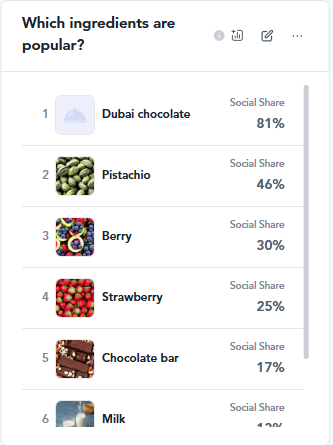
Consumer insights make it easier for CPG brands to identify and implement the most appropriate positioning strategy for their products. Here are a few examples of how consumer intelligence data could influence a brand’s food product positioning strategy:
Trait-based positioning
Consumer intelligence platforms like Tastewise can provide brands with real-time information about the formats, flavors and other attributes consumers are looking for in certain food products. If consumer data indicates that customers are specifically searching for, say, Dubai chocolate flavors, CPG brands with Dubai chocolate offerings might want to highlight those items as part of their digital shelf optimization.
Pricing-based positioning
If consumers express a strong preference for purchasing products at or below a certain pricepoint, brands whose product offerings align with those pricing preferences may want to take a pricing-based approach to product positioning. Shopper marketing strategies might highlight the relatively low cost of certain items or tailor promotion planning around data-driving pricepoints. Many of today’s strongest food brands rely on consumer insights to guide positioning
Application-based positioning
Sometimes it’s the actual use case of a product that sets it apart from its competitors. Let’s say you notice an uptick in social media searches for “functional foods” or “functional ingredients.” If consumers are specifically searching for health-boosting products, you might want to position yourself as a brand that offers effective, research-backed wellness solutions.
Quality-based positioning
Customer ratings and reviews can reveal clear consumer preferences around quality and effectiveness. Leveraging positive consumer reviews and testimonials can help brands set their products apart among quality-focused consumer bases.
As you can see, it’s all about tailoring your strategy based on accurate, real-time consumer data. Putting your faith in abstract information or outdated research might lead you to develop a strategy that misses the mark and that even alienates your target audience.
What makes a strong product positioning strategy
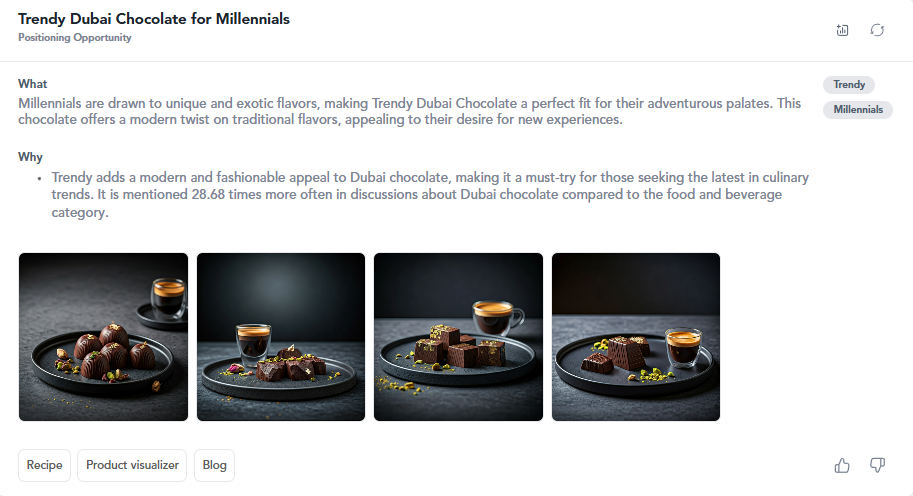
With accurate consumer data in hand, you can craft a product positioning strategy that covers all your bases and levels the playing field. Here are some of the most important components of a well-tailored positioning approach:
Understanding who your core consumer is
Shoppers are, first and foremost, people. Treating them like numbers or data points rather than individuals with unique preferences might compromise your positioning strategy. Instead, you’ll want to rely on real-time consumer insights to hone in on your ideal target audience and tailor your efforts around their wants, needs and preferences.
Identifying unmet needs and demand spaces
Some of the most successful products rocket to stardom because they effectively meet unmet needs. Consumer insights can reveal market gaps and identify areas where consumers have consistently been let down in order to position products with less competition and more relevance.
Using trend data to guide flavor and format choices
Platforms like Tastewise are great at highlighting flavor and format trends for food and beverage brands. These kinds of insights can serve as the cornerstone of application and trait-based positioning strategies and help CPG brands roll out and leverage products that are more likely to deliver on performance.
Positioning against competitors
Effective positioning is always relative. Data-driven insights can help you gain a clearer understanding of your competitors’ messaging, pricing and positioning strategies so you can identify opportunities to stand out. Targeting just one area in which you can outshine your competitors could open major doors in a crowded market driven by differentiation.
Pricing and value perception in product positioning
In many spaces, price plays a critical role in consumer buying behaviors. Consumer intelligence data can help drive your F&B revenue management strategy by revealing what consumers are willing (and not willing) to pay for certain products or qualities. Aligning your pricing strategy with consumer pricing preferences can help advance a pricing-based positioning strategy and reduce friction at the point of purchase.
Testing and refining positioning with real-time insights
Gone are the days of treating product positioning as a one-and-done investment. Effective product positioning is both proactive and responsive – it relies on current information to meet existing consumer needs while identifying opportunities for growth. By utilizing real-time insights as part of your positioning strategy, you can stay agile in a rapidly-evolving space rather than getting locked into an approach based on historical data.
Use Tastewise data for smarter positioning decisions
Tastewise enables brands to ground their positioning strategies in real demand signals rather than assumptions or old intel. By analyzing consumption patterns, identifying emerging trends and tracking purchasing behavior in real time, Tastewise helps teams roll out positioning decisions with greater confidence and less guess-work. This data-driven approach can play a role in multiple brand operations and ensure a more consistent, effective positioning strategy that stands the test of time.
Final thoughts
A strong food product positioning strategy is built on insight, not impulse. Brands that leverage real-time consumer data are better equipped to stand out from the crowd based on their unique attributes, value, applications, and quality. By anchoring product positioning decisions in real consumer behavior and up-to-date trend information, teams can build products that resonate today without compromising their ability to evolve and adapt in conjunction with their consumers.
FAQs about Food Product Positioning Strategy
Consumer insights provide accurate, practical information about consumers’ past, present and future purchasing behaviors. As such, brands can leverage consumer insights to more effectively tailor their products to the wants, needs and preferences of their target audiences.
Sometimes, it’s better to identify and meet an unmet need than to reinvent the wheel in a crowded space. Targeting unmet consumer needs can help brands stand out from the crowd and expand their growth potential within their niche market.
Real-time insights allow teams to monitor shifts in consumer demand and behaviors so they can decide whether an attribute-based, pricing-based, application-based or quality-based production positioning strategy is most likely to deliver results.




We’d love to learn your goals and see how Tastewise fits
We’d love to learn your goals and see how Tastewise fits
Get a personalized demo
Good taste. Wise move.
Your demo request is confirmed. We’ll reach out within one business day to schedule your walkthrough.
What happens next

See what’s driving demand, then turn it into a sell-in story for retailers and operators.
- Connect consumer panels, market trackers, and agents into one evidence view
- Get the “why” behind what’s changing, with explainable demand drivers
- Walk away with a buyer-ready narrative and next steps to activate
Trusted by





“Tastewise is my secret tool for knowing what consumers want next and why.“