






From Michelin-starred restaurants to bustling food trucks, the culinary world is abuzz with a new ingredient: artificial intelligence (AI). But this isn’t your grandmother’s cookbook recipe. AI is changing how we cook and how we think about food, flavor, and the way chefs approach their culinary creativity. Yet, as with any disruption, the rise of AI in the kitchen has sparked both excitement and apprehension amongst culinary professionals.
This article discusses how AI is revolutionizing the culinary world by automating tasks, providing data-driven insights, and inspiring creativity. It addresses concerns about AI replacing human chefs, showing instead how AI helps culinary professionals focus on innovation, sustainability, and delivering exceptional dining experiences.
This article covers the ways AI is transforming kitchen operations, menu creation, and even culinary education, highlighting the potential for a harmonious partnership between humans and technology in the kitchen.
Key takeaways
- AI culinary creativity means chefs using data on flavor, ingredients and diner behavior to develop dishes, with the cooking judgment staying human.
- Einav Gefen, SVP Chef Innovator at Restaurant Associates, frames the shift as freedom to explore more, watch what other chefs are doing and test more ideas.
- Culinary intelligence platforms read recipes, social posts and restaurant reviews together, so a flavor climbing elsewhere shows up before it reaches your own menu.
- Kitchen operations gain first. Inventory systems hold stock at the right level and cut waste, and customer analytics support menus built around real dietary needs.
- Sustainability decisions get sharper when supplier footprint, waste patterns and plant based swaps sit in the same view as the recipe.
- Chefs are not replaced. Taste, cultural intuition and plating stay human, and culinary schools teaching data analysis and trend forecasting graduate cooks ready for both sides of the job.
Beyond the fear: AI as a creative catalyst
The idea of AI taking over kitchens might conjure images of robotic chefs churning out standardized meals. The reality is more nuanced than that, and more interesting. While AI can automate repetitive tasks, it’s far from replacing the human touch that defines great cuisine. In fact, AI is emerging as a serious tool for culinary creativity, giving chefs room to push boundaries and reimagine the dining experience.
Einav Gefen, SVP Chef Innovator at Restaurant Associates, encapsulates this shift in perspective: “If we shift the paradigm and the mindset and say, ‘Okay, it will free me to explore more, to see what other chefs are doing, to try different things…,’ I actually see it as an advantage, not a fear factor.”
From data to delight: AI’s culinary toolkit
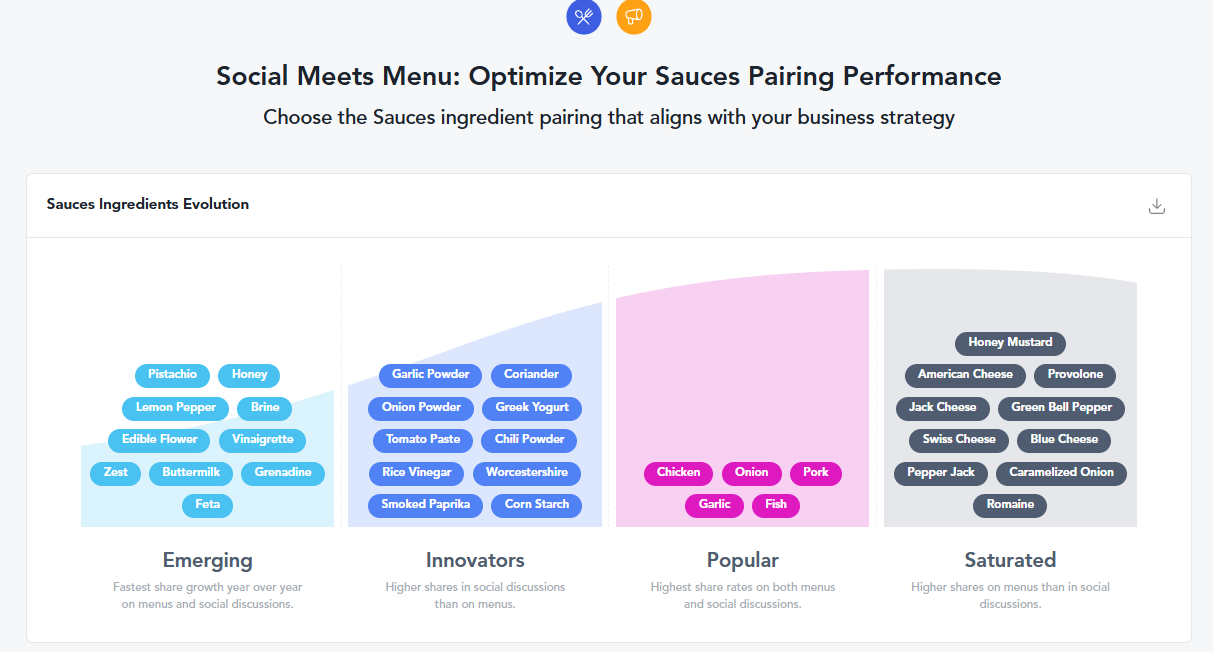
AI-powered platforms are now analyzing billions of data points, sifting through recipes, social media posts, and even restaurant reviews to uncover emerging trends and flavor preferences. This allows chefs to tap into a wealth of information that was previously inaccessible, inspiring them to experiment with new ingredients, techniques, and flavor combinations.
But AI doesn’t stop at inspiration. It’s also revolutionizing the way chefs manage their kitchens. AI-powered inventory management systems can optimize stock levels, reducing food waste and ensuring that fresh ingredients are always on hand. Meanwhile, AI-driven customer analytics can help chefs personalize menus, catering to individual tastes and dietary needs. This level of customization was once the exclusive domain of high-end establishments, but AI is democratizing the ability to create bespoke dining experiences.
Sustainability: a recipe for the future
As the world grapples with the challenges of climate change and food insecurity, sustainability has become a top priority for many chefs and restaurants. Here too, AI is already changing how kitchens decide.
By analyzing data on ingredient sourcing, carbon footprint, and waste patterns, AI can help chefs make more informed decisions that prioritize sustainability. For example, AI can identify the most eco-friendly suppliers, optimize recipes to minimize waste, and even suggest plant-based alternatives to traditional ingredients.
Furthermore, AI can help restaurants track their progress towards sustainability goals, providing transparency and accountability to consumers who are increasingly demanding ethical and environmentally conscious practices.
Culinary education and the next generation of chefs
Integrating AI into culinary education is paramount to equip the next generation of chefs with the tools and skills they need to thrive in this evolving landscape. Culinary schools and programs that embrace AI will produce graduates who are not only proficient in traditional techniques but also adept at leveraging technology to enhance their creativity and productivity.
By introducing AI-powered tools into their curriculum, culinary schools can provide students with real-world experience in data analysis, menu optimization, and trend forecasting. This will not only make them more attractive to potential employers but also prepare them to lead the charge in creating a more sustainable and innovative culinary industry.
The growing impact of AI in gastronomy
AI in gastronomy has moved from novelty to working equipment. Kitchens using it well treat it as a research and calculation layer sitting underneath the cooking, not as a substitute for a palate. National Restaurant Association research puts adoption at nearly 1 in 4 restaurant operators (26%), with only 6% using it anywhere near a customer order, which tells you where the practical value currently sits. Recipe innovation, flavor pairing accuracy and kitchen workflow are where AI agents earn their place.
Automation and culinary artistry
Most of what automation takes off your plate is arithmetic. Scaling a braise from 12 covers to 400. Recalculating batch yields when the protein spec changes. Rewriting a prep sheet after a supplier substitution. Checking allergen conflicts across a 60-item menu. Those tasks take hours and they reward accuracy rather than imagination.
Handing them to a system returns the hours you need for tasting, plating and training your line. Automation also catches the errors people miss under service pressure, like a yield calculation that drifts every time a recipe is scaled by hand. The creative decisions stay with you. Whether the dish carries chili crisp or preserved lemon, how the plate reads under the pass light, what the third bite tastes like. None of that comes out of a model.
Transforming modern cuisines
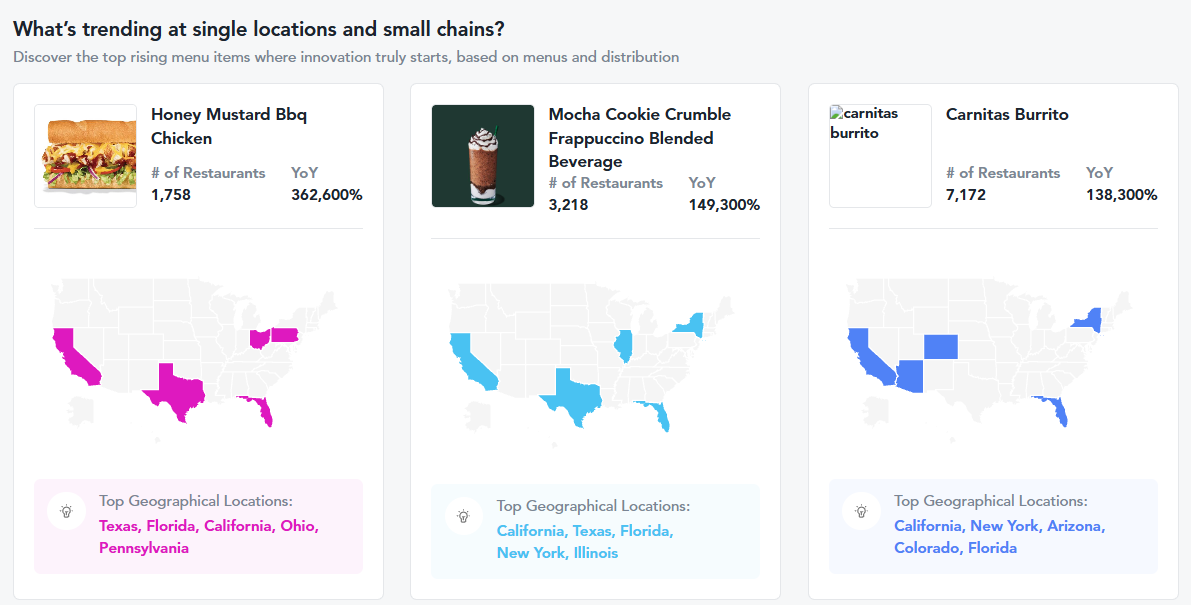
Culinary intelligence is most useful before the recipe exists. AI cuisine insights compare what appears on restaurant menus, in home recipes and in social posts, so you can watch a flavor move in one channel while it is still absent from another. Gochujang caramel, hot honey on breakfast items and Dubai chocolate in desserts all reached menus after visible movement somewhere else first.
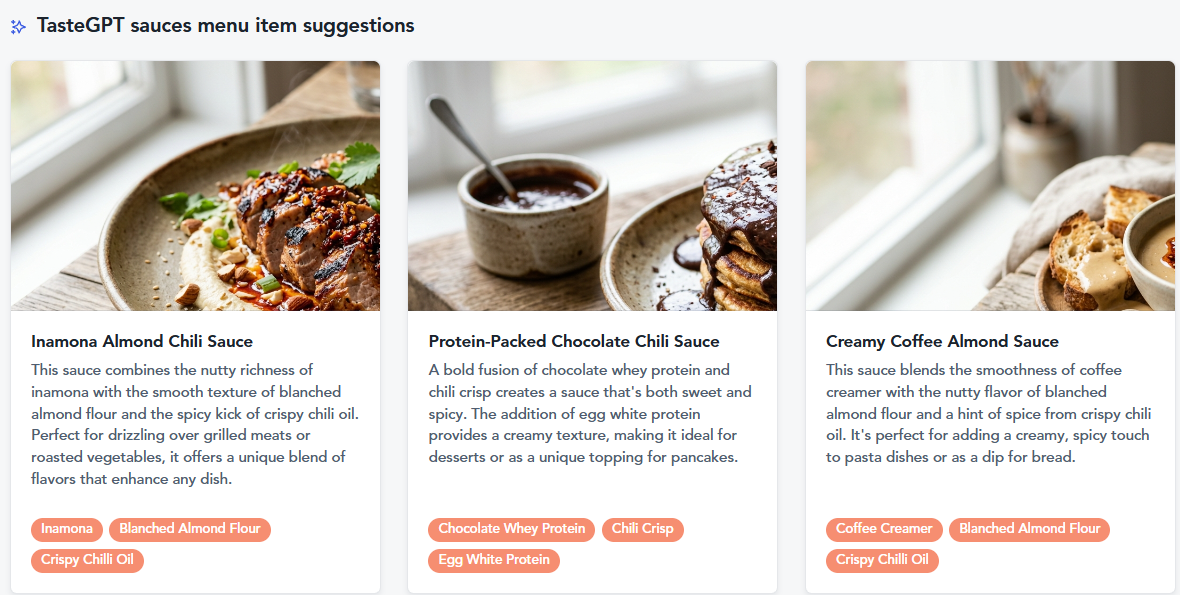
A menu innovation agent turns that signal into concepts you can cost and test, and an AI recipe agent drafts variations to cook against. It is the same logic behind food intelligence in menu planning, applied at dish level. Teams building modern AI cuisines use it to place a dish where demand is heading rather than where it has already peaked, and the same evidence carries into product innovation when a restaurant concept moves into retail. What you get back is a shortlist worth cooking. The cooking is still the job.
A world of flavor awaits
The culinary landscape is constantly evolving, and AI is accelerating this evolution. From hyper-personalized menus to lab-grown meat, AI is pushing the boundaries of what’s possible in the kitchen.
Imagine a restaurant where AI-powered robots prepare your meal, while a human chef curates the menu, selects the freshest ingredients, and adds those final, personal touches that elevate a dish from good to great. That is where food is heading.
AI amplifies the creativity and expertise of chefs rather than replacing them. By automating mundane tasks and providing a wealth of data-driven insights, AI frees chefs to focus on what they do best: create delicious, memorable, and sustainable culinary experiences.
The culinary world is at a crossroads, and AI is the bridge to a brighter future. By embracing this technology, chefs can unleash their creativity, innovate faster, and create a more sustainable and inclusive food system. This is about the future of food as much as the cooking.
AI is already changing the culinary world. The question is how we, as chefs, entrepreneurs, and consumers, will embrace this change and use it to create a more delicious, sustainable, and equitable food future.
Frequently asked questions about AI culinary creativity
Start with the tasks that are calculation rather than craft. Artificial intelligence for chefs compares ingredient sourcing options and supplier pricing, reads flavor pairing data across menus and recipes, forecasts covers so prep matches demand, and shortens dish development by testing concepts against real consumer signals before a tasting. Most kitchens see the fastest return on food waste, because forecasting and par levels sit on the same data. The practical entry point is one workflow, usually prep forecasting or menu costing, before anything touches the creative side.
It shows chefs where flavor demand is moving before it reaches their own menu. AI in the culinary field reads global menus, home recipes and social posts together, then surfaces the ingredient interactions and diner preferences that point to combinations worth testing, such as a chili and honey pairing crossing from wings into breakfast. Chefs using AI for new recipe ideas treat that output as a shortlist to cook from, then apply their own judgment on balance, texture and presentation.
Artificial intelligence in professional kitchens mostly runs operations. It holds inventory at the level that limits spoilage and predicts demand spikes so staffing and prep match the covers. It also monitors cooking precision on equipment such as combi ovens and fryers, and it ranks new concepts against live demand during menu ideation. Adoption is concentrated in marketing, forecasting and back office work rather than at the pass, which is why most kitchens meet it first through a costing sheet or an ordering system.
No. AI in culinary tools take over research, forecasting and repetitive calculation, and they have no palate, no cultural memory and no eye for a plate. Taste, the judgment to know why a dish belongs to a place, and artistic presentation stay with the chef. The realistic outcome is fewer hours on spreadsheets and more hours on the food.



We’d love to learn your goals and see how Tastewise fits
We’d love to learn your goals and see how Tastewise fits
Get a personalized demo
Good taste. Wise move.
Your demo request is confirmed. We’ll reach out within one business day to schedule your walkthrough.
What happens next

See what’s driving demand, then turn it into a sell-in story for retailers and operators.
- Connect consumer panels, market trackers, and agents into one evidence view
- Get the “why” behind what’s changing, with explainable demand drivers
- Walk away with a buyer-ready narrative and next steps to activate
Trusted by





“Tastewise is my secret tool for knowing what consumers want next and why.“