





Clear protein water has moved from gym-bag curiosity to one of the most closely watched formats in functional hydration. Retail buyers managing active lifestyle and functional beverage sets in 2026 are looking past flashy packaging and demanding proof of shelf velocity before they give a single facing.
For brands bringing clear protein water to the table, winning a spot means showing that your SKU expands the category’s total footprint rather than cannibalizing existing functional beverage lines. The data makes that case easier than it has ever been, and the consumer signals are already there to build on.
Key takeaways
- Consumer engagement around protein water is generating nearly 50,000 posts in the Tastewise US consumer panel, with dishes in the category up 3.7% in the past year. The overall category has real consumer depth, not just social buzz. Build your sell-in story around that sustained signal, not a seasonal spike.
- Sugar-free is the fastest-growing claim in the clear protein water consumer need set, up nearly 195% in the past 12 months. Shoppers want protein and a clean label in the same bottle. Formulations and pack claims that lead on zero-sugar will earn faster trial.
- Carbonated water is an emerging ingredient in the protein water space, growing 73% since last year. Consumers are connecting sparkling texture to the clear format. Your team has a brief for a sparkling clear protein SKU that does not yet exist at mainstream retail.
- The “anti-bloat” claim is up 34% in the protein water context, sitting at nearly 14% share of consumer needs. That is the digestive-ease narrative that separates clear whey isolate from traditional protein shakes. Make it prominent on pack, front and centre.
What clear protein water actually represents in consumer terms
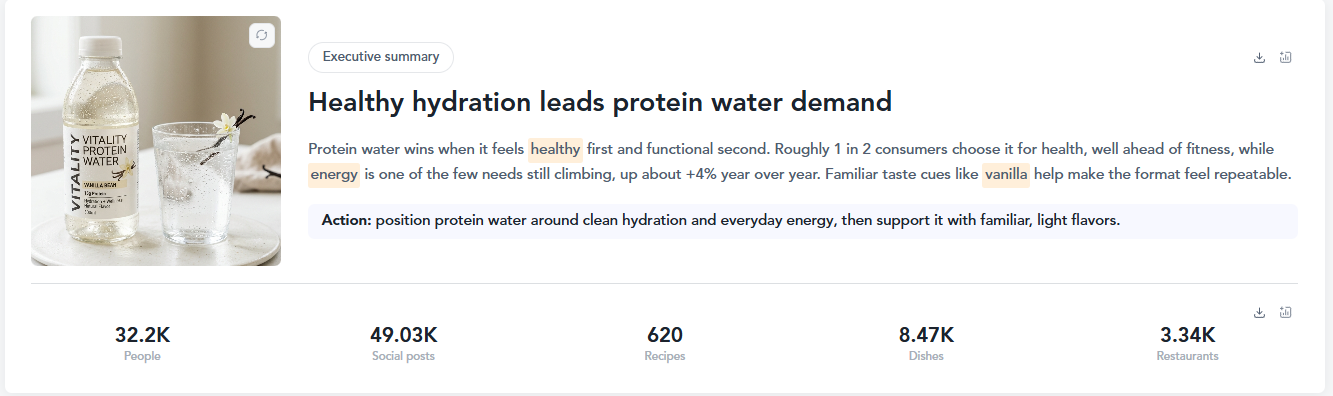
The clear protein water category exists because a specific consumer problem went unsolved for too long. Active consumers, especially those who track macros or follow structured training routines, needed a high-protein format that did not feel like a recovery shake. Traditional protein drinks are opaque, dense, and often associated with gym counters and post-workout routines. Consumers wanted protein in a format that felt like hydration: light, refreshing, and appropriate across more moments of the day.
Tastewise consumer panel data across the broader protein water category shows that the top consumer motivations are fitness (nearly 30% share), energy (28%), and hydration (27%). All three sit together in one purchase. That combination tells you something structurally important: this is a throughout-the-day play that competes with functional water as much as with shakes.
Within clear protein water specifically, the refreshing claim is growing at 23% in the past year, sitting in the top 15 consumer needs. Consumers are already framing this format as a sensory upgrade on standard hydration, and as a more convenient route to protein than mixing a shake. That framing is your retail story, and it is one a traditional sports nutrition brand is unlikely to have in their pitch deck.
Shifting paradigms in functional hydration
The consumer who drove protein water demand in 2024 was primarily a gym-goer. The consumer driving it in 2026 is much broader. Tastewise data shows that the “morning” occasion claim in the protein water category has grown 17% in the past year, while the “blood sugar” claim is up 24% and metabolism is up 9%. These signals point toward a consumer who is managing protein intake across their whole day: at breakfast, at a mid-morning desk moment, and on the commute home. The format has moved well beyond the post-workout window.
The most commercially significant shift is in the aftertaste signal. The chalky claim in the protein water context has grown 121% in the past 12 months. Consumers are actively discussing texture and mouthfeel, and the ones asking for improvement are the most engaged repeat-purchase candidates. Brands that solve the aftertaste and chalkiness problem are addressing the single most cited barrier to long-term loyalty. For your R&D team, this is a formulation priority. For your sales team, it is a differentiation claim you can use on shelf.
Clear whey isolate, the base protein used in most clear RTD formats, delivers transparency of texture and fast absorption. That alignment between functional benefit and sensory experience is what makes the clear format defensible at premium price points. The shopper who picks up a clear protein water at $3.50 to $4.50 is trading up from a bottle of flavored water. That is the incrementality story your retail buyer needs to hear.
Breakdowns in innovation: RTD formats vs. functional concentrates
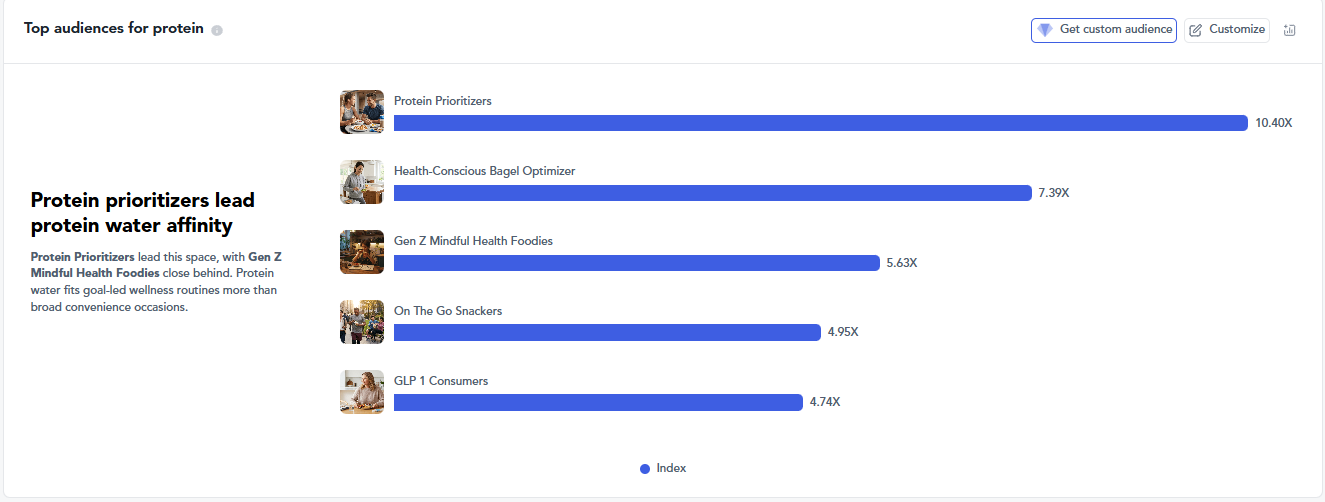
Two formats are competing for the functional protein water shelf right now. They serve different shopper missions and deserve different placement strategies
Trend 1: ready-to-drink clean formulas
Ready-to-drink clear protein water is shelf-stable, pre-mixed, and built for immediate consumption. Brands in this space, including Clean Simple Eats-style grass-fed whey isolate lines, are driving adoption by pairing high protein content (typically 20g per serve) with zero-sugar, zero-artificial-sweetener formulations.
Tastewise consumer panel data shows the sugar-free claim in clear protein water growing at 195% in the past year. Shoppers in this category have made zero-sugar a baseline expectation rather than a premium add-on. Retail buyers want to see this format because an RTD clear protein water commands eye-level shelf space and a higher average unit retail price than traditional flavored waters. Your pitch is premium margin expansion, delivered through a format shoppers are already reaching for.
Trend 2: portable powder sachets and concentrates
The second format is concentrated powder designed to dissolve into still or sparkling water without cloudiness or grit. This is where the clear protein water powder and clear protein packets for water searches are pointing. Consumers who carry these are solving a portability and sustainability problem: smaller shipping footprint, no single-use bottle at point of source, and the flexibility to mix into whatever water they already carry.
Carbonated water as an ingredient is growing 73% in the protein water consumer panel data. That tells your team that consumers are already mixing clear protein powder into sparkling water at home. A ready-formatted sparkling clear protein concentrate is an obvious category gap your team can brief against. For category managers, powder items also offer higher margin per square foot and a natural cross-promotion anchor with the retailer’s existing premium still water set.
Extracting consumer white spaces with category data
The flavor and dietary gaps in the clear protein water category are not where most brands are looking. The bariatric-friendly opportunity is one example.
The Celebrate Clear Protein Water brand has built a specific following in the post-bariatric surgery recovery community, a shopper who needs very high protein in very low volume with no digestive irritants. Tastewise data shows anti-bloat growing at 34% in the clear protein water consumer panel, with the gut health claim at 26% share. That is a formulation brief and a retail placement opportunity that a standard sports nutrition team would miss entirely.
On flavor, Tastewise data shows lemon growing at 6% and strawberry at 47% in the clear protein water ingredient signal, while pineapple is up 50% and berry is up 25%. The white space is in citrus-herb combinations and tropical profiles that have seen zero brand response. Brands occupying the standard fruit punch and berry lane are competing on the most crowded part of the shelf. The consumer who wants a cucumber-lime or lemon-elderflower clear protein format is going unserved. That is a first-mover opportunity that Tastewise’s food intelligence platform can surface at the SKU brief stage, well ahead of the post-launch review.
Building the data-backed sell-in story
The traditional sell-in deck starts with the product. The sell-in story that wins in 2026 starts with the consumer demand map. Tastewise data for the protein water category shows 32,198 consumers in the US panel engaging with this space, with dishes in the category up 3.7% in the past 12 months. That is a category in growth, with depth of engagement across over 5,500 restaurant locations already putting protein-enhanced beverages on menus. When you walk into a retail buyer meeting with that operator-side signal alongside the consumer panel data, you are showing them where demand exists both in homes and across out-of-home consumption. That is a very different conversation from “our product tastes great and here is the label.”
The best retail sales enablement software used by leading CPG brands does not generate static reports. It generates live consumer demand evidence that your sales team can update before every buyer meeting. Shelf velocity proof built on last-quarter data is a liability in a fast-moving category like functional hydration. Buyers know it. Your ability to walk in with a story that reflects what consumers are doing right now is a meaningful competitive advantage.
Proving incrementality and defending premium placement

The incrementality question is the one retail buyers return to most often. Does your clear protein water SKU bring new shoppers to the hydration aisle, or does it just shift spend away from an existing neighbor? Tastewise data gives you the answer in advance of the meeting.
Consumers who engage with clear protein water are driven by fitness, energy, and hydration simultaneously. They are spending in the premium water aisle and the electrolyte set, where functional water and sparkling formats sit. The “sparkling” claim in the protein water category is up 72% in the past 12 months. That signal tells you the shopper most likely to buy your clear protein water is already a premium water buyer. They bring incremental basket value to the functional beverage shelf as a whole.
The “premium” claim in the clear protein water consumer panel has grown 39% in the past year. Consumers are willing to pay more for this format and they are telling you why: they perceive it as an upgrade. When you frame your SKU placement against the premium water section rather than the protein supplement section, you are arguing for category adjacency that the basket data will eventually confirm. That is the incrementality case.
Localizing supply to fit regional retail resets
A trend growing strongly in Los Angeles or New York does not automatically have the same shelf velocity in Kansas City or Columbus. Tastewise location-level data allows your team to build region-specific shelf arguments before the reset meeting, not after.
The fitness motivation in the protein water category is highest in coastal urban markets where active lifestyle spending is disproportionately concentrated. The “convenient” claim, however, is growing 13% in the broader protein water space and skews more evenly across market types. That tells you something useful: in urban commuter hubs, lead the shelf story with performance and recovery. In suburban big-box and value retail environments, lead with convenience and everyday habit formation.
The clear protein packets for water format is particularly well-suited to suburban club and mass retail formats, where shoppers buy in bulk and value formats they can keep at home and at the office. Pitch the RTD clear water protein drink to grocery chains in dense metro markets with active lifestyle indexes. Pitch the powder sachet format to club and mass retailers with a value-per-serve story that justifies the multi-unit purchase. A single sell-in narrative will underperform in both channels.
What this means for CPG brands in 2026
- For innovation and R&D: the chalky claim growing at 121% in the protein water panel is a formulation signal, not a consumer complaint to monitor later. Address it now at the protein source and binding agent stage, before it appears in retailer review data post-launch.
- For category managers: the sparkling format gap in clear protein water is real. Carbonated water as an ingredient in this space is up 73% in the past year with minimal brand response. Defend your linear shelf space by owning this format before a competitor does.
- For sales teams: the sugar-free claim growing at nearly 195% in the clear protein water context is the single most defensible claim you can lead with in a buyer meeting. It addresses the taste, the nutrition label, and the shopper mission in one line.
Looking ahead: the 2027 autonomous shelf outlook

Retailers are moving toward dynamic, automated shelf management. Category resets that currently happen every six to twelve months will be informed by rolling consumer demand data, and the brands arriving with live signals will have a structural advantage over those relying on lagging sales reports. The CPG brands that win the 2027 shelf will be the ones who treated Tastewise as a continuous intelligence layer in 2026, building buyer credibility reset by reset.
The clear protein water category is still early enough that brands investing in consumer signal tracking now will carry a multi-year head start into every future category review. The window to own this conversation with your key retail partners is wide open right now.
Frequently asked questions about retail evaluation for clear protein water
Retail buyers in 2026 want to see three things beyond product quality: proof of incremental category growth (not cannibalization of existing SKUs), consumer demand signals tied to their specific shopper demographic, and a shelf placement rationale grounded in basket data and category adjacency. Tastewise gives your team all three in a format that holds up in a category review meeting. Clear protein water review data from the Tastewise consumer panel shows this format attracting consumers from the premium water and functional hydration spaces, making the incrementality case much stronger than a traditional sports nutrition pitch.
Traditional protein shakes are primarily purchased by gym-focused consumers for post-workout recovery. Clear protein water drinks are being adopted across a much wider set of occasions. Tastewise data shows that the “morning” occasion claim in the protein water category has grown 17% in the past year, and the “convenient” claim is up 13%. This is a product that fits into daily hydration routines across every part of the day. That is what makes the shelf story so strong for general grocery and mass retail buyers who would typically pass on a sports nutrition range extension.
The strongest sell-in stories for clear protein water in 2026 lead with consumer demand evidence, not product attributes. That means arriving with Tastewise panel data that shows the growth trajectory of the functional water occasion, the consumer motivations driving trial, and the specific flavor and formulation gaps your SKU fills that existing range members do not. Pair that consumer demand map with a regional shopper index to show your buyer that the demand is relevant to their specific store base. That is the difference between a sample-and-pray approach and a data-backed sell-in strategy that earns a listing.




We’d love to learn your goals and see how Tastewise fits
We’d love to learn your goals and see how Tastewise fits
Get a personalized demo
Good taste. Wise move.
Your demo request is confirmed. We’ll reach out within one business day to schedule your walkthrough.
What happens next

See what’s driving demand, then turn it into a sell-in story for retailers and operators.
- Connect consumer panels, market trackers, and agents into one evidence view
- Get the “why” behind what’s changing, with explainable demand drivers
- Walk away with a buyer-ready narrative and next steps to activate
Trusted by



“Tastewise is my secret tool for knowing what consumers want next and why.“