





Menu trends India data from the Tastewise consumer and operator panel points to three structural shifts underway simultaneously, and each one represents a concrete opportunity for culinary teams who act before peak saturation. India’s restaurant industry is moving faster than most R&D cycles can track. Operators and menu developers who rely on annual scan reports are already working from a picture that is six to twelve months out of date. Spicy claims on restaurant menus India are up 72.9% year on year. Idli is growing 60.1%. Butter chicken has entered an emerging lifecycle stage. The question is not whether the shift is real. The question is how fast your team moves on it.
Key takeaways
- Spicy claims on restaurant menus India are up 72.9% year on year, with 77% of that signal concentrated inside the foodservice channel rather than home cooking.
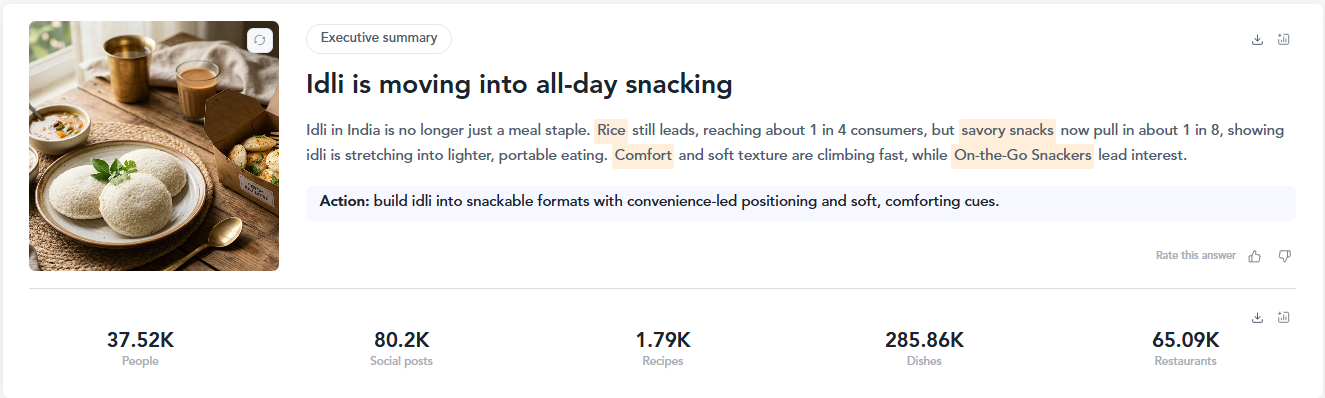
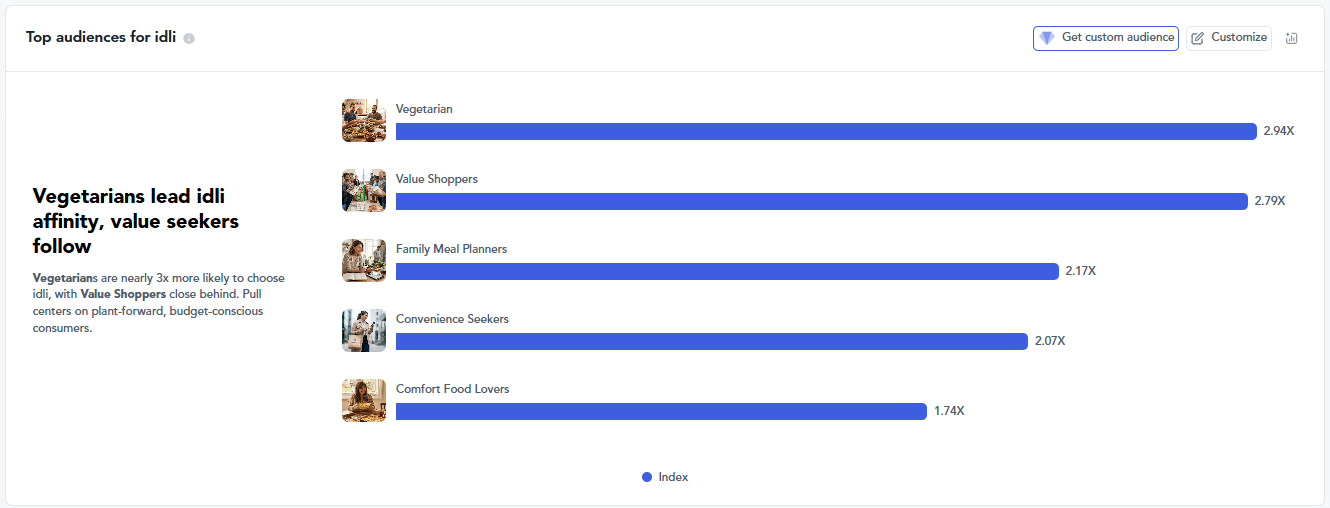
- Idli is growing 60.1% year on year in the India consumer panel with zero tracked operator menu share, making it the widest social-to-menu gap in the South Indian breakfast daypart and the clearest whitespace for QSR operators in 2026.
- Butter chicken has entered an emerging lifecycle stage, growing 41.8% year on year with the highest operator relevance score (22.6) in the Tastewise India innovation dataset. The window for format ownership is open now.
- Indo-Chinese formats are becoming a permanent structural menu tier, not a limited-time special. Chinese cuisine claims on Indian restaurant menus grew 35.6% year on year. Fried rice is up 55.2%. Noodles are up 23.9%.
- Heritage formats are growing alongside global crossover, not in spite of it. Thali is up 23.3% year on year. Biryani remains the highest-penetration format in the India panel with a mature lifecycle and the highest relevance score. Operators who package heritage execution with modern speed have the clearest runway in full-service and catering.
What the menu trends India data actually means for the category
The India Foodservice Market worth USD 93.97 billion in 2026 is growing at a CAGR of 10.30% to reach USD 153.37 billion by 2031. making it one of the fastest-expanding restaurant economies globally. The structural drivers behind that growth, a young urban population, rising disposable incomes, and accelerating digital food culture, are the same forces pushing the menu innovation signals in the Tastewise data. For culinary R&D teams and menu developers at multi-unit chains, that context matters because it means the signals below are not campaign-driven spikes. They reflect a durable shift in what diners expect from restaurant menus India.
The Tastewise India consumer panel shows three macro-forces reshaping the category simultaneously. The heritage format revival: thali up 23.3% year on year, idli up 60.1%, tandoori chicken up 9.7%. Global cuisine crossover: Chinese cuisine claims up 35.6%, Indo-Chinese formats entering mainstream menus at pace. Comfort-meets-precision flavor positioning: spicy up 72.9%, creamy up 28.9%, intense flavor up 31.8%. These are not competing forces. They reinforce a single direction: consumers want authentic flavor executed with precision, available at the price tier and speed that fits their occasion.
The commercial opportunity is in format-led innovation using high-familiarity ingredient bases. Biryani, tandoori, curry, and thali formats carry enormous consumer recognition and can be redeployed into new convenience and global-fusion builds to de-risk bold menu innovation. Your team can build a menu innovation pipeline backed by real consumer demand rather than instinct.
The Tastewise foodservice report breaks down which formats, flavors, and occasions are driving operator menu decisions across markets right now. It is built for culinary R&D and menu development teams who need data they can take directly into a brief.
What the menu trends India data shows about format velocity
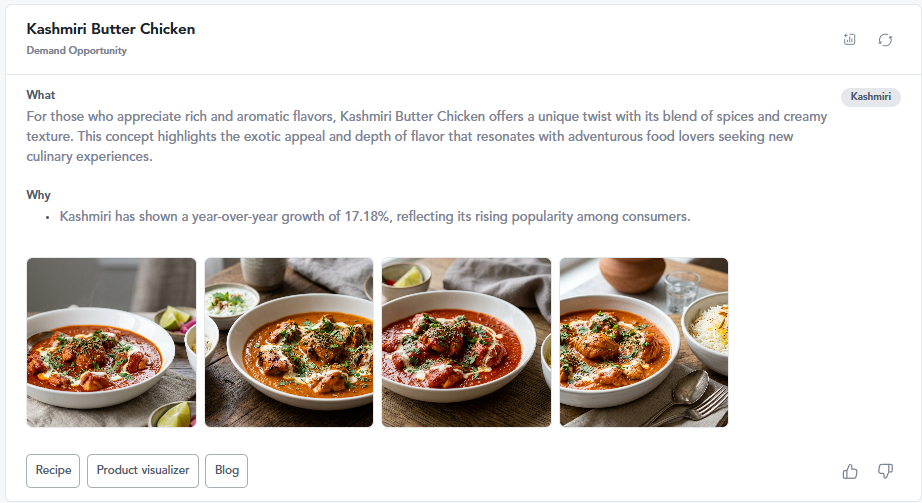
Butter chicken is the standout signal in the India innovation panel right now. It is reaching new consumers 41.8% faster than a year ago and has entered an emerging lifecycle stage with an operator relevance score of 22.6, the highest in the dataset. That growth is not happening in isolation. Ghee is up 30.3% year on year as a premium finishing fat, and creamy as a flavor claim is up 28.9% in the restaurant channel. Consumers are actively moving toward rich, heritage-anchored protein builds executed with bold flavor. Your
product innovation brief should treat butter chicken as a format to systematize across QSR bowls, fast-casual wraps, and catering banquet layouts before the lifecycle matures.
Momo (up 38.7% year on year), dumplings (up 28.8%), and noodles (up 23.9%) are the next tier of momentum. All three form the clearest evidence of a street-food-to-restaurant format migration in the India panel. Tibetan and Northeast Indian street formats are entering mainstream menus across Tier 1 cities, and the consumer claim profile around them, spicy, crispy, intense flavor, is identical to the dominant restaurant demand signal in the dataset.
Idli is the sleeper with the widest gap. At 60.1% consumer growth year on year and zero tracked operator menu share in the Tastewise data, idli is not generating the same mainstream operator penetration as biryani or butter chicken, but its consumer velocity means the whitespace window is open and narrowing. South Indian breakfast formats are growing fastest in the QSR and fast-casual tier, particularly in Tier 1 and Tier 2 cities. Ghee as a finishing fat and a spicy chutney pairing align directly with the dominant flavor signals in the panel. Your foodservice sell-in narrative should show operators both the stable heritage formats and the velocity leaders together.
Consumer and operator signals shaping menu trends India
The motivation data around Indian restaurant menus tells a clear story: consumers are not visiting this category for convenience alone. They are visiting for occasion, flavor intensity, and cultural connection. Craving is growing 38.9% year on year as a consumer signal. Weekend is up 38.2%. Comfort is up 13.6%. These are occasion-based and sensory motivations, which means the operators that win in this market will be those that show up at the right cultural moment with the right format.
Fresh claims are growing 40.8% year on year specifically in the restaurant channel, with 66% of that signal coming from foodservice rather than home cooking. Transparency in ingredient sourcing has moved from a premium signal to a mainstream menu expectation across fast-casual and full-service formats in India. Trendy as a consumer claim is up 17.4% year on year, with 46% of that signal inside foodservice restaurants. Operators who signal trend-awareness in their menus, through new formats, global cuisine nods, and modern plating, are winning diner attention.
Gourmet is up 18.3% and premium is up 17.2% inside the foodservice channel. Consumers are beginning to see Indian restaurant menus as worth spending more on when the occasion is right. Amusement park and business setting occasion signals are both growing. These signals converge on one insight: Indian restaurant dining is becoming an experience-anchored category, not just a commodity meal occasion. The 2026 food and beverage trend forecast sets out exactly how experience-led consumption is reshaping foodservice brand strategy across categories.
What menu trends India look like on the operator side
On the operator side, the Tastewise India data returned 254 tracked menu items from the available panel. The Indo-Chinese tier is the most commercially embedded in operator menus: fried rice, noodles, and momo all have growing operator presence alongside their consumer velocity. Biryani, thali, and tandoori chicken are the most penetrated formats with mature lifecycle stages, appearing across major QSR, fast-casual, and full-service restaurant formats across India.
The geographic distribution of operator penetration signals commercial reliability across North, South, and pan-India formats. North Indian formats dominate full-service and catering menus nationally, led by tandoori, Mughlai, and Punjabi cuisine clusters. South Indian formats anchored by idli and dosa are growing fastest in the QSR and fast-casual tier in Tier 1 and Tier 2 cities. Indo-Chinese cuts across all regions and is the dominant global cuisine crossover category by volume and growth rate.
Indian cuisine is also accelerating outside India. Indian food in the USA trends show paneer growing 37% year on year in the US market, biryani up 17.6%, and craving signals up 28.6%. The flavor direction driving fast-casual menus in India is shaping what diners want from Indian restaurants globally. Franchise brands operating across both markets should treat these two datasets as one innovation brief.
What menu trends India means for your team right now
The data supports a clear three-part activation. First, build your format calendar around butter chicken, idli, and Indo-Chinese builds for the next 12 months. These are the formats with the velocity to carry a menu development brief and the consumer pull to make a culinary budget approval straightforward. Second, anchor your occasion strategy to weekend dining, craving-driven evening occasions, and Ramadan (up 24.7% year on year in the India panel), all three of which carry strong and growing signals in this market. Third, pitch ghee-finished protein builds and spicy chutney-led formats to foodservice operators, particularly in QSR and fast-casual, where the category already has strong and growing menu presence.
Your culinary team does not have to guess which formats are ready to move. The consumer panel tells you. Butter chicken is already reaching new consumers fast. Idli is growing 60.1% year on year. Momo is up 38.7%. These are not obscure signals. They are the next formats consumers are telling you they want. Pair that with the premium and trendy motivations growing in this market, and you have a menu brief that connects consumer demand to commercial timing.
FAQs about menu trends India
Idli is growing 60.1% year on year in the Tastewise India consumer panel, making it the fastest-growing format with zero tracked operator menu share. Butter chicken is up 41.8% and has entered an emerging lifecycle stage. Momo is up 38.7%. Indo-Chinese formats including fried rice (up 55.2%) and noodles (up 23.9%) are becoming a structural menu tier. Cola formats and legacy global chains are declining in the data, making heritage Indian and Indo-Chinese formats the clearest growth opportunity in the category.
The data does not isolate the shift exclusively to younger demographics, but the motivation signals around Indian restaurant menus, craving, weekend, trendy, gourmet, and premium experiences, are closely aligned with how younger urban consumers approach dining out. They treat a restaurant visit as an experience and a cultural moment, not just a meal. That behavioral pattern is driving format migration away from legacy generic dining toward bold, occasion-anchored, heritage-led formats.
Idli, momo, and butter chicken all have high consumer growth signal and low current operator menu saturation in the Tastewise data. These are the highest-priority whitespace formats for QSR and fast-casual operators in 2026. The spicy signal is 77% foodservice-concentrated, meaning menus that lead with bold flavor execution are aligned with dominant consumer demand. Operators should consider ghee-finished and chutney-paired builds for breakfast and lunch dayparts alongside Indo-Chinese formats as a permanent structural tier. The menu planning guide covers format and occasion pairing in detail.
The traditional Indian foodservice R&D cycle runs 12 to 18 months. Real-time social-to-menu gap analysis lets culinary teams identify which formats are growing at the consumer level but absent from operator menus, validate the signal before committing culinary budget, and build a brief backed by data rather than instinct. Teams using this workflow report compressing validation to six months or less. The AI menu generator guide documents how operator teams are integrating live signal into brief-writing and concept validation workflows.


We’d love to learn your goals and see how Tastewise fits
We’d love to learn your goals and see how Tastewise fits
Get a personalized demo
Good taste. Wise move.
Your demo request is confirmed. We’ll reach out within one business day to schedule your walkthrough.
What happens next

See what’s driving demand, then turn it into a sell-in story for retailers and operators.
- Connect consumer panels, market trackers, and agents into one evidence view
- Get the “why” behind what’s changing, with explainable demand drivers
- Walk away with a buyer-ready narrative and next steps to activate
Trusted by





“Tastewise is my secret tool for knowing what consumers want next and why.“