





NASA’s Artemis II mission is carrying more than just four astronauts around the Moon; it is transporting 189 unique data points on the future of human consumption. According to the official NASA Artemis II Crew Menu (NP-2026-01-001-JSC), the mission includes 43 cups of coffee and 58 tortillas. They show how space food trends translate into real performance requirements and where CPG innovation needs to hold up under pressure.
- Format Dominance: Handheld, crumb-free formats like tortillas are the “universal carriers” of 2026, solving for both portability and shelf-stability.
- Sensory Amplification: High-intensity flavor anchors (specifically hot sauce) are essential to overcome “sensory adaptation” in microgravity.
- Performance Hydration: Functional beverages like caffeine and nutrient-dense smoothies are categorized as “performance fuel” rather than leisure drinks.
- Shelf-Stable Luxury: Indulgence is a non-negotiable psychological requirement; comfort foods like Mac & Cheese are being reformulated for extreme longevity.
- Mass Personalization: The Artemis II menu proves that even in the most restricted environments, individual crew “sweet-tooth” preferences drive assortment.
Inside the Artemis II crew menu by the numbers
The Artemis II mission menu is a masterclass in assortment strategy and innovation. With 189 unique items, NASA and the Canadian Space Agency (CSA) have developed a system that balances nutritional density with psychological comfort.
The menu includes 10+ beverage categories and five distinct hot sauces to address flavor fatigue, where microgravity reduces taste perception. For CPG innovation leads, this indicates a clear priority. Consumers favor high-intensity flavor and format reliability in high-constraint environments. The mission relies on retort pouches and freeze-drying, aligning with demand for high-quality, shelf-stable BFY (Better-for-You) meals.
The 7 space food trends shaping 2026 and beyond
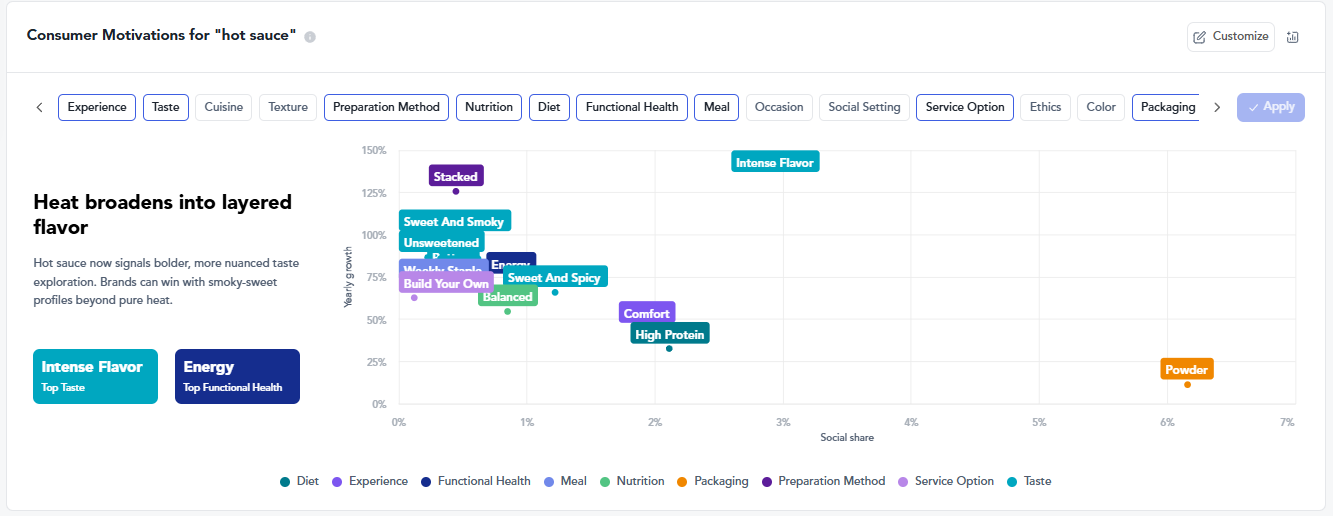
These signals show where performance, format, and flavor converge under constraint. The same pressures are already shaping retail and foodservice decisions.
1. Hot sauce as a flavor anchor
Space food is notoriously bland due to fluid shifts in the body that dull the sense of smell. NASA includes five distinct hot sauces to act as sensory anchors for the crew.
- As consumers on Earth seek lower-sodium diets, high-impact “heat” profiles are becoming the primary tool for flavor delivery.
- Brands should explore Tastewise hot sauce trend data to see how spicy flavor profiles are moving from niche condiments to core ingredient anchors in global CPG.
2. The tortilla as the perfect format
NASA is flying 58 tortillas because traditional bread crumbs are a mechanical hazard in microgravity.
- The tortilla is the “universal carrier”, making it portable, mess-free, and versatile.
- CPG brand should optimize for handheld “wrap” formats to satisfy the growing demand for on-the-go snackification and portion control.
3. Caffeine as performance fuel
With 43 coffee servings on board, caffeine shows up as something the crew depends on to stay sharp and keep going.
- There’s a change happening from “coffee as a drink” to “caffeine as a productivity tool”, and it’s accelerating faster than we can reach the moon.
- There is a significant white space for functional beverages that offer sustained energy without the “crash” associated with traditional coffee.
4. Personalized indulgence
The menu includes candies, cookies, and chocolate spread tailored to individual crew preferences to maintain morale.
- The Signal: Mass-personalization is the next frontier for B2B food innovation.
- What this means for brands: Brands must use predictive product innovation tools to validate which indulgence profiles resonate with specific micro-audiences.
5. Global flavor passports
The presence of mango-peach smoothies, couscous with nuts, and barbecued beef brisket shows that multicultural eating is now a baseline expectation.
- Global-fusion is the new standard for “comfort food,” even in the 2026 Trend Forecast.
- Integrate hyper-regional spices and ingredients to differentiate in stagnant categories.
6. Functional nostalgia
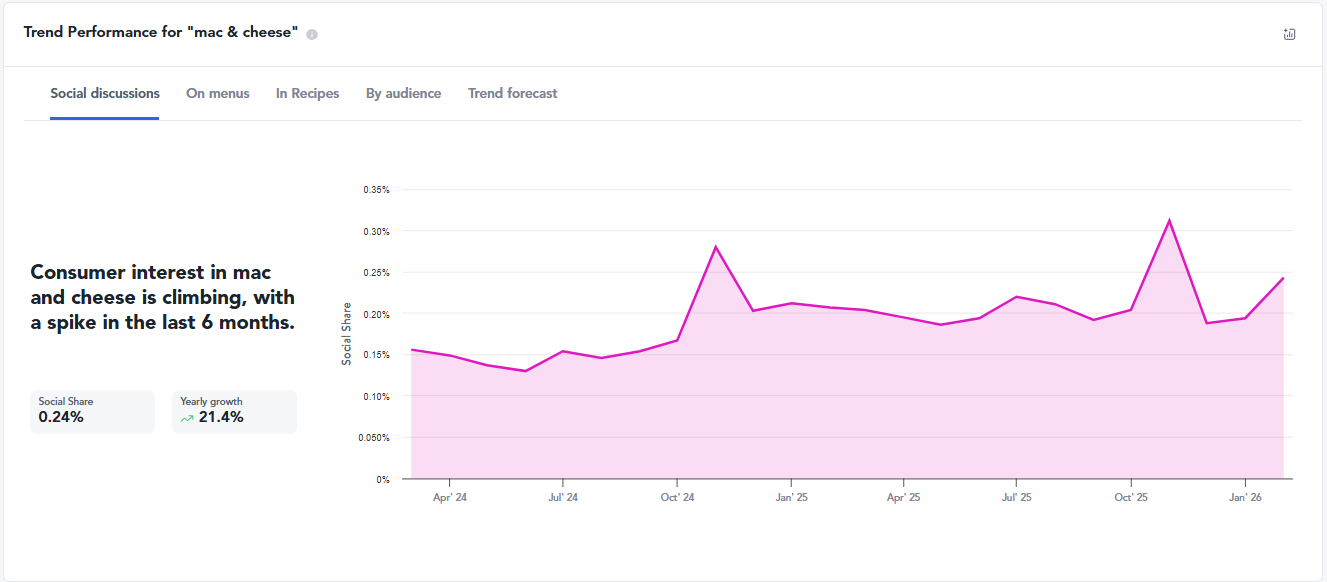
Legacy comfort items like mac & cheese and vanilla breakfast drinks have been reformulated for the Artemis Program’s strict nutritional standards.
- Consumers want the flavors of their childhood but the nutrition of the future.
- Modernize legacy brands with high-protein or gut-health claims to maintain relevance with health-conscious cohorts.
7. Constraint-driven innovation
The shelf-stable, lightweight, and nutrient-dense formats required for the Moon are exactly what is needed for climate-resilient food on Earth.
- Constraints (like shelf life or supply chain volatility) are the greatest drivers of creativity.
- Use NASA-level constraints to de-risk your next 2026 food trend report and build a resilient product pipeline.
What Artemis II tells us about consumer trends on earth
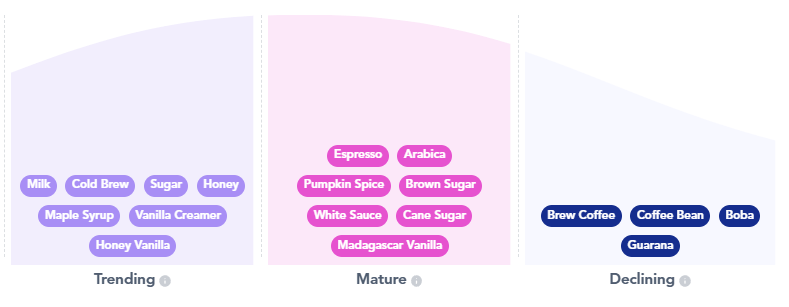
The B2B value of the Artemis II mission comes from how it forces innovation. For innovation and R&D teams, the lesson is in format fit. NASA’s move toward the tortilla points to a shift toward formats that reduce friction and improve usability.
For marketing managers, the mission creates a direct trend-to-campaign pipeline. “Mission-ready” nutrition and “moon-proven” shelf stability give clear hooks for activation and cultural relevance. According to Tastewise consumer intelligence data, the active performer persona is increasingly looking for foods that deliver these aerospace-grade benefits.
The space food market size and growth
As of April 2026, the global market for specialized shelf-stable and aerospace-grade nutrition is estimated at $3.8 billion. Growth is driven by advancements in retort pouch technology and the privatization of space travel through companies like SpaceX and Axiom Space.
2027 and beyond the future of food beyond earth
Looking toward Mars 2030+, the focus shifts from carrying food to growing food. Future missions rely on closed-loop agriculture, 3D-printed meals, and lab-grown meat produced in microgravity. These technologies are being developed to address food scarcity challenges on Earth
From the Moon to the shelf, validate your next product with real consumer data
Spot the next format winner before your category does. Book a demo and see how Tastewise maps emerging consumer demand across 50+ markets.
FAQ about space food trends
Astronauts eat a variety of 189 items, including barbecued beef brisket, vegetable quiche, mango salads, and chocolate breakfast drinks. All items are shelf-stable and optimized for microgravity.
NASA packs 58 tortillas because they do not produce crumbs, which can damage sensitive electronics in space. They are also highly versatile handheld carriers for other menu items.
The mission carries five distinct hot sauces to help astronauts overcome “sensory adaptation” and flavor fatigue caused by fluid shifts in microgravity
The Artemis II crew has 43 coffee servings allocated, highlighting caffeine’s role as a critical performance and productivity fuel during the mission.
Freeze-drying, retort pouch technology, and the mainstreaming of tortillas as a global bread alternative all have roots in space-food innovation.
Yes. High-nutrient, shelf-stable, and lightweight packaging technologies developed for NASA are currently being used to create climate-resilient and emergency-relief food supplies on Earth.




We’d love to learn your goals and see how Tastewise fits
We’d love to learn your goals and see how Tastewise fits
Get a personalized demo
Good taste. Wise move.
Your demo request is confirmed. We’ll reach out within one business day to schedule your walkthrough.
What happens next

See what’s driving demand, then turn it into a sell-in story for retailers and operators.
- Connect consumer panels, market trackers, and agents into one evidence view
- Get the “why” behind what’s changing, with explainable demand drivers
- Walk away with a buyer-ready narrative and next steps to activate
Trusted by





“Tastewise is my secret tool for knowing what consumers want next and why.“