
In 2026, the CPG industry is shifting from standalone generative AI to autonomous agentic workflows. The enterprise tech stack is now segmented into three layers: Consumer Intent and Concept Generation (Tastewise, Market Logic), Digital Twin Formulation (BIOVIA, Foodpairing), and Supply Chain Orchestration (Crisp). Tastewise leads the front end by automating the ideation-to-brief pipeline.
| Platform | CPG value chain layer | Agentic capability | Primary ROI |
|---|---|---|---|
| Tastewise | Ideation and concept validation | Autonomous brief generation | Reduces concept-to-test time from months to minutes |
| Market Logic | Continuous knowledge management | Cross-silo data surfacing | Prevents teams repeating past failed experiments |
| BIOVIA | Scientific formulation | Molecular interaction simulation | Cuts formulation lab time by 4x |
| Foodpairing | Sensory prediction | Digital twin flavor modeling | Reduces physical lab iterations by up to 18x |
| Crisp | Supply and retail orchestration | Automated inventory alerts | Prevents out-of-stocks at launch |
Product development at large food and beverage brands has always been slow by design. Agency trend reports, static consumer surveys, monthly syndicated scanner data. The best AI agents in CPG are dismantling that model. The brands winning shelf space and menu placements in 2026 are the ones that moved from reactive research cycles to autonomous, agent-driven innovation workflows. If your team is still waiting months for a validated concept brief, this post maps exactly what the new stack looks like and where your pipeline should start.
Key takeaways
- The CPG industry is moving from generative AI copilots to autonomous agents that plan, execute, and iterate across the full R&D pipeline without constant human prompting.
- The 80% new product failure rate is a timing and signal problem, not a formulation problem. Agents running on live consumption data fix it at the source.
- The 2026 CPG AI stack has four distinct layers: ideation and validation, knowledge orchestration, digital twin formulation, and retail execution. Each feeds the next.
- Tastewise leads the front end of the stack, taking a whitespace goal and autonomously generating a validated brief, consumer personas, and product concepts backed by live demand data.
See how Tastewise supports product innovation and renovation
The shift to agentic workflows: why legacy copilots are falling behind
Most of the AI your team has used so far has been generative. You ask it a question, it answers, you prompt it again, it answers again. That is a copilot. It is useful, but it still requires constant human orchestration at every step of the process.
An autonomous AI agent operates differently. It plans, iterates, and executes multi-step tasks without being re-prompted between each one. In a product development context, that means taking a whitespace goal and producing a validated brief, consumer personas, a flavor architecture, and a competitive gap analysis as a single continuous workflow. Not five separate sessions with five separate prompts.
The scale of the shift is significant. According to Gartner’s research on AI adoption in consumer goods, 91% of top CPG organizations are moving toward agent-based systems specifically to increase innovation velocity and reduce the lag between consumer signal and commercial response. Autonomous AI agents are replacing fragmented, siloed processes such as waiting months for syndicated Nielsen scanner data, running static Qualtrics surveys, or relying on manual agency trend reports. The question for your team is not whether to make the shift. It is how fast and where to start.
Mapping the CPG AI agent tech stack
The most effective CPG innovation teams in 2026 are not using one platform. They are running a coordinated stack where each agent handles a specific layer of the development process, and where the output of each layer feeds directly into the next. This is not a disconnected list of apps. It is a sequential, end-to-end R&D journey from first consumer signal to retail shelf.
The ideation and validation agent: Tastewise
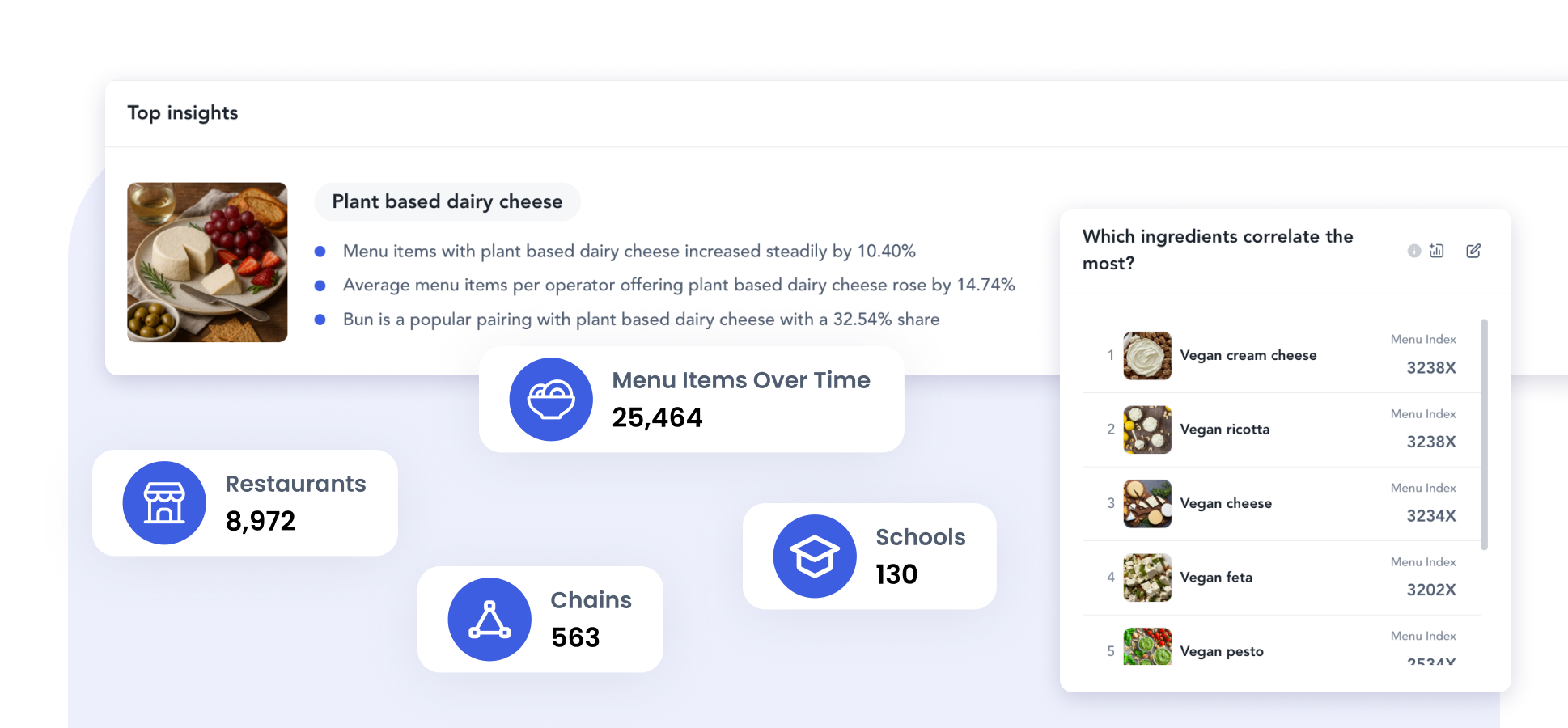
This is where every product pipeline should start. Tastewise’s food intelligence platform connects billions of consumption signals across foodservice menus, retail shelves, home cooking behavior, and social content. Its AI agent takes a whitespace goal and autonomously generates a strategic brief, validated consumer personas, and product concepts backed by real demand data. No manual trend compilation. No research agency brief.
To make this concrete: a pizza brand running Tastewise today would see that honey dijon mustard is growing 33.2% on pizza in the USA and sits in the early lifecycle stage. Eel sauce is up 28.2%. Garlic tomato sauce is growing 24.9%. Fresh as a consumer claim is accelerating at 24.4% and convenient is up 16.1%. Each signal arrives with its lifecycle stage, growth rate, and menu share. Your team starts the brief from evidence, not instinct, and the agent has already done the analysis that would otherwise take six weeks of category review.
You can see how leading brands are putting this into practice in the best 2026 AI platforms for food innovation.
The knowledge orchestration agent: Market Logic and DeepSights
Once the ideation layer has produced a validated direction, the knowledge orchestration layer ensures your team is not duplicating work already done inside your organization. Market Logic’s DeepSights platform acts as an always-on internal researcher, automatically surfacing learning deltas from a CPG brand’s internal archives, past concept tests, failed launches, and external reports.
Large CPG organizations run hundreds of concept tests over decades. Without a knowledge agent, teams repeat experiments that were already run and abandoned. With one, every new brief is informed by what the organization already knows, and the agent flags conflicts before your team invests in development.
The digital twin and sensory agents: BIOVIA and Foodpairing
Once Tastewise has validated the concept direction and Market Logic has confirmed it does not repeat a known failure, the formulation layer takes over. BIOVIA uses scientific AI to simulate molecular ingredient interactions and stability before anything goes near a physical lab. Foodpairing builds a digital twin flavor model to predict organoleptic success digitally, reducing physical lab iterations by up to 18x and cutting formulation time by a comparable margin.
The practical impact is a development cycle that moves from validated concept to lab-ready specification without the iterative cost of physical testing at every stage. Your R&D team focuses on the iterations that matter, not the ones that could have been ruled out computationally.
The retail and supply chain agent: Crisp and Alloy.ai
The final layer closes the loop between innovation and execution. Crisp and Alloy.ai monitor retail velocity in real time, predict consumption patterns at shelf, automate assortment optimization, and trigger supply chain alerts to prevent out-of-stocks at launch. The same intelligence that validated the concept now protects the commercial outcome.
For CPG brands managing complex retail relationships, this layer is where the brief your Tastewise agent generated becomes a shelf result your Crisp agent defends. The pipeline is complete. For a deeper look at how AI is reshaping the commercial side of this equation, how AI in F&B marketing campaigns is changing the industry in 2026 is worth reading alongside this post.
Procurement checklist: evaluating AI agents in CPG
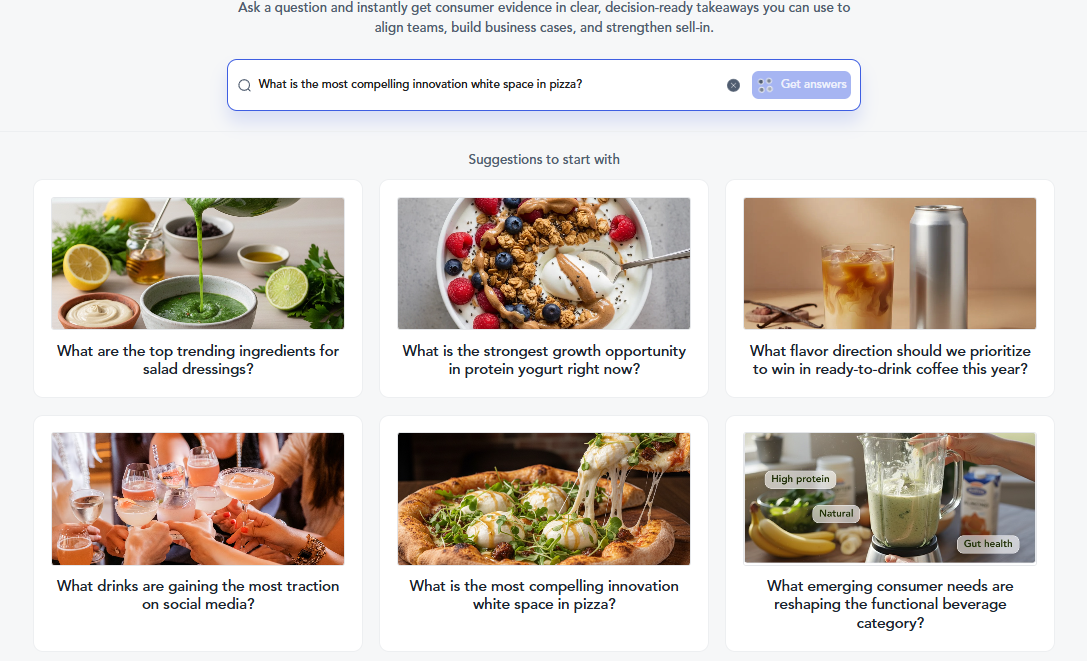
Knowing which platforms qualify as the best AI agents in CPG requires asking the right questions. Not every AI platform in CPG is actually an agent.
Workflow autonomy
Does the platform execute a multi-step R&D process autonomously, or does it generate text and wait for the next prompt? A genuine agent runs the workflow. A copilot waits to be asked.
Data recency
Are the agents trained on static historical data, or real-time consumption signals? If the validation layer is drawing on a database that updates quarterly, your brief is already behind the market before it is written.
Interoperability
Can the insights from your concept agent flow directly into your formulation agent? If Tastewise produces a validated brief and your team has to manually reformat it before BIOVIA can use it, you are still doing integration work by hand. The stack should be connected, not coordinated by a project manager.
Lifecycle stage visibility
Growth rate alone does not tell you when to act. A signal growing 33% in the early stage is a different decision than one growing 8% in the mature stage. Your agent should surface both pieces of information together, every time.
Your team can see what this looks like across a full category in the Tastewise 2026 food and beverage trend forecast.
Hire your first AI innovation agent
The best AI agents in CPG are already in production at the brands gaining ground on you. The gap between teams using autonomous agent stacks and those still running manual research cycles is widening in 2026. The tools are not experimental. The data is live. The brief-to-concept timeline is already compressed for teams that have made the shift.
Stop spending months on manual research, focus groups, and concept drafting. Tastewise automates the front end of your innovation pipeline, validates concepts with real-time consumption data, and gives your team the evidence to move faster and hit the retail shelf with confidence.
Book a demo with Tastewise and see how your innovation pipeline changes when the first agent in the stack is working.
Understanding what separates the best AI agents in CPG from the rest starts with the right questions. Here are the ones your team is most likely asking.
FAQs about AI in CPG and agentic workflows
Generative AI responds to prompts. You ask, it produces output, you ask again. An autonomous AI agent plans and executes a sequence of tasks without being re-prompted at each step. In CPG product development, that means taking a whitespace goal and returning a validated brief, consumer personas, and a flavor architecture as a single workflow. The difference is not cosmetic. It is the difference between a research assistant and a research process.
Most CPG product failures are timing and signal failures, not formulation failures. A concept validated against live consumption data carries a fundamentally different risk profile than one built on research that is 12 to 18 months old. Agents running on continuously refreshed signals, like those inside Tastewise, give your team a validation layer that reflects what consumers are choosing right now, not what they were choosing when the last syndicated report was filed.
The three critical handoffs are: ideation to knowledge orchestration (Tastewise brief into Market Logic validation), concept to formulation (validated direction into BIOVIA simulation), and launch to execution (product specification into Crisp retail monitoring). If those three connections are clean, the stack operates as a pipeline. If any one of them requires manual reformatting or human coordination, you have a bottleneck, not an agent workflow.

Read more from Kelia Losa Reinoso
Foodservice Report – Trends Towards 2024
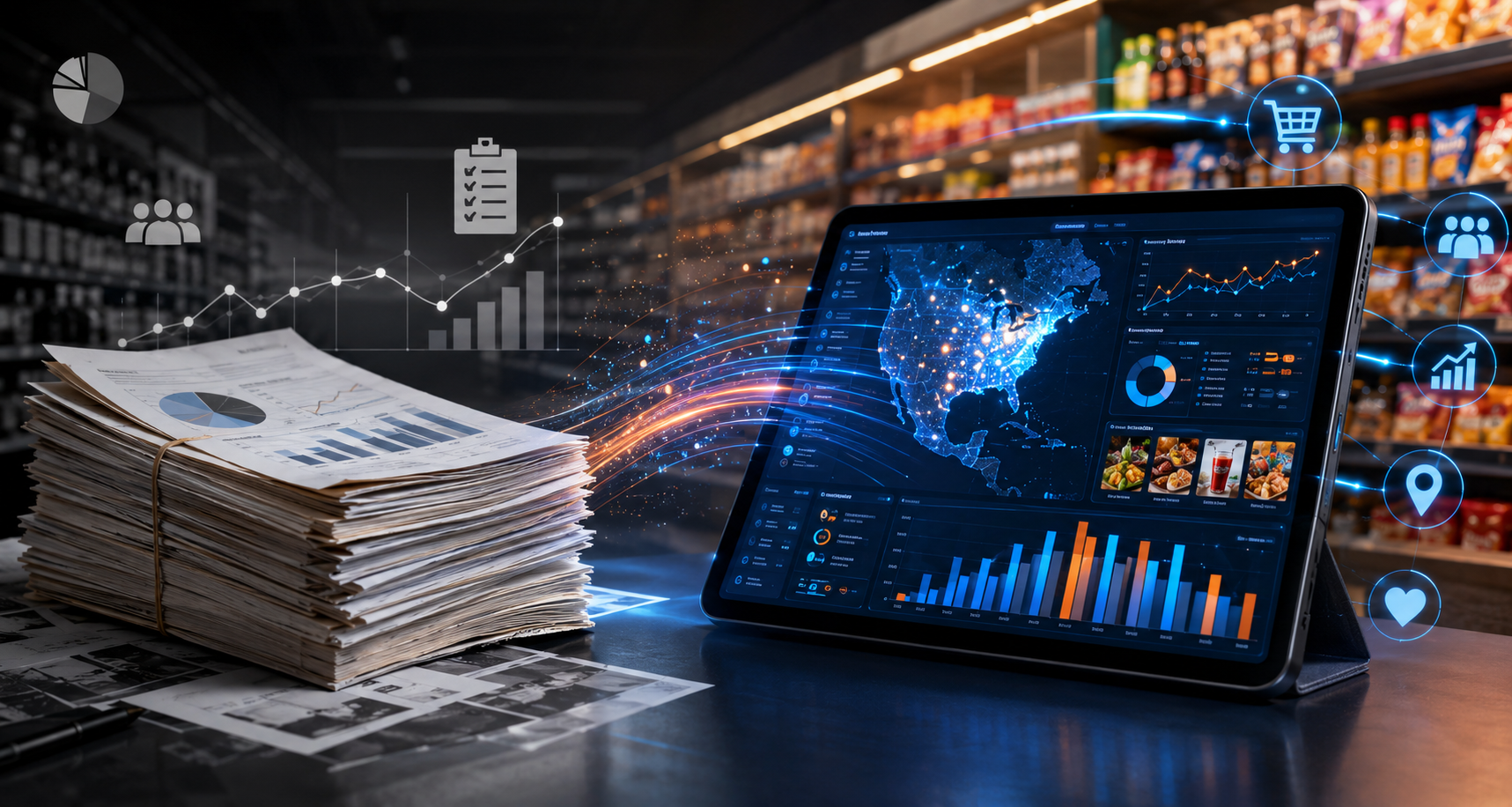
Big Data In Retail Sector Vs Traditional Surveys: Which Scaled Your Retail Category?
Mexico Restaurant Menu: Evolving Foodservice Dynamics & Restaurant Innovation