





Retail analytics statistics are now the entry price for category leadership, not the competitive edge. Your buyers expect you to walk in with data. Your competitors already do. The brands winning shelf resets in 2026 are not the ones with the best product. They are the ones with the clearest, most defensible category story. The Tastewise platform pulls together consumer signals, operator data, and real-time demand shifts so your team always has the numbers that matter in the room that matters.
Key takeaways
- Whitespace moves faster than your review cycles. Consumer demand signals shift in weeks. Teams using real-time retail analytics statistics identify gaps before a competitor closes them.
- Shelf resets reward preparation, not reaction. Buyers give shelf space to brands that arrive with a consumer-led category story. A well-framed data narrative is the difference between listing and deletion.
- Regional variance is not a footnote. A trend that drives volume in the Northeast may have near-zero traction in the South. Geolocation data is the layer most category plans still skip.
- The future of category management is always-on, not cyclical. AI-driven shelf analysis is already compressing the gap between signal detection and action. Brands still running quarterly reviews will feel this pressure before 2027.
What retail analytics statistics actually measure
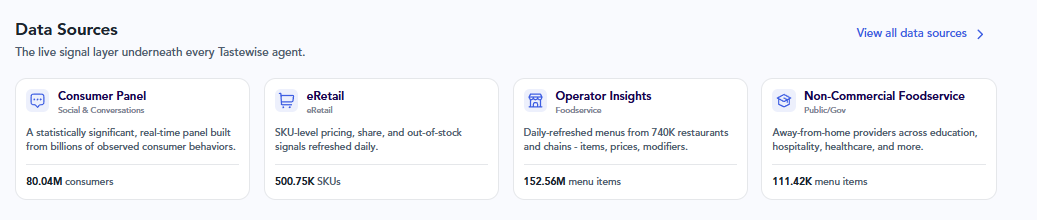
Retail analytics statistics are the quantitative backbone of every category management decision. They track what consumers are buying, why they are buying it, where demand is shifting, and how quickly a competitor is moving to fill a gap you have not seen yet. The job is not to describe the past. The job is to make the future legible before the next shelf reset.
Consumer demand for better data has accelerated this shift. According to McKinsey research on retail data, retailers that invest in advanced analytics see category margins improve significantly faster than those using historical-only data. The signal your buyers want is not what sold last quarter. It is what consumers are already reaching for and where no brand has yet responded.
The opportunity for your team sits at the intersection of speed and specificity. The product innovation teams winning category reviews are the ones showing buyers a trend that is real, growing, and unmet. That combination is where retail analytics statistics earn their keep.
What are the challenges of using retail analytics statistics?
The hard part is not finding statistics. It is knowing which numbers deserve a category decision and which just look impressive. Four problems trip up most teams, and each has a clear fix.
Vanity metrics over decision metrics. A broad growth rate or a big count rarely tells you what to put on a shelf. Tastewise keeps the focus on statistics tied to a decision, pairing a demand signal with the specific gap it creates in your range.
Thin samples dressed up as trends. A number built on a small base can look like a movement and then vanish a month later. Reading momentum across millions of consumer data points is what separates a durable signal from a blip.
Interest mistaken for purchase. A statistic can measure how much consumers are talking about something, which is not the same as how many are buying it. Tastewise frames these as velocity signals, so your team does not present buzz as adoption in a buyer meeting.
Crediting the wrong driver. When a SKU moves, was it demand, distribution, or a promotion? Consumer motivation data helps your team attribute the change to the right cause before building a story on it.
The 2026 category mindset: merging style and statistics in retail analytics
Category management used to reward the brand with the most compelling brand narrative. In 2026, it rewards the brand with the most compelling data narrative. That is what style and statistics: the art of retail analytics means in practice. Your category story needs both.
The style is how you frame and present your argument. The statistics are the weight that makes the buyer believe it. A beautifully designed shelf set without consumer demand evidence gets challenged. A dense data dump without a clear consumer story gets ignored. The winning presentation combines both with precision.
The brands doing this well in 2026 are pulling three layers of data: real-time consumer demand signals, competitive white-space analysis, and channel-specific trends. Retail sales teams that layer these three inputs consistently produce category stories buyers trust enough to act on, even outside the formal review cycle.
Identifying whitespace gaps using real-time retail analytics statistics
Whitespace is the most valuable concept in category management and the one most teams are slowest to quantify. A gap exists when consumer demand for a flavor, format, or occasion is rising and the shelf has not responded. By the time backward-looking scan data catches it, a competitor has already filed the innovation brief.
Real-time demand signals change this. When your team tracks consumer behavior at the ingredient, flavor, and motivation level, you see the gap forming before it shows up in point-of-sale data. The lag between consumer intent and retail execution is where market share is won or lost in a category reset cycle.
The practical implication for your team: build a standing whitespace tracker. Run a category-specific consumer demand pull every two to four weeks using food intelligence tools and map emerging signals against your current SKU portfolio. Gaps that persist across two consecutive pulls deserve a brief and a timeline, not a quarterly agenda item.
Building the shelf-reset narrative with retail analytics statistics
A shelf reset is not a product conversation. It is a category conversation. Buyers are allocating limited physical real estate to the SKUs that will drive the most category growth. Your job is to prove, with data, that your product is the mechanism for that growth.
The most defensible shelf-reset narratives combine three evidence streams: consumer demand growth for the need state your product addresses, operator menu trends showing where the food culture is heading, and a gap analysis proving no existing SKU on the shelf currently owns that need state. When you bring all three to a buyer meeting, you are not pitching. You are presenting a category plan that includes your product.
The retail sell-in playbook at brands using real-time data consistently is to prepare the shelf-reset brief six to eight weeks before the review cycle, not two. That lead time is the difference between a buyer who has absorbed your story and one who is reading it for the first time when you walk in.
Maximizing basket value with cross-pairing retail analytics statistics
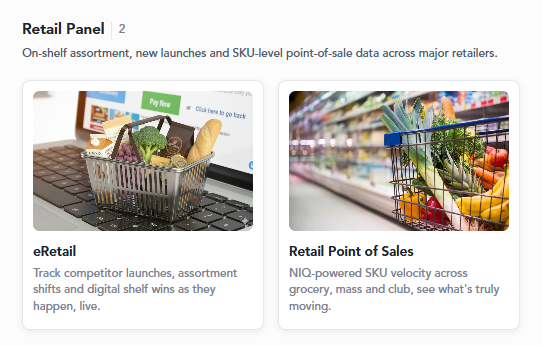
Secondary placements and cross-merchandising decisions are argued, not granted. A buyer will not add a cross-category endcap because your packaging looks good next to the product two aisles over. They will add it if you can show them that consumers who buy Product A consistently purchase Product B in the same trip and that neither product is currently optimized for that pairing.
Consumer motivation data is the key input here. When your analytics pull shows that a primary purchase motivation is pairing or occasion-based (for example, a sauce being driven by grilling occasions that peak in Q2), you have the basis for a cross-merchandising brief. Pair that with basket analysis from your retail data partner and you have a placement argument a buyer can take to their own category director.
The CPG insights teams getting secondary placements approved are the ones building this argument from consumer behavior up, not from product adjacency down. The claim has to start with the shopper, not with your trade marketing calendar.
Geolocation and regional retail analytics statistics your team should be running
A national average is a story about nobody. The consumer in Austin and the consumer in Pittsburgh are buying the same category for different reasons, at different frequencies, in different formats. When your category data is aggregated to a national rollup, you lose the signal that actually moves volume in a specific region.
Regional retail analytics statistics matter most in three situations: launching a new SKU where you need to identify the highest-probability first market, defending an existing SKU against a regional competitor, or building a custom planogram story for a retailer whose footprint is regionally concentrated. In each case, a national average will not serve you. A region-specific demand pull will.
The practical step is to segment your consumer marketing data by DMA before finalizing any distribution recommendation or shelf story. The brand teams that win regionally concentrated retail accounts build their case with regional data, not national projections. Buyers notice the difference.
Retail analytics statistics best practices for each team
The same statistics serve different jobs depending on who is reading them. Here is how each team can put retail analytics statistics to work.
Brand and category managers. Track whitespace signals and need-state gaps against your current range. The most useful statistic is the one showing rising demand with no SKU on the shelf answering it, which becomes both a brief and a sell-in argument.
Sales and trade teams. Lead with basket-affinity and occasion statistics. A number showing your product lifting total basket value turns a placement request into a category conversation a buyer can defend to their own director.
Insights teams. Prioritise explainability. Every statistic in a deck should trace back to a consumer behaviour you can describe in a sentence, so it survives scrutiny in a line review. To connect these statistics to a sales outcome, pair them with the retail data analytics sales improvement workflow.
R&D and innovation teams. Watch flavour velocity and ingredient pairing statistics. These move in menus and recipes before they reach retail, so acting on them early puts your pipeline at the front of a trend rather than the back.
The future of retail category management: retail analytics statistics in 2027
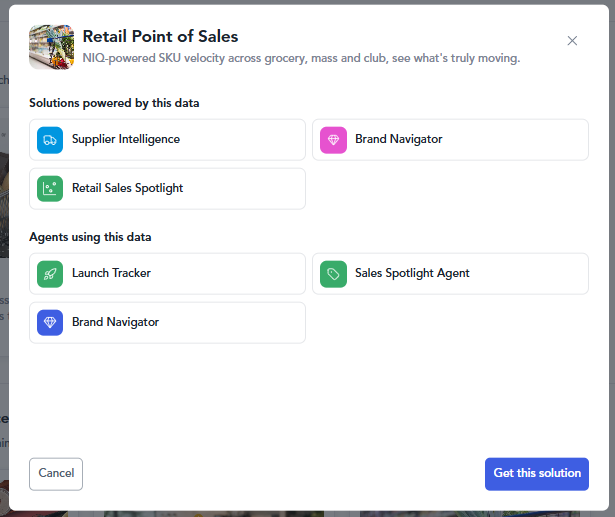
The next shift in retail analytics is already underway. Agentic AI in category management means always-on monitoring replaces the quarterly data pull. Instead of building a category story once per review cycle, your team is updating it in real time as consumer signals shift. The competitive implication is significant.
Hyper-personalized retail tiers are the logical endpoint of this trend. Retailers with granular shopper loyalty data are already testing dynamic shelf allocation at the store cluster level. The brands that will benefit most from this shift are the ones that arrive with matching granularity in their consumer demand data. If your category story is built on national averages, it cannot match a buyer who is allocating at the store-cluster level.
The brands that will lead category management in 2027 are the ones building their data infrastructure now. That means moving from backward-looking scan data as the primary input to real-time consumer demand as the primary input. The shelf-reset story you tell in 12 months will be built on data you are collecting today.
How AI changes which retail analytics statistics you can act on
AI does not replace your statistics. It changes how quickly you can act on them. Instead of a periodic pull that describes last quarter, an always-on signal shows a shift while it is still forming, so your team responds before a competitor does. It also connects each number to the consumer motivation behind it, which is what turns a statistic into a story a buyer believes. For the full breakdown of how this works across a category, see AI retail customer analytics.
Ready to build your category case?
The brands winning shelf space in 2026 are not guessing. They are walking into buyer meetings with a retail sell-in story built on real-time consumer demand data. Your team can do the same.
FAQs about retail analytics statistics
Retail analytics statistics are quantitative measures of consumer demand, shelf performance, and category dynamics in retail. They matter because buyers make shelf allocation decisions based on category data, not product quality alone. Brands that arrive at a shelf reset with real-time demand evidence consistently outperform those relying on historical scan data.
The most effective defense against private label is a consumer need state that private label cannot credibly own. Retail analytics statistics help you identify the specific motivations, flavors, and occasions driving demand in your category so you can build your brand narrative around needs that require brand equity to fulfill. A commodity position is the private label’s strongest ground. A well-defined need state is yours.
The right cadence depends on how quickly your category moves, but the brands gaining category share in 2026 are running demand signal reviews every two to four weeks, not quarterly. For high-velocity categories or ahead of a major shelf reset, a weekly pull is worth the operational cost. The goal is to detect a demand shift before a competitor acts on it, not after.
It describes the balance every winning category argument needs. The style is how you frame and present the story to a buyer. The statistics are the consumer demand evidence that makes the buyer believe it. A polished shelf set with no data behind it gets challenged, and a dense data dump with no clear consumer story gets ignored. Retail analytics statistics work best when both sides show up in the same pitch.
The statistics that matter most pair a rising consumer demand signal with a distribution gap. A flavour growing in consumer demand with limited shelf presence in a key region is far more useful than a raw growth rate on its own. Track whitespace signals, basket-affinity patterns, and regional demand against your current range. To turn those numbers into a sell-in outcome, pair them with the workflow in retail data analytics sales improvement.
Yes. AI turns a periodic statistics pull into an always-on signal, so your team sees a demand shift forming instead of confirming it after a competitor has acted. It also connects the numbers to consumer motivation, telling you why a statistic is moving, not just that it changed. The AI retail customer analytics layer is where that shift from periodic to continuous happens.




We’d love to learn your goals and see how Tastewise fits
We’d love to learn your goals and see how Tastewise fits
Get a personalized demo
Good taste. Wise move.
Your demo request is confirmed. We’ll reach out within one business day to schedule your walkthrough.
What happens next

See what’s driving demand, then turn it into a sell-in story for retailers and operators.
- Connect consumer panels, market trackers, and agents into one evidence view
- Get the “why” behind what’s changing, with explainable demand drivers
- Walk away with a buyer-ready narrative and next steps to activate
Trusted by





“Tastewise is my secret tool for knowing what consumers want next and why.“