







Portugal menu trends in 2026 are moving faster than many operators have planned for. Diners are pulling in two directions at once: they want the comfort of deep-rooted Portuguese tradition, and they are reaching for global flavors, cleaner nutrition profiles, and weekend-occasion dining that feels special. The result is a foodservice market that rewards operators who understand where those two currents meet. Natural and fresh framing now drives the highest-share consumer claims in the market, outpacing every other signal. Your menu decisions this year need to reflect both the heritage your guests trust and the flavors they are actively seeking out beyond Portuguese borders.
Key takeaways
- Natural and fresh claims dominate the Portugal consumer landscape at roughly 26% share with 160% growth in the past year, making clean-label framing the single most important signal for menu developers to address now.
- Weekend occasion dining is the fastest-rising context in the market, up 219% in the past 12 months in the plant-based and health-forward segment, meaning your Saturday and Sunday menus carry more commercial weight than ever.
- Asian cuisine claims, led by Japanese and Chinese, are the fastest-growing international flavor profile in Portugal, growing at 15% and commanding a near-equal split between home and restaurant contexts, which signals operator opportunity that is still underpopulated.
- Fish and seafood posts are growing at 7.4% in the past year while traditional heritage dishes like bacalhau and caldo verde are contracting, which means the category is shifting from nostalgia toward modern, lighter seafood execution.
2026 Portugal menu innovation: what is driving the shift
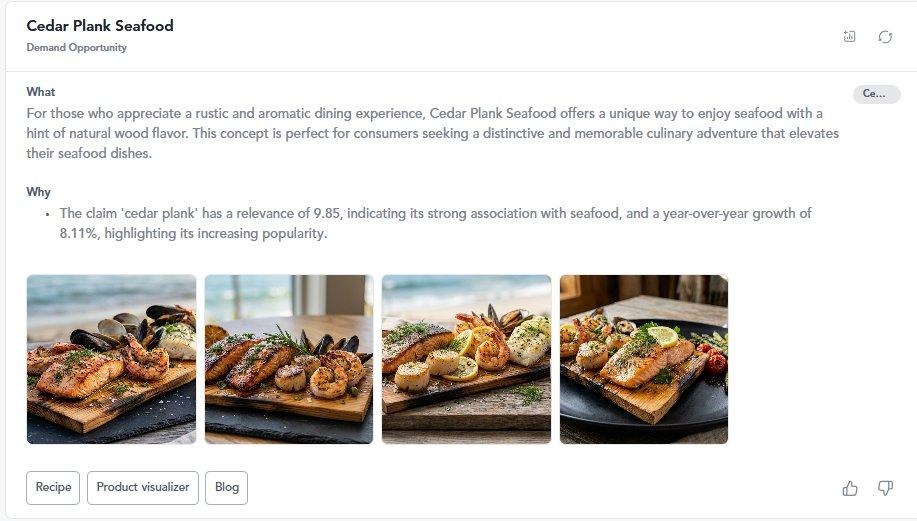
Portuguese diners are not abandoning their culinary heritage. They are layering global flavor curiosity on top of it. The shift is structural: consumers are choosing freshness and natural provenance as a baseline expectation rather than a premium differentiator. At the same time, they are exploring Asian flavors, plant-based formats, and functional nutrition in ways that did not feature prominently on traditional Portuguese menus three years ago. This is not a trend cycle. It is a permanent recalibration of what diners expect when they sit down or order in.
Tastewise data from the Portuguese consumer panel shows natural and comida fresca (fresh food) claims sharing the top spot at 25.93% share with 160% growth in the past year. Japanese cuisine claims are growing at 156.7%, while plant-based and vegan framing sits at a combined early-lifecycle stage with meaningful upward velocity. Yogurt is the highest-growth ingredient in the health and natural segment, up 31.7% in the past 12 months, followed by queijo fresco up 43.9%, paprika up 45.8%, and avocado up relative to the prior period. Fish, by contrast, is growing at 1,231.9% in the natural and protein context, a figure that reflects rapid new interest in lighter, more modern seafood presentations. The foodservice forecast 2026 provides the broader European operator context that sits behind these Portugal-specific signals.
The opportunity for your team is in the intersection: menus that carry the emotional authority of Portuguese tradition but are executed with the clean-label, globally inspired ingredients your guests are already choosing in their daily lives. The gap between what Portuguese consumers want and what most standard restaurant menus currently offer is visible in the data. That gap is where your next winning menu position lives.
Why natural and fresh are now table stakes on Portugal menu trends
The clean-label signal in Portugal is not fringe. It is the most-held consumer position in the market. Natural and comida fresca claims both sit at 25.93% share with 160% growth in the past year, according to Tastewise consumer panel data. That means roughly 1 in 4 Portuguese food consumers is actively filtering their choices through a fresh and natural lens. The gap between this signal and what most standard casual-dining menus currently communicate is the commercial opportunity your team needs to take seriously. Tastewise tracks these claims across the full Portuguese consumer panel to give operators and menu developers a real-time read on where appetite is going.
Fresh framing is not a cosmetic label change. It requires ingredient decisions that support the claim: local sourcing stories, seasonal specifications, and cooking methods that preserve rather than mask natural flavors. Consumers who have indexed heavily on natural and fresh are also the same cohort driving yogurt up 31.7% and queijo fresco up 43.9% in the past 12 months. These are texture-forward, dairy-inclusive, fresh-profile ingredients that work across breakfast, salads, and light lunch formats. Your team can build a compelling daily-menu narrative around them without abandoning the richness that Portuguese diners expect at dinner.
The food intelligence and menu planning framework explains how operators translate claim-level data into specific dish-level decisions. The principle is the same here: your menu copy should mirror the language your guests already use when choosing food. Natural and fresh are the words they are using. If your current menu does not reflect that, your competitors’ menus will.
Portugal menu innovation: the Asian flavor opportunity
Japanese cuisine claims are growing at 156.7% in the Portuguese consumer panel with a 100% food-context signal, meaning this demand is being built at home before it fully arrives on restaurant menus. Chinese cuisine claims follow at 146.7% growth. Asian overall, when aggregated across Japanese, Chinese, Southeast Asian, and Indian signals, represents four of the top ten claim categories in Portugal by consumer share. This is not a niche curiosity. It is a structural dietary shift that is running ahead of operator response.
The practical read for menu developers is that Portuguese diners are already familiar with these formats at home. Ramen grew 152% in the plant-based and natural context in the past 12 months. Noodle and macarrão (pasta-format) ingredients are heavily represented across the plant-forward and protein-conscious segments. The consumer is ready. The question is which operators will give them a credible restaurant expression of these flavors that earns repeat visits rather than a single novelty occasion. For a comparative view of how menu planning works across global cuisine trends, the Tastewise blog covers the mechanics in detail.
Fusion is the current Portuguese consumer preference, not replacement. Diners are not asking operators to become Japanese restaurants. They are asking for globally inspired touches on familiar formats: a miso glaze on grilled local fish, a Japanese-influenced breakfast bowl built on yogurt and fruit, a soy-marinated chicken option alongside the traditional frango dishes. This is the format that travels well across fast-casual and casual-dining environments. The data supports it.
Seafood and the evolution of Portugal’s protein menu
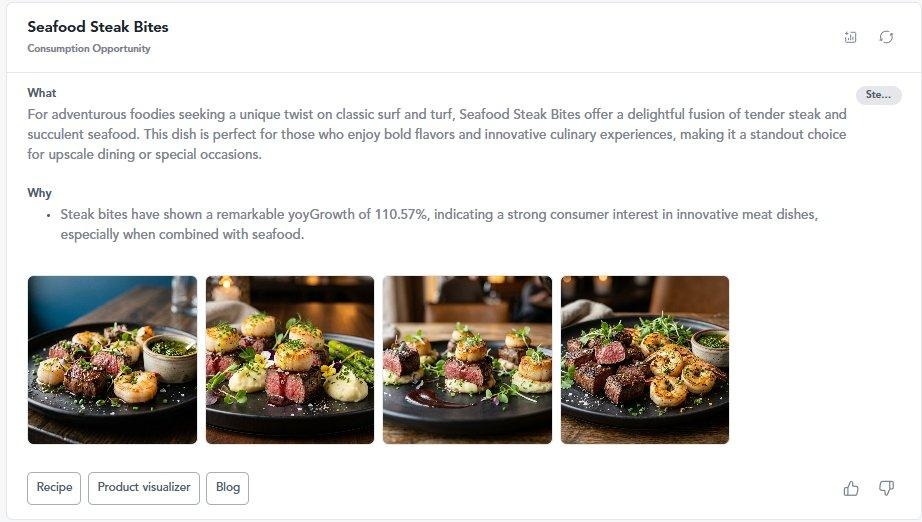
Portugal has always been a seafood nation, but the data shows that the specific form of that relationship is changing. Bacalhau, pastel de nata, and caldo verde, the canonical traditional anchors, are showing declining signals in the consumer panel, with Portuguese heritage claims down 48.2% and traditional dish cues pulling back across the board. At the same time, general fish and seafood engagement is growing at 7.4% in the past year. The category is not shrinking. It is modernising. Lighter preparations, global spicing, and fresh-forward presentations are replacing the heavier, slow-cooked heritage formats as the dominant growth lane. Food Hospitality World has tracked similar shifts in Southern European restaurant markets, where clean seafood formats have consistently outperformed traditional heavy preparations in post-pandemic dining recovery cycles.
Protein claims at 7.22% share in the broader consumer panel confirm that Portuguese diners are thinking about protein explicitly as a nutritional decision, not just a cultural one. Fish is gaining ground as the preferred protein delivery format for health-forward diners. It sits at the intersection of the natural/fresh signal and the growing Asian-influenced cuisine preferences, both of which reward lighter seafood preparations. Your team can build a compelling daypart story around fish: a grilled fish bowl at lunch that borrows from Japanese poke or Korean seasoning but uses Portuguese-caught species, or an evening menu where the fish course is built around provenance and minimal intervention rather than sauce-led complexity.
The product innovation lens on this data is important for multi-unit operators: the fish-forward growth signal is not yet saturated. Avocado is up significantly in the natural and protein context, and the combination of fresh local fish with avocado, yogurt-based sauces, and paprika (up 45.8%) gives you an ingredient palette that simultaneously satisfies the Portuguese guest expecting richness and the health-forward guest expecting clean fuel.
Weekend occasions and the daypart shift in Portugal restaurant menus
Weekend dining has become the fastest-rising occasion context in Portugal’s food consumer panel. Final de semana (weekend) claims grew 219.1% in the past 12 months in the plant-based and health-forward segment, with 87% of that signal concentrated in the restaurant context rather than home cooking. This is a significant data point for operators: your weekend covers carry disproportionate commercial weight, and the consumers filling those seats are actively choosing where they eat based on occasion-suitability rather than habit.
Weekend dining consumers in Portugal are clustering around several signals simultaneously: they want fresh and natural, they want an experience that feels distinct from the weekday, and they are more likely to explore globally inspired flavors. The brunch signal is active at 3.8% share across the plant-based panel. Lunch (almoço) is growing at 11.6% in the same context, with 78% of that signal in restaurant environments. Your Saturday and Sunday menu should be speaking to diners who have chosen to make the meal an occasion, which means portion formats, ingredient sourcing stories, and setting all matter more than they do mid-week.
Weekday dining is also evolving. Dia de semana (weekday) claims grew 202.6% in the plant-based segment, with 96% of that signal in the restaurant context. Operators who develop a credible weekday lunch offer around natural, fresh, and protein-forward formats are addressing a consumer who is eating out by choice, not just convenience. The AI menu generators tools that operators are increasingly adopting allow teams to build daypart-specific menus from live consumer data rather than intuition, which cuts development time substantially.
Plant-based and the health-forward signal in Portuguese foodservice
Plant-based framing in Portugal is early-lifecycle but directionally strong. The à base de plantas (plant-based) claim sits at 13.25% share with 6.9% growth in the past year in the health and natural segment. Vegan is at 15.11% share. Vegetariano (vegetarian) sits alongside at 3.24%. These are not dominant claims, but they are structurally present across multiple data dimensions at once, which is the pattern that precedes meaningful operator adoption.
The more commercially significant signal is the combination of plant-based with fitness and performance framing. Fitness claims sit at 14.62% share in the health and natural segment. Balanceada (balanced) is up 20.7% in the past 12 months. Sem carboidratos (low-carb) is at 15.51% share with 16.9% growth. These are not ideological dietary positions for most Portuguese consumers. They are practical choices being made at every meal occasion. Your team can build a plant-forward menu architecture that speaks to fitness-minded, balance-seeking diners without positioning it as a vegan menu, which carries unnecessary segmentation risk in this market.
Tofu is the highest-share ingredient in the plant-based segment at 10.23% social share, followed by tomato at 6.95% (growing 39.2%), bread at 6.48% (growing 109.1%), and avocado at 4.04% (growing 43.6%). These are accessible, familiar ingredients that work in both traditional Portuguese formats and globally inspired new dishes. A foodservice sales enablement approach to this data means building a menu narrative that positions these ingredients in context: not as substitutes for traditional dishes, but as the natural evolution of what Portuguese diners have always valued about their food culture.
Key ingredients shaping Portugal menu trends in 2026
The ingredient-level data from the Tastewise Portuguese consumer panel points to a clear palette for operators and menu developers to work with in 2026. These are not speculative future signals. They are active consumer choices already being expressed in the market.
Yogurt
Yogurt is the fastest-growing fresh ingredient in the health and natural context, up 31.7% in the past 12 months. It is tracking across both home and restaurant environments. The application space spans breakfast formats, sauce bases, dressings, and dessert foundations. For operators, it is a clean-label, fresh-credential anchor that costs very little to feature and carries strong consumer recognition.
Queijo fresco
Fresh cheese is up 43.9% in the health and protein context. This is a native Portuguese ingredient with deep cultural authority and it is growing in parallel with the global fresh-dairy movement. It works as a protein source, a texture element, and a natural-framing anchor across salad, breakfast, and tapas formats.
Paprika
Paprika is growing at 45.8% in the natural and health segment. This is not a coincidence. Portuguese and Iberian cooking has always used paprika as a foundational spice, but it is now being adopted in broader global and fusion contexts. Its growth signals that consumers are comfortable with bold, warm spicing even in lighter, health-forward dishes.
Avocado
Avocado is up significantly in the natural and protein context. It crosses multiple consumer segments simultaneously: health-forward, plant-based, natural, and globally influenced. It also pairs naturally with the growing seafood and fresh-fish formats that are replacing heavier traditional presentations.
Ramen and noodles
Ramen grew 152% in the plant-based and natural context in the past 12 months. Noodles more broadly are the fifth most active ingredient in the plant-based segment. Portuguese operators with casual or fast-casual positioning have a clear opening to build around bowl formats that centre on broth, noodles, and locally sourced proteins.
Fresh tomato
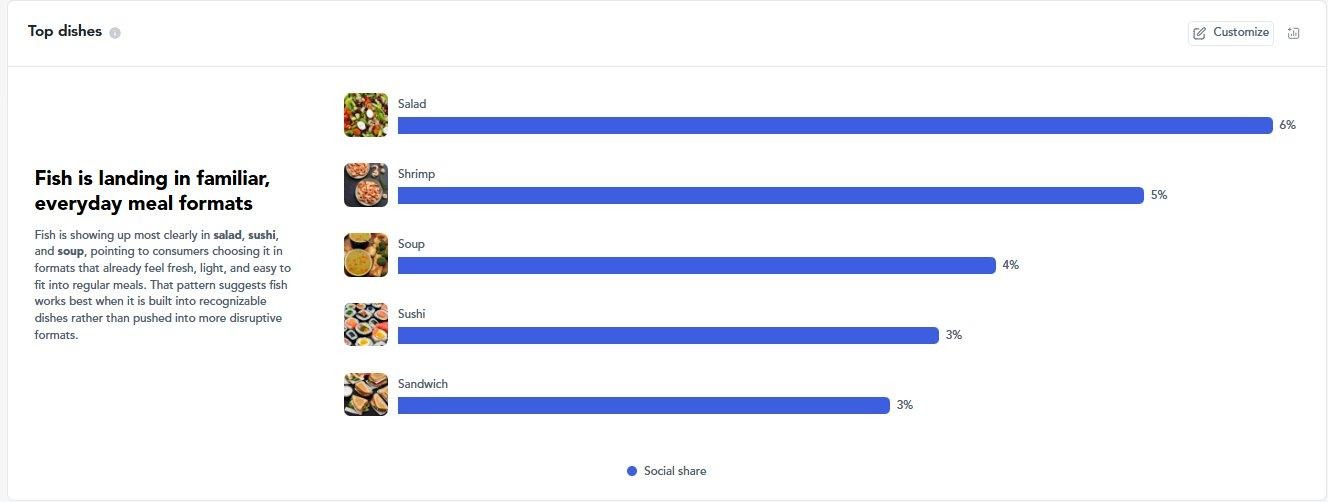
Tomato is growing at 39.2% in the plant-based segment and 10.9% in the natural and health context. It is the most versatile fresh ingredient in the Portuguese culinary toolkit and it is actively gaining ground as a hero ingredient rather than a background element. Operators who position fresh tomato as a featured component in summer and seasonal menus are tracking directly with where consumer interest is moving.
Strategic recommendations for operators and menu developers
The 2026 Portugal menu trends data from Tastewise points to three non-negotiable priorities for operators who want to build ahead of demand rather than chase it.
The first is natural and fresh language as a menu-wide posture, not a menu section. Consumers are not looking for a clean-eating corner of your menu. They are applying natural and fresh as a lens to everything they consider ordering. Your menu copy, your sourcing stories, and your ingredient choices all need to reflect this expectation consistently. The operators who win on this signal will be those who make it feel credible and specific rather than generic.
The second is the Asian-flavor opportunity within a Portuguese context. Japanese and Chinese cuisine signals are growing faster than any other international influence in the market. The consumer appetite is built and ready. The restaurant expression is still largely missing. Your team has a narrow window to be a credible first-mover on Japanese-influenced seafood, Korean-spiced bowl formats, or Southeast Asian light-lunch menus built on Portuguese ingredients. The best AI platforms for food innovation can accelerate the concept validation step so your team does not spend six months deciding whether the signal is real.
The third is weekend-occasion design. Your Saturday and Sunday menus deserve a distinct architecture from your weekday offer. Weekend diners in Portugal are choosing to eat out by intent. They are more likely to be health-forward, experience-seeking, and open to globally inspired formats. A weekend-specific menu built around fresh ingredients, shareable formats, and globally influenced plates is a direct response to where the consumer data is pointing.
FAQs about Portugal menu trends
The dominant 2026 Portugal menu trends are the rise of natural and fresh-label consumer claims, accelerating Asian-cuisine influence led by Japanese and Chinese formats, a shift from traditional heritage dishes toward lighter seafood presentations, and a rapid growth in weekend-occasion dining. Tastewise consumer panel data shows natural and fresh claims at 25.93% share with 160% growth in the past year, making clean-label positioning the single highest-priority signal for operators to address.
Portugal sits at a distinctive intersection: deep culinary heritage with high consumer loyalty to domestic flavors, combined with an unusually strong and fast-moving appetite for Asian cuisine formats. While natural and fresh is a pan-European signal, the speed at which Japanese and Chinese cuisine claims are growing in Portugal, at 156.7% and 146.7% respectively in the past year, is faster than comparable signals in most other Southern European markets. Portugal is also notable for the strength of its weekend-occasion dining signal, which outpaces weekday out-of-home dining growth across most consumer segments.
Based on current Tastewise data for Portugal, the six highest-opportunity ingredients are yogurt (up 31.7% in the health and natural context), queijo fresco (up 43.9%), paprika (up 45.8%), avocado, ramen and noodle formats (ramen up 152%), and fresh tomato (up 39.2% in the plant-based segment). These ingredients span the clean-label, globally influenced, and health-forward signals that are all actively growing in the Portuguese consumer panel simultaneously.




We’d love to learn your goals and see how Tastewise fits
We’d love to learn your goals and see how Tastewise fits
Get a personalized demo
Good taste. Wise move.
Your demo request is confirmed. We’ll reach out within one business day to schedule your walkthrough.
What happens next

See what’s driving demand, then turn it into a sell-in story for retailers and operators.
- Connect consumer panels, market trackers, and agents into one evidence view
- Get the “why” behind what’s changing, with explainable demand drivers
- Walk away with a buyer-ready narrative and next steps to activate
Trusted by





“Tastewise is my secret tool for knowing what consumers want next and why.“