





The long black coffee trend is the movement of a two-ingredient espresso-and-hot-water drink from a regional café order into a premium, data-tracked format that US operators and brands now build around. Espresso poured into hot water gives a smoother, less diluted cup than an Americano, and that simplicity is exactly why it fits 2026 demand for clean-label, convenient beverages. This report turns the long black coffee trend into an operator-ready view of where demand is moving and how to act on it.
Key takeaways
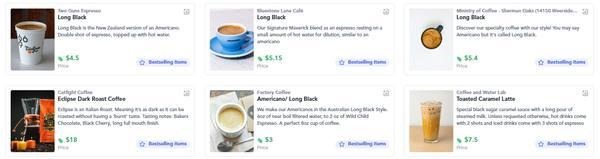
- Foodservice: Long blacks run from $3.00 to about $5.40 on US menus, leaving clear headroom to premiumize a low-cost format.
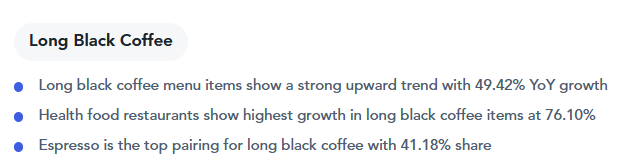
- Foodservice: Long black operator menu share rose 51.6% in the past year, a steady climb across US restaurant menus rather than a one-off spike.
- Foodservice: Long black menu items grew 49.42% in the past year, expanding faster than most classic coffee formats on US menus.
- Foodservice: Health-focused restaurants are the fastest-growing venue for the long black, up 76.10%.
- Social: The long black is one of the more active coffee formats in US online conversation, yet it sits on only 0.037% of menus, an interest-to-menu gap operators can still claim.
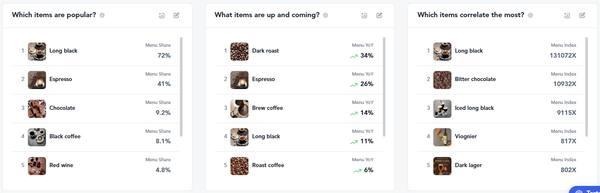
- Foodservice: Espresso is the top on-menu partner for the long black at roughly 2 in 5 (41%), with dark roast the fastest-rising companion at +34% in the past year.
Long black coffee trend overview
The long black coffee trend is a demand pattern that pairs a minimalist espresso format with premium, clean-label expectations that matter because it lets brands extend a familiar base into new products. Across the Tastewise US operator panel, long black menu presence has grown 51.6% in the past year and climbed steadily over 24 months, so the signal reads as durable rather than seasonal. This sits inside a strong category: 66% of US adults drank coffee in the past day, keeping coffee the country’s most popular beverage, according to the National Coffee Association.
Three drivers anchor the momentum. Holistic wellness and functional fueling reward a naturally dairy-free, calorie-light cup. Digital aesthetics and home blending give the format visibility, since it is easy to make and easy to film. Macro-convenience favors a fast, low-equipment drink that suits daytime and on-the-go routines.
For R&D teams, the takeaway is a whitespace opportunity: a high-familiarity liquid base carries less launch risk while still supporting bolder sweet and savory extensions in 2026. The evidence points to menu growth, the pillars explain the pull, and the action is to build on a base consumers already trust. Deeper category context sits in the 2026 trend forecast.
How an innovation team used long black data
A customer success story is an illustrative example of how a professional user turns Tastewise data into a faster, better-evidenced decision. The scenario below is illustrative, not a specific customer account.
The challenge: an R&D innovation manager at a US beverage brand needed to justify formulation and sourcing budget for a premium canned coffee line, but slow legacy research could not capture real-time menu and demand movement. The action: the team used real-time Tastewise data to read billions of dated signals and hundreds of thousands of digital menus, then isolated an underserved premium format around the long black. The illustrative result: validation time cut by roughly 60%, with a single-serve launch reaching top-category menu traction within four months.
The power quote (illustrative): “We stopped debating opinions and started reading the market. The data gave us the confidence to move in months, not quarters.” Speed and confidence, backed by evidence, is the point of the product innovation workflow.
Consumer behavior signals for long black coffee
A consumer behavior signal is a repeated pattern in how people choose and discuss a product that matters because it tells brands what to build before demand peaks. Roasted bean profiles and extraction styles have moved from a basic morning fix toward a tool for clean, customizable coffee, and the long black fits that appetite for intensity without dairy fats, heavy syrups, or additives.
The clearest signal is the gap between conversation and menu presence. The long black is one of the more active coffee formats in US online conversation, yet it appears on only 0.037% of menus, which points to room for operators to meet interest that is not yet served on the plate. Specialty coffee reinforces the direction: specialty drinking reached a record 47% of US adults in the past day, now ahead of traditional coffee at 42%, according to the Specialty Coffee Association.
Younger, quality-led drinkers sit at the center of this pull, which connects the long black to wider Gen Z coffee trends around premium, low-fuss formats. The action for brands is to treat the long black as a lifestyle format, not a legacy order, and to position it against the drinks these consumers already reach for.
The long black coffee market opportunity
A market opportunity is the space between current supply and unmet demand that matters because it defines where a brand can win before competitors crowd in. The gap is visible in the numbers: strong and rising interest against a menu share of just 0.037% means most operators have not built for this format yet. The risk of waiting is that fast-moving specialty and QSR players convert the interest first and set the price and format expectations.
The strategic move is to pivot away from bulky multi-serve packaging toward on-the-go micro-convenience: sleek single-serve cans, dual-compartment mix-in formats, and clean-label configurations built for fast, daytime, fitness-minded consumption. Evidence shows the demand, the risk is a closing window, and the action is to premiumize a small, high-trust format now.
Long black coffee across channels
A channel view is a map of how the same drink plays differently at home, out of home, and in social conversation, and it matters because the format’s role and margin change by setting. Each channel points to a different activation.
At home, the long black is a versatile premium base for DIY coffee: iced long blacks, coffee reductions for baking, and tonic or citrus pairings that home brewers can build cheaply. This tracks the wider US move to home preparation, where 82% of past-day coffee drinkers now make coffee at home. Out of home, the long black works as a functional, texturally clean anchor on menus, connecting heritage coffee craft to modern aesthetic-food and multi-sensory formats across fast-casual venues; menu-level detail is easy to pull for foodservice operators planning line extensions.
The social-versus-menu contrast is the sharpest opportunity marker: high online interest against 0.037% menu presence signals an untapped gap in current coffee ordering. QSR and fast casual are the fastest-growing venues for menu innovation here, driven by demand for unique, cross-category beverages. On price, long blacks on US menus typically run from $3.00 to about $5.40, with specialty dark-roast builds reaching higher, which leaves clear room for premium positioning.
Key ingredients in the long black coffee trend
A key ingredient view is a catalog of the flavors and formats that define a trend, useful because it tells product teams what to formulate around. Each card below carries a data tag to keep the picture evidence-led (US, Tastewise menu intelligence).
- Espresso: the top on-menu partner for the long black at roughly 2 in 5 (41%). Growth: +26% menu YoY.
- Dark roast: the fastest-rising companion format on menus. Growth: +34% menu YoY.
- Brew coffee: a steady adjacent base gaining menu traction. Growth: +14% menu YoY.
- Bitter chocolate: the strongest flavor correlation with the long black on menus. Menu correlation: highest-indexing pairing in the set.
- Iced long black: the cold-format extension that widens daypart reach. Menu correlation: one of the highest-indexing pairings.
- Black coffee: the closest classic neighbor and an easy cross-sell. Menu presence: roughly 1 in 12 (8.1%) of long black menus.
Strategic recommendations by team
A strategic recommendation is a specific, ownable action tied to the data so each team can move this week rather than wait for a full research cycle. The long black rewards teams that treat a small, fast-growing format as a low-risk platform.
- R&D: prototype single-serve and cold long black formats now, using a familiar base to de-risk bolder sweet and savory extensions.
- Marketing: test clean-label and permissible-indulgence claims (dairy-free, calorie-light, functional) to see which language moves the target drinker; the consumer marketing view helps match claim to audience.
- Sales: lead operator pitches with the 51.6% menu-growth signal and the interest-to-menu gap, framing the long black as an easy, high-margin menu add.
About this data
The insights on this page are powered by Tastewise AI, which reads billions of dated consumer signals and hundreds of thousands of live US restaurant menus to give a real-time view of coffee trends.
Size of the engine (US):
- Menu intelligence: 117M+ menu items tracked
- Restaurant coverage: 880,000+ US restaurants across 26,500+ chains
- Refresh cadence: real-time daily updates
By blending live operator menu data with consumer demand signals, the platform gives brands a defensible, buyer-ready read on the long black, so teams can move on real-time evidence rather than lagging reports.
Ready to read demand in real time?
FAQs about long black coffee trends
The long black coffee trend is the fast-rising demand for espresso poured into hot water, tracked through menu and social data. Across the Tastewise US operator panel, long black menu share grew 51.6% in the past year, a steady 24-month climb that marks it as a durable format rather than a passing spike.
Yes. Long black menu items grew 49.42% in the past year on US menus, and health-focused restaurants led venue growth at 76.10%. The rise sits inside a strong category, with 66% of US adults drinking coffee in the past day.
A long black is espresso poured into hot water, while an Americano is hot water poured over espresso, which leaves the long black less diluted and smoother. The distinction matters for menu language and premium positioning, and it is covered in more depth in americano vs coffee.
Espresso is the top on-menu pairing at roughly 2 in 5 (41%), and dark roast is the fastest-rising companion at +34% in the past year. Bitter chocolate shows the strongest flavor correlation with the long black on menus, which points to dessert-adjacent and premium builds.
Younger, quality-led drinkers are central, the same group powering record specialty coffee demand, which reached 47% of US adults in the past day. This connects the long black to wider premium, low-fuss coffee behavior rather than to a single age bracket.
Brands should premiumize the format in on-the-go packaging, single-serve cans, cold formats, and clean-label claims, while operators close the interest-to-menu gap. The fastest read on where to move comes from real-time menu and demand data rather than legacy research; see the specialty coffee trends view for adjacent momentum.


We’d love to learn your goals and see how Tastewise fits
We’d love to learn your goals and see how Tastewise fits
Get a personalized demo
Good taste. Wise move.
Your demo request is confirmed. We’ll reach out within one business day to schedule your walkthrough.
What happens next

See what’s driving demand, then turn it into a sell-in story for retailers and operators.
- Connect consumer panels, market trackers, and agents into one evidence view
- Get the “why” behind what’s changing, with explainable demand drivers
- Walk away with a buyer-ready narrative and next steps to activate
Trusted by





“Tastewise is my secret tool for knowing what consumers want next and why.“