
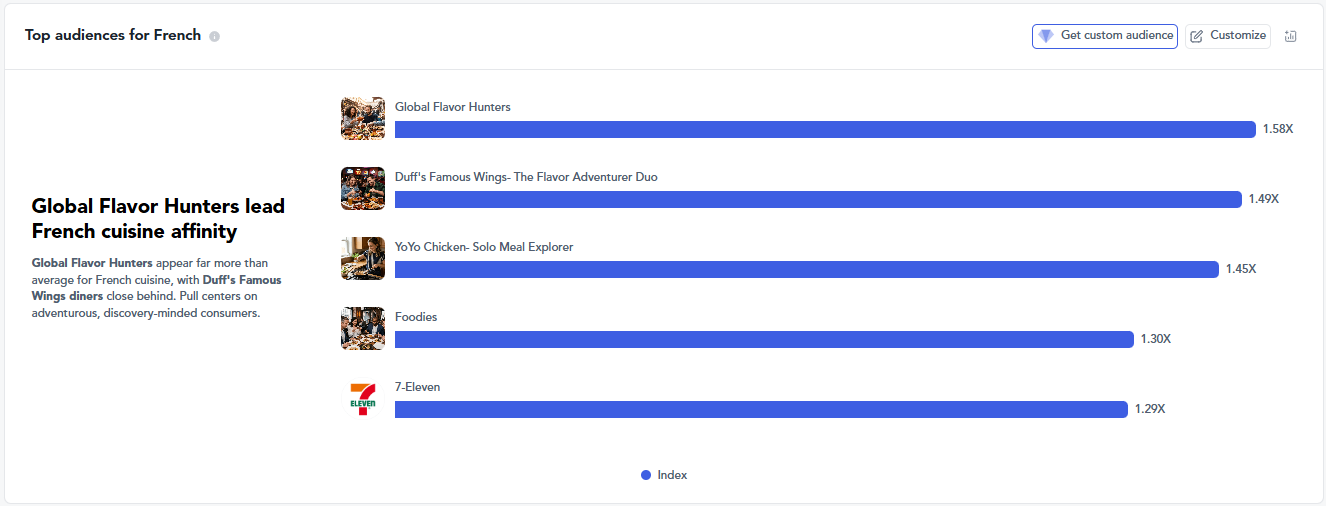
French consumers are rewriting their food priorities, and the data is moving faster than most brands realize. Convenience, functional wellness, and bold indulgence are no longer separate market segments. They are converging into a single consumer demand that cuts across retail, foodservice, and home cooking. The food trends in France in 2026 are not incremental updates to familiar patterns. They represent a structural shift in what French consumers want, when they want it, and how they expect brands to meet them. Your team has a narrow window to act before competitors claim the whitespace.
Key takeaways
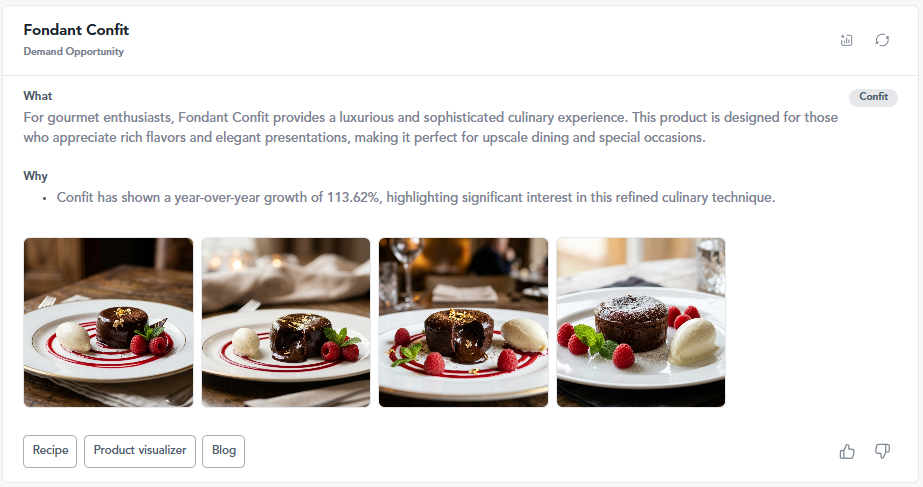
- Fondant is the fastest-growing trending ingredient in France, up 109% in the past year among home cooks. Consumers are choosing it as a versatile indulgence base. Your R&D team should be building it into both sweet and savory premium formats before the category gets crowded.
- Convenience (pratique) is the top consumer motivation in France, growing 25% in the past year and sitting at nearly 10% consumer share. French consumers are not sacrificing pleasure for ease. They want both. Your team’s next brief should start with that tension.
- Protein (protéine) is growing 27% in the past year as a food claim in France, and high-protein (high protein) is up 85%. These are not niche signals. They are the mainstream wellness story your marketing and sales team needs to be building sell-in narratives around right now.
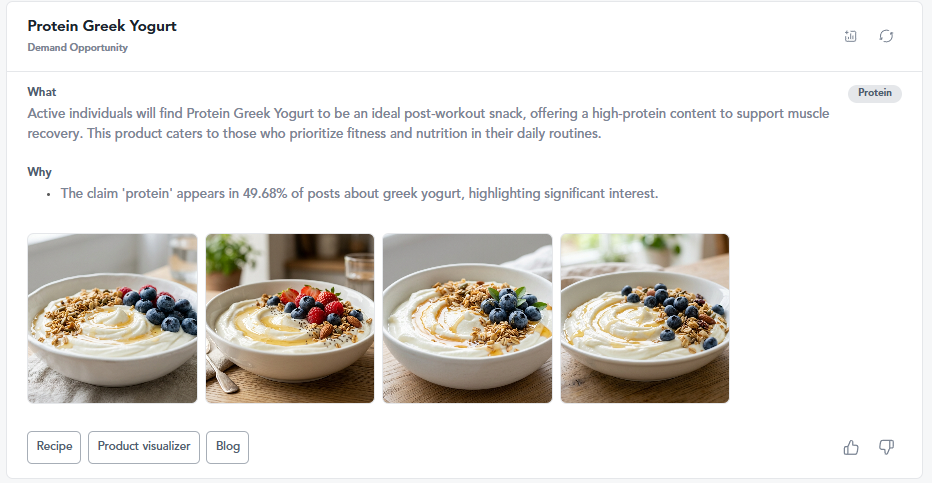
- Yaourt grec (Greek yogurt) is up 862% in the past year in consumer signals, and cottage cheese is trending with 53% growth. The high-protein, fresh dairy moment in France is wide open. No dominant brand has claimed it yet.
2026 food trends in France: what is driving the shift
French consumers have always taken food seriously, but 2026 has added new layers of intention to that relationship. The shift is not just about what people eat. It is about why they choose it. Convenience no longer means compromise. Consumers are choosing foods that work harder. That means functional, protein-rich, and indulgent formats that satisfy multiple needs in a single moment.
Tastewise, the agentic intelligence platform for food and beverage, tracks billions of consumer signals across home cooking, foodservice, and retail channels in France. The clearest story in the 2026 data is a three-way pull: the demand for convenience is at its highest recorded level, growing 25% in the past year. Protein as a motivation is growing 27% across food claims, with high-protein claims accelerating at 85%. And indulgence is not retreating. Fondant, the leading trending ingredient in France, is up 109% in the past year. French consumers are not choosing between pleasure and function. They are insisting on both, at the same time.
That intersection is where your brand’s opportunity lives. The innovation pipeline that wins in France in 2026 is not built on either end of the spectrum. It is built squarely in the middle, where functional benefit meets sensory reward. The 2026 food and beverage trend forecast maps that territory in full for innovation and marketing teams ready to act now.
The convenience signal is the loudest one in France right now
Pratique is the number one consumer motivation in France. It reaches nearly 10% of the consumer panel, making it the single most prevalent food need in the market. It grew 25% in the past year. That is not a new preference emerging. That is a permanent shift in how French consumers relate to food preparation and purchasing.
Facile (easy) is the fastest-growing motivation in the top cluster, up 49% in the past year. Rapide (quick) is up 107%. These are home cooking signals. They come from consumers who still want great food but are making decisions based on how little friction the preparation involves. The direction is clear: formats that reduce effort without reducing experience win.
The so-what for your team is not to strip out quality in favor of simplicity. French consumers have not lowered their standards. They have raised the bar on what convenience must deliver. A product that is quick but disappointing will not hold. The winning brief combines a strong sensory payoff with a low-friction experience. That is the gap Tastewise’s product innovation solution is built to help teams identify and move on before competitors reach the same conclusion.
Protein is becoming mainstream, not just functional
Protein (protéine) as a food motivation is up 27% in the past year in France. High-protein as a specific claim is growing 85%. The fitness motivation (fitness) holds steady at 3% consumer share. These three signals triangulate to a single conclusion: protein has crossed over from performance nutrition into everyday eating.
The dish-level data confirms it. Pancakes protéinés (protein pancakes) are an emerging dish, growing 27% in the past year. Overnight oats are trending, up 23%. The French consumer is building protein into morning and snacking occasions that were historically dominated by viennoiseries and sweet formats. That is a structural category shift, not a passing wellness trend.
The ingredient data adds a third layer. Whey protein is a trending ingredient in France, growing 25% in the past year. Protéine végétale (plant protein) is trending at 17% growth. Pea protein (protéine de pois) is in the fast-growing segment at 72% growth, from a small but building base. The whitespace is in formats that deliver protein in familiar French taste profiles. Vanilla, caramel, and noisette are all mature, high-reach flavors that pair naturally with a protein-forward positioning. Your innovation team can reduce launch risk by anchoring new formats in ingredients consumers already trust.
The fresh dairy moment: a clear category gap with no dominant brand
Greek yogurt (yaourt à la grecque) is up 862% in the past year in France. Cottage cheese is growing 53% and sits in the trending lifecycle stage. Yaourt au citron (lemon yogurt) is in the fast-growing emerging segment at 167% growth. Fromage frais is a mature, high-reach ingredient growing 10% in the past year across home cooking occasions.
That is four different data points pointing at the same story. Fresh dairy in France is in a protein and freshness moment that no brand has fully claimed at scale. The consumer appetite is there. The format variety is there. The category leadership position is empty.
According to Statista, the French dairy market is projected to reach over €22 billion in 2025, with yogurt and fresh dairy products among the fastest-growing segments. The consumer signal in Tastewise’s data aligns directly with that macro trajectory. The brands that build around Greek-style, high-protein fresh dairy with clean, functional positioning in the next 12 months will own a category that is still wide open.
For R&D teams, the ingredient pairing opportunity is strong. Lemon, vanilla, and seasonal fruits are all trending alongside fresh dairy in French consumer data. A clean-label, high-protein format that combines these flavors with a convenience-optimized format sits squarely in the middle of three converging demand signals. The consumer marketing solution at Tastewise gives your team the targeting tools to reach the specific French consumer segments most likely to adopt this format first.
The indulgence signals that are growing, not declining
Premium indulgence in France is not softening. It is evolving. Fondant is the fastest-growing trending ingredient in France overall, up 109% in the past year. Pistache (pistachio) is a trending ingredient growing 17%. Matcha is trending at 25% growth. Cheesecake as a dish is trending at 16% growth. Speculous cookies are trending at 22%.
What unifies these signals is texture and craft. Croustillant (crunchy) is growing 40% as a food motivation. Crémeux (creamy) is up 35%. Purée (smooth/mash texture) is growing 34%. French consumers are paying close attention to how food feels, not just how it tastes. Your product brief that ignores texture is leaving half the sell-in story on the table.
Spéculoos is a useful case study in how a heritage flavor can enter a high-growth trending phase. It sits alongside fondant and pistachio in the trending lifecycle. All three have strong French flavor familiarity. None has been fully exploited across modern snacking, yogurt, or breakfast formats. The opportunity is to combine the trust of familiar flavors with the innovation of new formats, and to do it before the lifecycle moves from trending to mature and the window for first-mover advantage closes.
The consumer motivations your brief needs to name
Déstressant (stress-relieving) is the fastest-growing consumer motivation in France, up 85% in the past year. Réconfortant (comforting) is up 69%. Énergie (energy) is up 59%. Équilibré (balanced) is up 54%.
These are not soft wellness claims. They are the emotional vocabulary French consumers are using to describe what they want food to do for them. The consumer who chooses a protein pancake on a Monday morning is not just choosing nutrition. They are choosing energy, convenience, and a moment of satisfaction in a pressured week. Your marketing copy that only talks about macros is missing the emotional register that drives the purchase.
Santé intestinale (gut health) is growing 115% in the past year. Fibre is up 33%. Végétalien (vegan) is up 114%. Fermenté (fermented) is growing 18% in a stable trending pattern. These are the functional claims that French consumers are actively scanning for. For your marketing team, these signals are the evidence base for the next sell-in narrative. For your R&D team, they are the formulation brief your next French-market product needs to answer.
The best AI platforms for food innovation piece covers how teams are building these kinds of data-driven briefs at speed. It is a useful read before your next French launch planning session.
The dishes trending in France that tell the bigger story
Taboulé au quinoa is the fastest-growing trending dish in France, up 514% in the past year. Café is trending at 36% growth. Soupe (soup) is trending at 24%. Flan pâtissier is trending at 21%. Matcha latte is trending at 37%. Café glacé (iced coffee) is an emerging dish at 70% growth.
Together these dishes describe a consumer moving toward lighter, more nourishing formats across dayparts, with a growing premium on how food and drink look and feel as an experience. The café and hot drink category is expanding fast in France. The protein and grain category is evolving quickly. And classic French pastry formats like flan pâtissier are returning as a counter-trend to the heavily processed indulgences of recent years.
For your innovation team, these trending dishes are signals about where to look for whitespace. The protein pancake category is emerging. The iced coffee and functional cold drink category is growing quickly. Soup formats with a premium or functional positioning are trending. All three are categories where the consumer demand is ahead of the brand response.
FAQs about food trends in France 2026
The three strongest trends in France right now are convenience, protein, and premium indulgence. Convenience is the number one consumer motivation at nearly 10% consumer share, growing 25% in the past year. Protein claims are growing 27%, with high-protein claims accelerating at 85%. And indulgent formats built around fondant, pistachio, and matcha are all in the trending lifecycle stage. These signals are not in tension. The biggest opportunity is in formats that combine all three.
The fastest-growing ingredients in France by growth velocity include fondant (up 109%), ube (up 925%, from a small emerging base), feuillantine (up 261%), cottage cheese (up 53%), zaatar (up 47%), and sardine (up 41%). Matcha, pistachio, whey, and plant protein are all in the trending lifecycle with sustained growth. The strongest opportunity lies in pairing high-growth flavor ingredients with the functional claims French consumers are increasingly demanding.
The most effective approach is to cross-reference ingredient growth with consumer motivation signals. An ingredient growing fast in a high-reach motivation cluster (like protein or convenience) is a stronger brief than growth rate alone. Tastewise gives R&D teams the ability to run that cross-reference in real time across France and other markets, so concept prioritization is based on live demand rather than 18-month-old research. The product innovation solution is built specifically for this use case.

Read more from Kelia Losa Reinoso
Foodservice Report – Trends Towards 2024

Big Data In Retail Sector Vs Traditional Surveys: Which Scaled Your Retail Category?
Mexico Restaurant Menu: Evolving Foodservice Dynamics & Restaurant Innovation