







The innovation in food industry has been on the rise in recent years, with new technologies and generative AI algorithms being developed to improve food production, packaging, and distribution. This has led to a significant increase in the efficiency of the food industry and improved access to high-quality food products for consumers.
What is innovation in the food industry?
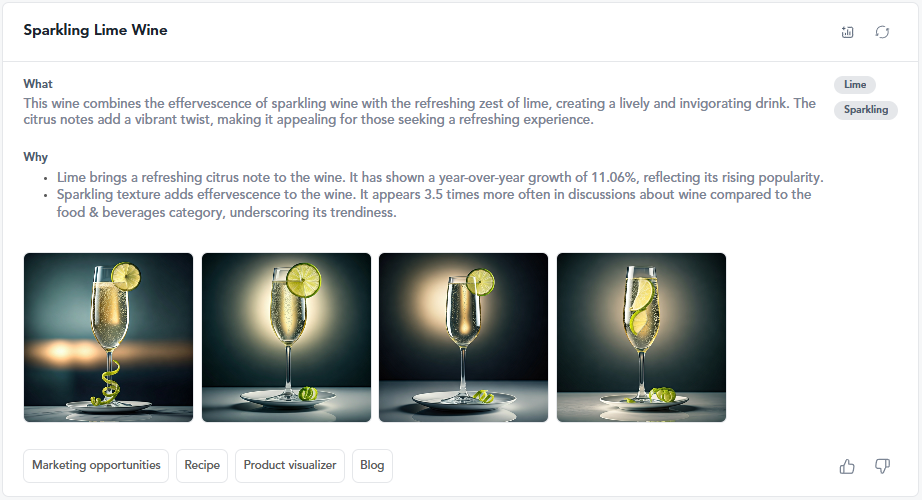
Innovation in the food industry can be defined as any new or improved method, process, product, or technology that enhances the production, packaging, and distribution of food products. It involves incorporating new ideas and approaches to improve efficiency, reduce costs, and increase output while maintaining high-quality standards. Since AI in the food industry has been on the rise, companies have been able to develop new solutions that help improve different aspects of food production and distribution.
Why is innovation important in the food industry?
Innovation is pivotal in the food industry for several compelling reasons. First and foremost, it addresses the escalating demand for food products driven by a growing population. By harnessing new technologies and methods, companies can accelerate production rates to meet this rising need.
Additionally, innovation enhances efficiency and reduces costs in the production process, enabling companies to offer competitive prices while preserving profit margins.
Furthermore, as consumer preferences evolve, innovation empowers companies to adapt and introduce new products that cater to these shifting demands. It also facilitates the improvement of existing products by incorporating healthier ingredients or making them more environmentally friendly.
Types of innovation in the food industry
| Type of Innovation | Focus Area | Example Applications |
|---|---|---|
| Product Innovation | New or improved products | New flavors, improved textures, healthier ingredients |
| Process Innovation | Production efficiency | Automation, new technologies, cost reduction methods |
| Packaging Innovation | Product protection & appeal | Eco-friendly materials, smart packaging, shelf-life extension |
| Marketing/Branding Innovation | Promotion & positioning | Social media campaigns, influencer partnerships, interactive marketing, brand planning |
10 Innovative food industry examples that have revolutionized the market
Innovation in the food industry is not limited to product development, it spans operations, distribution, safety, and customer experience. Below are real-world examples showing how technology, data, and new business models are reshaping how food is produced, sold, and consumed.
1. Supply chain management
Technology, particularly AI in food supply chain operations, has played a significant role in streamlining processes. Real-time tracking, intelligent inventory management, and predictive data analytics make it easier than ever for companies to monitor and optimize their supply chains. This has resulted in reduced waste, lower costs, and timely delivery of products.
2. Food safety and quality control
With the help of AI, companies can now monitor food safety and quality with greater precision. Sensors and cameras can detect potential hazards in food production facilities, while machine learning algorithms can analyze data to predict potential risks.
3. Packaging innovation
Innovative packaging solutions such as biodegradable materials, smart packaging with sensors that detect spoilage or contamination, and eco-friendly designs have not only reduced the environmental impact but also improved the shelf life and safety of food products.
4. New product development
The rise of alternative protein sources like plant-based meat and cultured meat has been made possible through advancements in the food industry. These innovative products cater to the growing demand for sustainable and ethical food options.
5. Food personalization
Customizing food products to meet the preferences and dietary requirements of consumers has become a trend in the food industry. Food personalization encompasses allergen-free choices, customized meal kits, and individualized nutrition plans.
6. Personalized nutrition
Personalized nutrition solutions have emerged as one of the hottest trends in food industry innovation. Much like how AI-powered platforms analyze consumers’ genetics, lifestyle, and health data to deliver tailored dietary recommendations, Tastewise’s product innovation platform helps brands leverage data to enhance overall health appeal and boost consumer loyalty.
7. Culinary innovations
Innovation is not limited to the production and delivery of food products but also extends to the culinary world. Chefs’ culinary innovations have led to the fusion of flavors and techniques, resulting in unique and exciting dishes that cater to diverse tastes.
8. Enhance Distribution channels
Distribution channels for food products have also undergone significant changes in recent years. With the rise of e-commerce and online grocery shopping, companies can now reach a wider audience and offer faster delivery options.
9. Food delivery services
The introduction of food delivery apps has transformed the way people access food, with a wide range of options available at their fingertips. This convenience has spurred the growth of online food delivery platforms, leading to increased competition and innovation in this sector.
10. Sustainability efforts
The food industry has also made significant strides in promoting sustainability through various initiatives such as reducing food waste, using renewable energy sources, and implementing eco-friendly practices in production processes. This focus on sustainability aligns with consumer demand for environmentally conscious products.
The 5 steps of innovation in the food industry with Tastewise
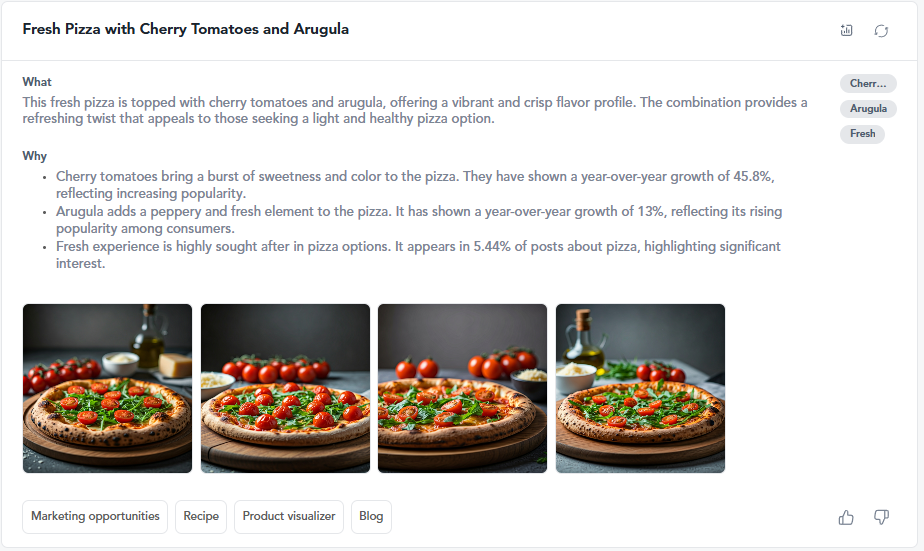
Most innovation slows down between insight and sell-in: teams spot opportunities but struggle to align internally or prove the business case to buyers. Evaluating Tastewise compared with Innova and Tastewise compared with Journey Foods highlights a more streamlined model that helps brands move faster—identifying real-time demand, pressure-testing concepts, building product strategies around proven behavior, and activating with retailer-ready proof.
1. Identify real demand
Growth appears in pockets before it becomes mainstream. According to the Social F&B panel, early traction concentrates in specific audiences. Foodservice data shows which LTOs and independent menu items are gaining velocity. The Home cooking panel confirms whether trial turns into repeat behavior.
This combination reveals where demand is forming, by audience, occasion, and region. Teams should narrow to 2–3 territories where demand is measurable and motivation is clear. If momentum cannot be sized, it should not move forward.
2. Shape it into scalable platforms
When rising ingredients intersect with functional needs and real occasions, product platforms become visible. Overlaying competitive SKU density and menu penetration exposes whether the shelf is open or crowded.
If differentiation is unclear at retail level, the concept will stall. Prioritize a focused set of platforms with structural whitespace, margin logic, and a clear retail narrative.
3. Remove weak concepts early
Velocity alone is not enough. Ingredient lifecycle analysis shows whether momentum is emerging or peaking. Demand rankings clarify strength versus noise. Surveys / synthetic data confirm audience size and claim resonance.
Concepts with narrow ceilings, declining signals, or weak commercial logic should be eliminated before development costs increase. Advance only ideas that combine growth, scale, and profitability.
4. Build the sell-in case
Retailers respond to proof of incrementality. Foodservice data demonstrates real ordering behavior. The Social F&B panel shows consumer pull. The Home cooking panel identifies basket adjacencies and usage occasions. Internal studio outputs translate this into retailer-ready decks and activation assets.
A strong pitch answers clearly:
- Who is buying
- What need it serves
- What it replaces
- Why it grows the category
When those answers are evidence-backed, internal alignment and buyer confidence increase.
5. Scale with continuous tracking
Launch does not end the process. Ongoing panel tracking reveals acceleration pockets, seasonal spikes, and competitive entry. Regions with concentrated demand can be prioritized. Messaging can reflect the language consumers are already using.
Distribution grows when proof compounds over time. Our product innovation solution connects real-time consumer demand, foodservice velocity, and retail activation into one repeatable system that helps teams secure distribution faster and scale with confidence.
Conclusion
The fast food industry has come a long way since its early days, with constant innovations and adaptations to meet changing consumer demands.
From offering plant-based options to utilizing technology for a better customer experience, fast food brands are continuously evolving to stay relevant in today’s society.
With disruptive innovation driving change in the food industry, it will be interesting to see how fast food continues to change in the future.
FAQs
It involves creating new products, technologies, or processes that improve food quality, sustainability, or accessibility, from ingredients to packaging to production.
Plant-based meats, upcycled snacks, and AI-generated recipes are examples. They address consumer demands for health, sustainability, and novelty.
It’s data-driven, sustainable, and tech-enabled. Expect more personalized nutrition, AI-powered product development, and circular food systems in coming years.





We’d love to learn your goals and see how Tastewise fits
We’d love to learn your goals and see how Tastewise fits
Get a personalized demo
Good taste. Wise move.
Your demo request is confirmed. We’ll reach out within one business day to schedule your walkthrough.
What happens next

See what’s driving demand, then turn it into a sell-in story for retailers and operators.
- Connect consumer panels, market trackers, and agents into one evidence view
- Get the “why” behind what’s changing, with explainable demand drivers
- Walk away with a buyer-ready narrative and next steps to activate
Trusted by





“Tastewise is my secret tool for knowing what consumers want next and why.“