





Korean food is no longer a niche on the global menu. It is one of the most requested cuisines of the decade, and South Korea menu trends now set the pace for how operators plan heat, texture and format. From double-fried chicken to gochujang-glazed everything, the flavours travelling out of Seoul are landing on menus from London to Los Angeles. If your team is building a 2026 foodservice line-up, the question is not whether to add a Korean item. It is which signals to build around, and how fast to move.
Key takeaways
- Heat-forward Korean sauces are the anchor signal. Gochujang sits in a trending stage with consumer interest up around 16% over the past year, so one gochujang base can carry a whole limited-time range.
- Korean fried chicken is the safest entry format. Interest in fried chicken builds is climbing across the Korean food read, so a yangnyeom or soy-garlic version gives your team a proven, low-risk LTO.
- Comfort and premium are rising together. Both cues are up in South Korea’s market signals, so operators can trade guests up without losing everyday appeal.
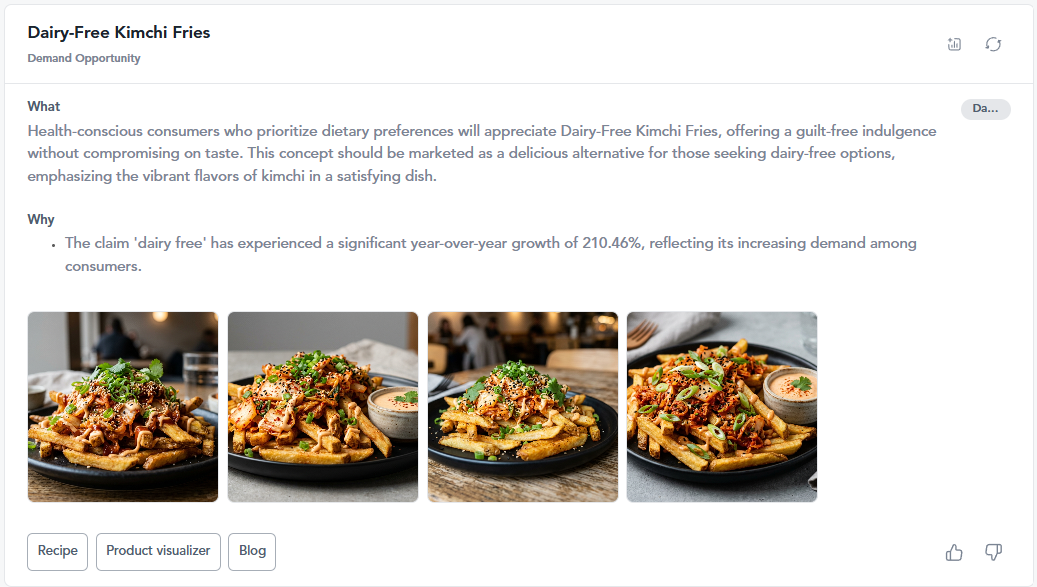
- Fusion is a format, not a gimmick. Korean fusion signals are growing, so bulgogi burgers, kimchi fries and gochujang pasta give your kitchen familiar vehicles for bold flavour.
South Korea menu trends in 2026, explained
In plain terms, Korean food has become shorthand for bold, crave-led eating. Diners reach for the crunch of double-fried chicken, the sweet heat of gochujang and the theatre of dishes you mix, grill or share at the table. The Hallyu wave of K-pop, K-dramas and streaming has turned that curiosity into everyday demand.
Across the Tastewise platform, the fastest-moving Korean signals are heat and format led. Gochujang and chili pepper both sit in a trending stage, galbi is climbing, and crispy texture is rising by roughly 16% on last year. In South Korea’s own market read, fried chicken, bulgogi and tteokbokki all show upward momentum, alongside comfort and street-food cues.
For your team, that convergence is the opportunity. The same flavours rising in Korea’s food demand are the ones gaining menu momentum abroad, which lowers the guesswork on what to launch next. A Korean move in 2026 is less a bet and more a response to demand your guests are already signalling.
The flavour signals rising on South Korea menus
The clearest signal in South Korea menu trends is heat with a purpose. Gochujang, the fermented chili paste, sits in a trending stage with consumer interest up around 16% in the past 12 months, and chili pepper is rising at a similar pace. Sweet-and-spicy pairings and crispy textures are climbing alongside them.
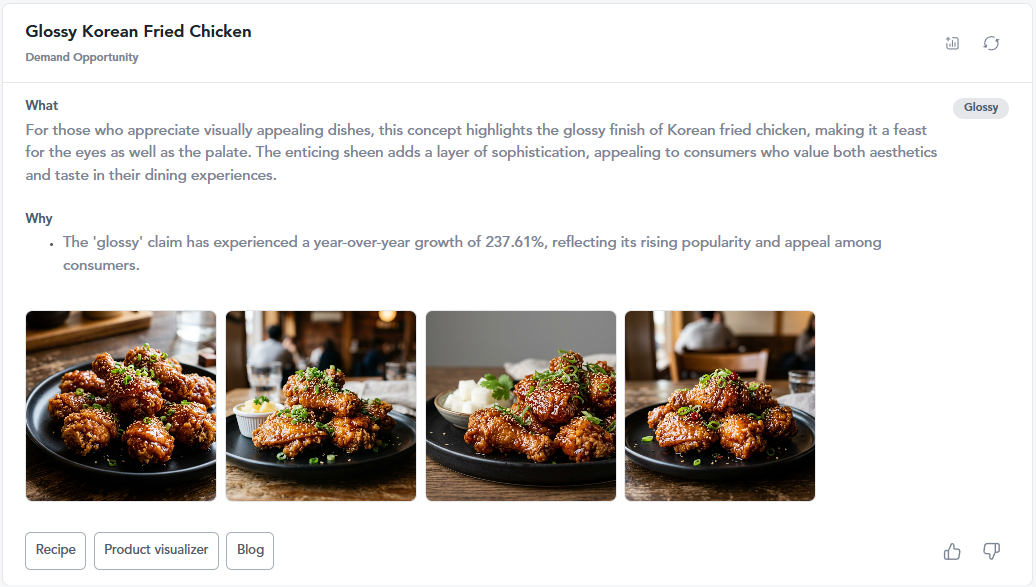
That matters because heat is no longer a novelty for your guests. It is a base flavour they seek out, which means a gochujang or yangnyeom glaze can anchor a whole menu section rather than sit as a one-off special. The same pattern is visible on international menus, where trade coverage of Korean menu development points to yangnyeom chicken, buldak and Korean hot dogs translating well across chains worldwide.
Formats and occasions your menu can own
Format is where South Korea menu innovation gets practical. Convenience and delivery signals are both rising in the Korean food read, and snack and street-food cues are climbing too. Recognisable builds like Korean fried chicken sandwiches, rose tteokbokki, corn dogs and loaded fries carry that energy without a full concept change.
For an operator, that means you can meet demand inside your current kitchen. A limited-time Korean sandwich or a shareable street-food plate tests the trend with low capital risk before you commit to a permanent line. It also gives your marketing team a story, because a familiar format paired with a bold Korean sauce is exactly the kind of build that reads well in menu planning and photographs well for social.
What South Korea menu innovation means for your operator team
Reading these signals early is the real advantage. Legacy menu research runs on annual scans that miss fast-moving trends until they peak. Live real-time AI workflows let your team move while there is still white space on the menu.
That speed is where R&D and menu developers win or lose a season. With current consumer signals, foodservice operators can validate a Korean concept, brief a kitchen and reach the pass before a competitor’s version lands. It is the same read that product innovation teams use to pressure-test a concept against real demand before launch.
About this data
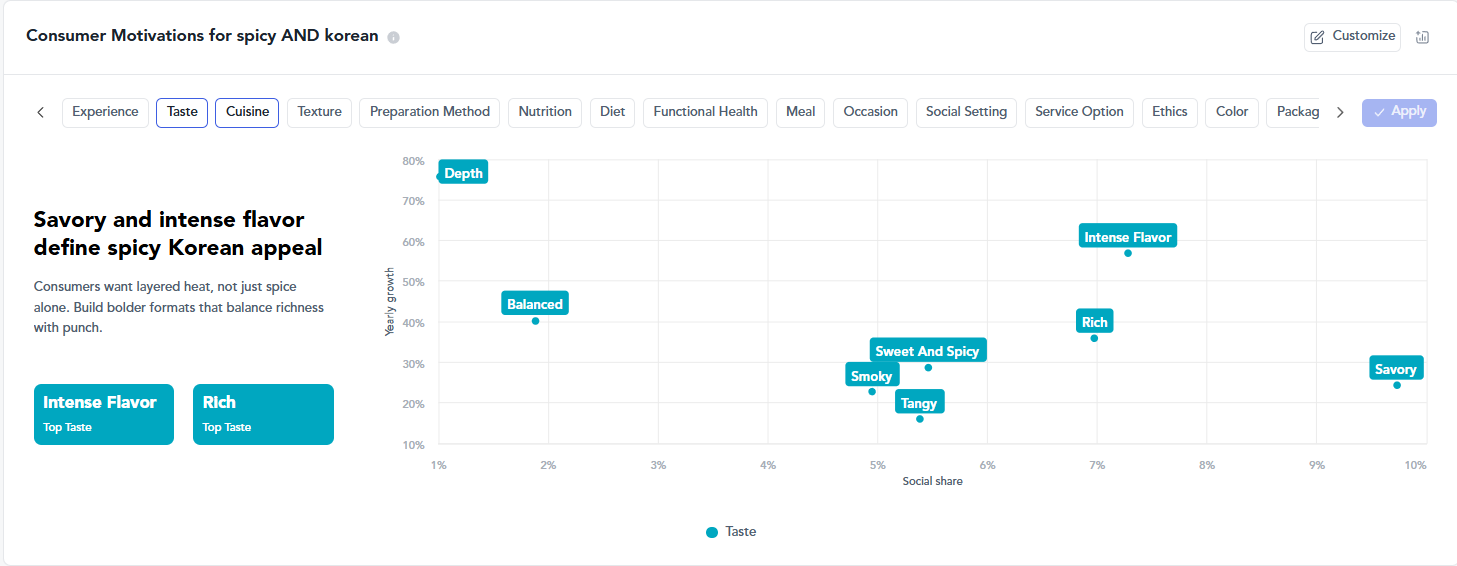
These insights come from the Tastewise platform, which models consumer demand signals from a large base of real-time food and beverage data. The figures here describe the direction and momentum of consumer interest, expressed as demand signals rather than verified menu penetration or panel-level adoption. For non-US markets like South Korea, operator and menu-level data is limited, so this read leans on consumer demand signals scoped to the South Korea market and to the wider Korean food category. Growth figures reflect the pace of change in that interest over the past year, and lower-volume signals are treated as early and directional.
FAQs about South Korean menu trends
The strongest signals are heat-led and format-led. Gochujang and chili pepper sit in a trending stage, Korean fried chicken and bulgogi show rising interest, and comfort, street-food and fusion cues are all climbing across the Tastewise read.
The demand signals suggest yes, if you start with a recognisable format. Korean fried chicken, sweet-and-spicy sauces and shareable street-food plates carry the trend with low kitchen risk, which is why they translate well as limited-time offers before a permanent listing.
Treat it as a direction finder. Use current demand signals to pick which Korean flavour or format to test first, validate the concept against live interest, then scale the winners. Moving early is where the white space still sits.




We’d love to learn your goals and see how Tastewise fits
We’d love to learn your goals and see how Tastewise fits
Get a personalized demo
Good taste. Wise move.
Your demo request is confirmed. We’ll reach out within one business day to schedule your walkthrough.
What happens next

See what’s driving demand, then turn it into a sell-in story for retailers and operators.
- Connect consumer panels, market trackers, and agents into one evidence view
- Get the “why” behind what’s changing, with explainable demand drivers
- Walk away with a buyer-ready narrative and next steps to activate
Trusted by




“Tastewise is my secret tool for knowing what consumers want next and why.“