






Global food trends for CPG and foodservice are no longer a single aisle in the supermarket or one section on the menu. Your shoppers and diners are reaching past Italian, Mexican and Chinese toward specific regions, cooking methods and flavor crossovers they found on their feeds and their travels. That shift is fast, and it rewards brands that name the exact concept consumers want rather than the broad idea of going global. The teams that win read the demand signal early and build before the category fills up. Here is what the data shows and where your team still has room to lead.
Key takeaways
- More than 21,000 people across the Tastewise US consumer panel engaged with global and international cuisine in the past year. The audience is large and active, so this is a planning priority, not a niche bet.
- Consumer demand for intense, pronounced flavor is up 71% over the past year. People want bolder execution, so dial up authenticity and heat rather than softening flavors for the middle.
- Specific regional cuisines are growing several times faster than the broad Asian cue. Vietnamese interest is up about a quarter, so anchor concepts to a named region, not a vague continent.
- Concept signals like clay pot cooking and shareable small plates are climbing quickly. These are buildable formats, so your team can move on them now while brand response is still thin.
Global food trends for CPG & foodservice
Global food used to mean a familiar shortlist. Today your customers treat the whole world as the menu, and they are precise about it. They are not asking for Asian food. They are asking for Vietnamese, Korean and the clay pot dishes they watched a creator make last week.
Across the Tastewise platform, more than 21,000 people in the US consumer panel engaged with global and international cuisine in the past year. The movement sits in specific places. Demand for intense, pronounced flavor is up 71%, Vietnamese cuisine is up about a quarter, and shareable formats are climbing as people build meals around the table rather than the plate.
For your team that is an opening. The broad demand is proven, but most of the specific concepts still have room before they crowd. Naming the exact regional dish or format gives your innovation and brand teams a sell-in story that is sharper than a generic global claim.
What is driving global food trends in 2026?
The driver is specificity. Consumers have moved from curiosity about foreign food to fluency in it, and they expect brands to keep pace. Chefs surveyed by Forbes for 2026 describe the dominant flavor story as regional specificity rather than one catch-all cuisine. The Tastewise panel shows the same pattern. The broad Asian cue is still the largest in the global set, yet it grew only modestly, while named regions like Vietnamese and Korean grew several times faster. For your team that means the safe, broad claim is also the slow one.
Which global flavors are growing fastest?
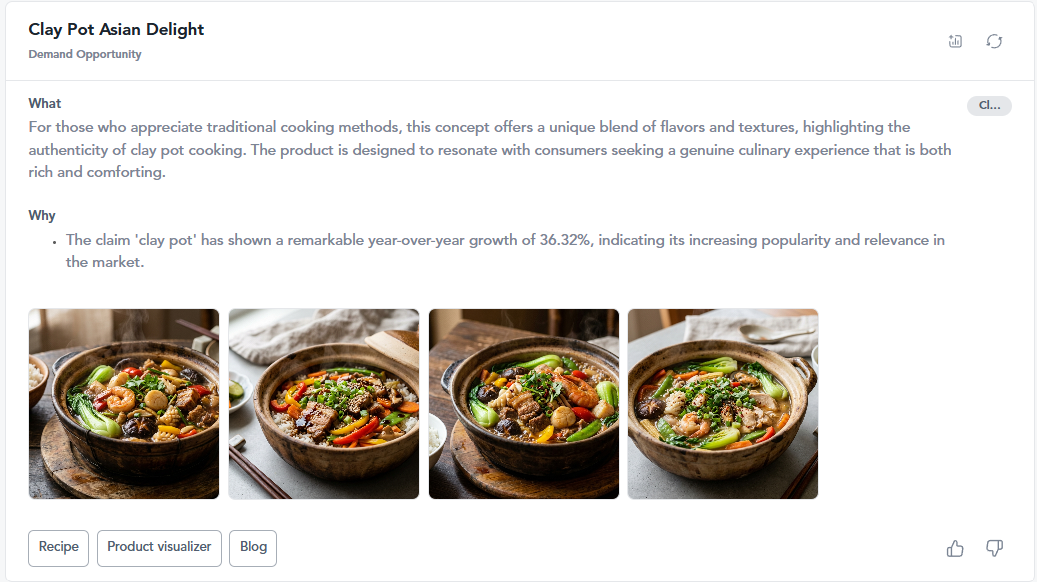
The fastest movement is regional and method led. Clay pot cooking is a clear example. Consumer demand for clay pot dishes is up about 36% in the past year, carried by the slow, communal and comforting method that people read as authentic. That sits alongside rising interest in Vietnamese, Korean and south east Asian profiles, all growing ahead of the category average. For a product or menu team, the lesson is to lead with the named method or region, because that is where the new demand is concentrating.
How are global food trends showing up in new products?
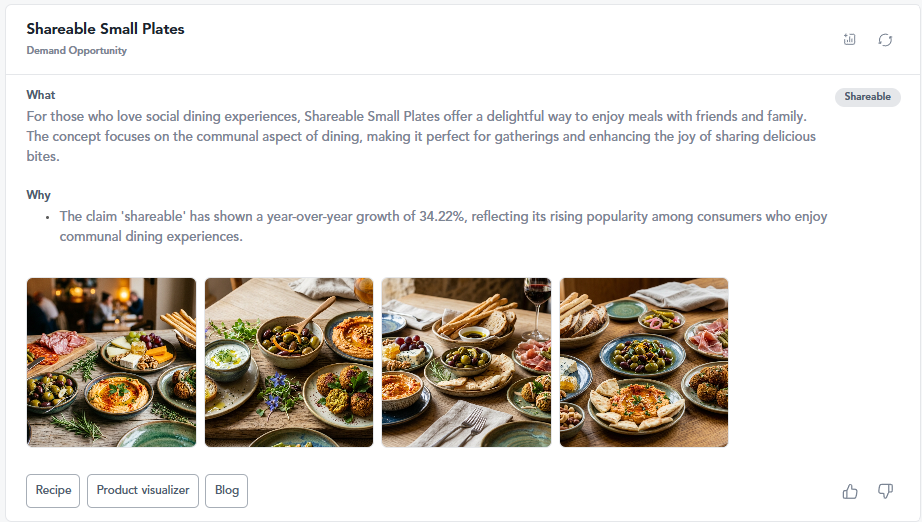
Global demand is not only about where a flavor comes from. It is also about how it is served. The format around a dish now carries as much signal as the spice inside it, and that is where some of the clearest openings sit for retail and foodservice alike.
Shareable small plates are one of the strongest format signals. Demand for shareable formats is up about 34% in the past year as consumers build social meals from several dishes rather than one entree. For a brand, that points to grazing boards, mezze style sets and multipacks that travel from restaurant menus onto retail shelves. Pair the format with a specific regional story and you have a launch that reads as both current and credible.
How can your team turn global food trends into a plan?
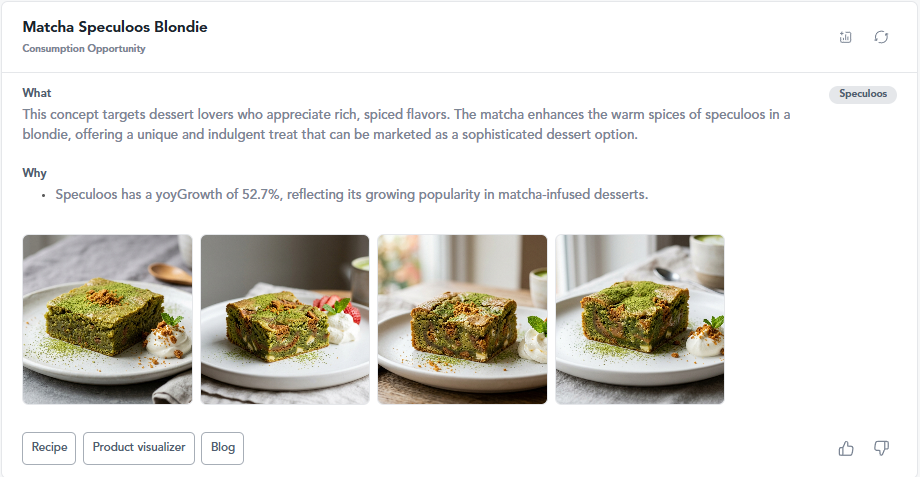
Crossover desserts are a useful test case. A matcha speculoos blondie blends a fast-rising Japanese flavor with a warm European biscuit, and consumer demand for speculoos is up about 53% over the past year. The point is not the single concept. It is the method of pairing two cultures inside a format your customer already loves.
Start by grounding the idea in real demand. Use food trend analysis to size the signal, then run new concept validation before you commit a line. Carry the same regional story into your brand campaigns so the launch and the message land together. Move while the specific concept is still open, because broad demand attracts fast followers.
FAQs about global global food trends for CPG and foodservice
The biggest global food trends in 2026 are regional specificity, bolder and more intense flavor, shareable formats, and cross-culture crossovers. Consumers are choosing named regions and methods over broad labels, and they want the format to feel social and current.
Specific regional cuisines are rising faster than the broad Asian label. Vietnamese, Korean and south east Asian profiles are all growing ahead of the category average across the Tastewise US consumer panel, which is why a named region beats a vague one.
Strong launches start by validating a specific concept against real consumer demand rather than a broad trend. Name the region or method, confirm the signal is rising, then build the format and the campaign around the same story before competitors crowd in.





We’d love to learn your goals and see how Tastewise fits
We’d love to learn your goals and see how Tastewise fits
Get a personalized demo
Good taste. Wise move.
Your demo request is confirmed. We’ll reach out within one business day to schedule your walkthrough.
What happens next

See what’s driving demand, then turn it into a sell-in story for retailers and operators.
- Connect consumer panels, market trackers, and agents into one evidence view
- Get the “why” behind what’s changing, with explainable demand drivers
- Walk away with a buyer-ready narrative and next steps to activate
Trusted by





“Tastewise is my secret tool for knowing what consumers want next and why.“