
In the consumer packaged goods (CPG) space, tail spend optimization and management have become major components of effective financial planning strategies. For brands looking to preserve their margins while embracing sustainable growth, reducing and streamlining tail spend can mean the difference between long-term success and financial disarray.
What is CPG tail spend?
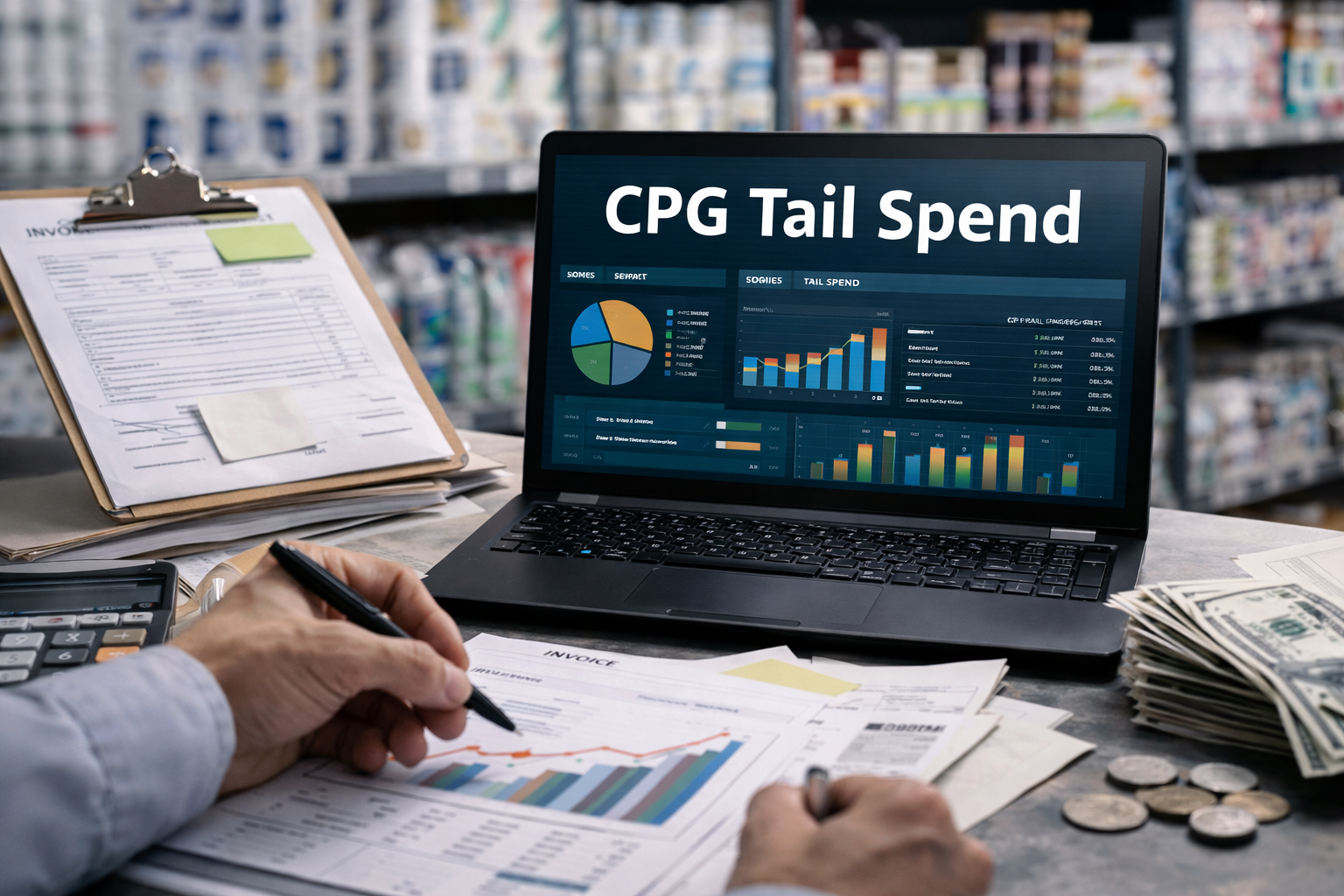
In the consumer packaged goods industry, CPG tail spend refers to any procurement spending that falls outside a company’s core spending areas. Tail spend might include the purchase of office supplies, marketing giveaways, event costs, occasional IT expenses and more. While each of these purchases may seem fairly insignificant on its own, they add up over time and can account for a startlingly large percentage of a company’s organization-wide spending.
Why tail spend matters for CPG companies
CPG brands often meticulously track spending related to their core functions, such as production costs, logistics expenses, large-scale marketing initiatives and more. Tail spend, however, often flies beneath the radar and may not always be accounted for in brands’ overarching financial strategies.
This lack of structure makes it difficult for finance teams to track spending and enforce cost control measures, which can undermine their broader CPG cost management efforts. No matter how small a purchase might seem, excess spending in non-core areas can seriously compromise CPG revenue in the long run and slow CPG growth across multiple areas.
Common sources of tail spend in CPG
CPG tail spend can take many different shapes and may show up across multiple departments in a CPG company. Here are a few common sources of tail spend:
Indirect and non-core procurement
Indirect spend categories often include office supplies, IT services, professional consulting and periodic resource enhancements/upgrades. These purchases tend to fall outside the purview of typical oversight initiatives, which can increase the possibility of sticker shock down the line. often fall outside centralized procurement oversight. There may also be confusion or uncertainty around who is responsible for managing and overseeing these expenses, so internal conflict can arise when overspending is discovered in these areas.
Marketing, agency and creative services
Many CPG marketing teams periodically partner with outside agencies and consultants to devise and implement marketing initiatives. Many of these CPG outsourcing initiatives come with high price tags and some marketing tasks involve additional expenditures on top of the upfront contractual expenses.
For example, a marketing team may pay an entrance fee to attend a trade convention, which then necessitates tail spend on travel, team lodging, signage, “swag bags” and more. While overarching marketing expenses are often closely monitored as part of CPG brand management strategies, secondary expenses may not be tracked as closely and may spiral out of control without adequate oversight.
Packaging variants and short-run materials
Limited-time packaging, promotional SKUs and short production runs are common in the competitive CPG landscape. While these initiatives can play a vital role in CPG e-commerce and retail strategies, they can also drive up per-unit costs and place additional strain on the CPG supply chain. Since some of these initiatives require tight turn-around times, expenses may be even higher temporarily, which can impact margins in the long-term if not carefully planned and budgeted for.
MRO, facilities and operational supplies
Maintenance, repair and operations (MRO) spending is another frequent source of tail spend. Companies with large brick-and-mortar facilities must set aside a certain amount of funding for maintenance and other facility-related expenses. The problem with these expenditures is that they can be hard to plan for, as many maintenance issues pop up unexpectedly. Since these purchases tend to be reactive rather than proactive, negotiation options may be limited and prices may be at a premium.
One-off and emergency purchases
Emergency expenses can creep up at just about any point in the CPG production, marketing and distribution processes. Emergency buys might be necessitated by supply chain disruptions, demand spikes, operational breakdowns and even natural disasters — making it difficult to plan ahead for resulting expenses. Under emergency circumstances, tail spend decisions may be made in the absence of standard oversight and budgeting procedures, and while they may address an immediate problem they can lead to unforeseen CPG finance planning issues down the line.
Tail spend optimization strategies for CPG
Effective tail spend optimization generally begins with improved visibility and inter-departmental communication. The goal is to centralize spend data so finance teams can exercise informed, effective oversight strategies while tracking and planning future spending. The more data you have on hand, the more easily you can identify patterns, gaps and opportunities for optimization.
Sometimes, data can reveal duplicate vendors, areas of overspending and other spaces where consolidation might be appropriate. Supplier rationalization can also play a vital role in tail spend optimization, as reducing the number of low-value suppliers and negotiating preferred agreements can lower costs without compromising compliance. Additionally, improving inventory management in CPG is often a natural byproduct of stronger tail spend oversight and supplier consolidation. Being intentional about how and to whom you outsource certain services can reduce unnecessary spending and streamline operational workflows to boot.
Measuring savings and performance in tail spend management
To assess the impact of tail spend optimization, CPG companies have to (A) establish clear performance metrics and (B) implement tools for evaluating performance. One is more or less useless without the other, so it’s important for departments to get on the same page about how they plan to measure performance and what workflows can help them track their progress.
Real-time CPG insights and proactive communication can all help streamline these processes and empower companies with the information they need to make proactive and reactive decisions that don’t compromise their goals. Tracking tail spend can play a crucial role in these protocols, and continuous reevaluation of a company’s spending habits can lead to more targeted decision-making over time.
How data and analytics enable CPG tail spend optimization
As we’ve mentioned already, data and analytics are essential for effective monitoring and tweaking of tail spend practices. Data about tail spend is often your best resource in making future decisions about how to approach these expenditures moving forward. You can’t adjust your strategy if you don’t understand the current state of affairs.
AI and CPG solutions like advanced analytics platforms can help companies automate their workflows to make tracking and analyzing their tail spend behaviors more seamless at an organizational level. These same tools can also support more reliable, data-backed CPG M&A decisions and serve as the springboard for all sorts of CPG innovation. Knowledge is power when it comes to increasing productivity and profitability, and recent advances in technology have only made information more accessible and actionable for CPG brands of all shapes and sizes.
How Tastewise data improves CPG tail spend control
Tastewise empowers CPG teams with demand-led intelligence data that can help brands link their procurement decisions to actual, observable consumer behaviors. By aligning purchasing strategies with evidence-based CPG trends and other market signals, Tastewise can help brands reduce unnecessary spending and make more targeted decisions from end to end.
Brands that leverage Tastewise data while making spending decisions can move with greater confidence and feel empowered to take bigger swings than ever before. Tastewise data is highly accurate and reflective of here-and-now industry trends, so there’s no need to rely on outdated historical data when making high-value decisions.This data-driven approach can help brands tailor their CPG distribution planning efforts and disincentivize last-minute, short-sighted purchasing decisions.
Final thoughts
CPG revenue optimization isn’t all about driving up CPG sales. On the contrary, it’s about identifying unnecessary drains on resources and finding new, more effective ways of making and managing financial decisions. CPG tail spend optimization can play a vital role in these brand management efforts and lay a more stable framework for future CPG growth.
Brands looking to make more informed decisions about how and why they spend their money can rely on consumer intelligence platforms like Tastewise to help them identify opportunities for growth and for consolidation. With the right workflows in place, brands of all sizes can leverage information to new levels of success and take advantage of streamlined decision-making protocols that are both responsive and proactive in an ever-changing industry.
FAQs about CPG Tail Spend Optimization
Tail spend often shows up across a variety of departments and individual purchases tend to be hard to track. Because these expenditures are inconsistent and often handled outside of standard workflows, the expenses can rack up in the absence of intentional, ongoing oversight.
Tail spend reduction often hinges first upon accurate accounting and identification of common expenditures. Once brands have a clear idea of where their money is going, they can implement optimized protocols for standardizing, consolidating and approving incidental purchases and other common areas of tail spend.
Data helps CPG teams identify spending patterns that may have previously flown under the radar. Data can also help brands forecast demand and industry trends with greater accuracy so they can make more informed, goal-aligned spending decisions moving forward.
Tastewise provides CPG brand management teams with real-time data about current and future consumer demand signals, purchasing patterns and industry trends. With this data in mind, brands can cut back on waste and funnel valuable resources into the expenditures that are most likely to support long-term, sustainable growth.
When data analysis reveals duplicate vendors or other opportunities for consolidation, brands can cut back significantly on tail spend by reducing the number of parties to whom they owe money at any given point in the production and distribution processes. Supplier consolidation can also improve pricing leverage, reduce administrative overhead and reduce variability in product quality.