







Club sandwich trends are less about breakout growth and more about staying power. Tastewise Category Dashboard data shows club sandwich mentions in social discussions were minimal and flat over the past 24 months but shows 100% YoY growth, which points to low-volume conversation where small shifts can swing the YoY number.
The club sandwich is still relevant, but it’s not driving the sandwich conversation on its own. What is driving conversation is the broader sandwich space. Tastewise Dish Insights shows Sandwich holds 56% social share, while Club sandwich holds 24%.
For foodservice and CPG, this changes the play. You don’t treat the club as an “emerging” trend. You treat it as a high-recognition format that wins when execution is tight, builds are protein-forward, and prep cues match what people associate with the category.
Club sandwich trend overview
- Club sandwich mentions are minimal and flat over the past 24 months
- Social share: 0%, with YoY growth: 100% (low-base movement)
- Club sandwich holds 24% social share among related dishes, vs Sandwich at 56%
- Club sandwich is down -19.06% YoY, while Sandwich is up +8% YoY and Burger is up +30% YoY
- Strongest correlation sits with Chicken club (1689X social index), followed by Club sandwich (1500X)
Club sandwich sales statistics and market performance
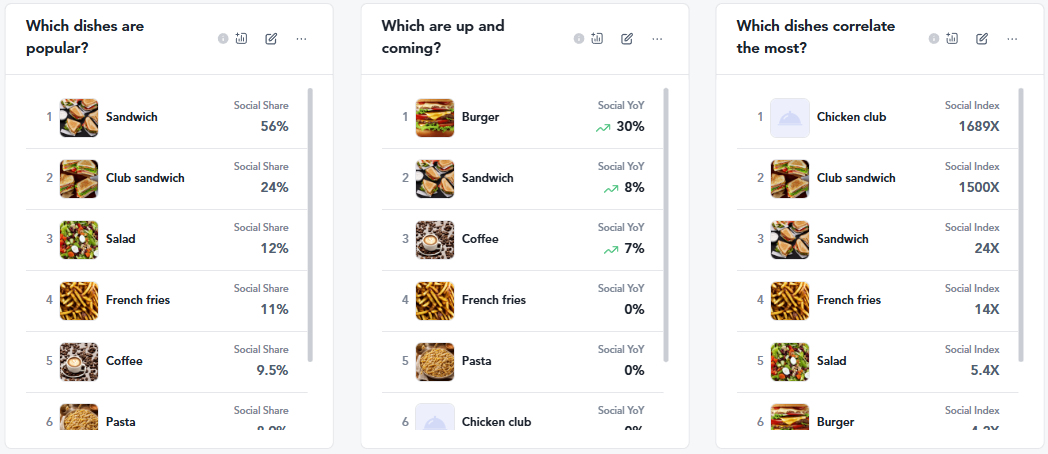
Tastewise trend performance data shows a mixed picture. Club sandwich mentions are flat over 24 months, yet the YoY growth reads 100%. That combination usually means the trend is moving on a small base, not exploding into mainstream conversation.
In Dish Insights, club sandwich is also under pressure compared to adjacent items. Tastewise shows Club sandwich is down -19.06% YoY in social discussion. Meanwhile, the broader Sandwich category is up +8% YoY, and Burger is up +30% YoY.
That tells you where the market is. People are still engaging with sandwich formats, but they’re not always using “club sandwich” language when they talk about them. If you’re building menus or retail products, it’s safer to treat “club” as a format inside the sandwich ecosystem, not as the headline claim.
Most popular club sandwich ingredients
Tastewise Ingredient performance shows club sandwiches are still built around a familiar protein stack. The most popular ingredients by social share are:
- Chicken (26%)
- Pork (20%)
- Turkey (20%)
- Bacon (15%)
- Tomato (13%)
- Lettuce (8.2%)
Chicken is the lead for a reason. It’s versatile, widely accepted, and works in both fried and grilled formats. Pork and turkey tying at 20% shows the category supports both indulgent and leaner builds without needing a total reposition. Bacon at 15% reinforces that salty crunch is part of what makes a club feel worth ordering.
Tomato and lettuce staying in the top set keeps the format from collapsing into “all meat.” They do structural work: moisture, crunch, and freshness. Without them, the club loses contrast and starts reading like a generic stacked sandwich.
Club sandwich consumer demand and eating occasions
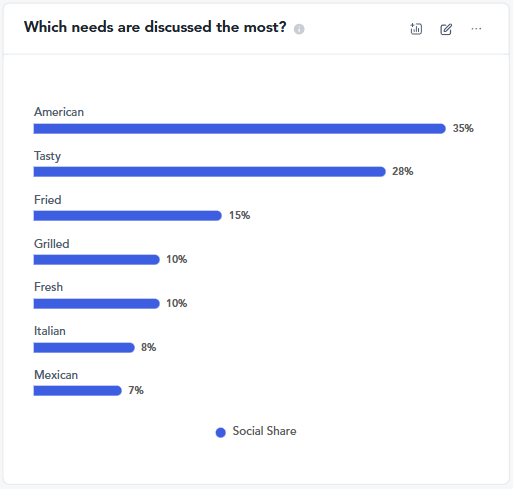
Tastewise Consumer Needs data shows what people associate with the club sandwich experience. The top needs discussed are:
- American (35%)
- Tasty (28%)
- Fried (15%)
- Grilled (10%)
- Fresh (10%)
- Italian (8%)
- Mexican (7%)
This is not a “health-led” demand profile. It’s comfort-coded, flavor-first, and prep-method driven.
The presence of fried and grilled in the top needs is especially useful for foodservice execution. It means clubs are being evaluated based on the cooking method and the payoff that comes with it. Fried implies crunch and indulgence. Grilled implies heat, melt, and a more structured bite. Fresh keeps the club from feeling heavy, which is why tomato and lettuce remain essential even in protein-heavy builds.
For CPG, the demand signal is clear: the club sandwich format is a strong vehicle for proteins that can hold up in layered builds, plus supporting components that deliver texture and balance.
Club sandwich variations and menu formats
Tastewise Dish correlation data shows the club is strongly tied to “chicken club” as a related format. The top correlations are:
- Chicken club (Social Index 1689X)
- Club sandwich (Social Index 1500X)
- Sandwich (Social Index 24X)
That gap is huge. It suggests that when people talk about club sandwiches, they’re often talking about a specific build type rather than the generic category. “Chicken club” behaves like a sharper menu signal than “club sandwich.”
Ingredient correlations also explain what makes a club feel like a club. The strongest correlated ingredients are:
- Lettuce (25X)
- Bacon (19X)
- Turkey (13X)
- Tomato (9.9X)
- Pork (7.6X)
- Chicken (6.1X)
Lettuce ranking #1 in correlation is a useful operational insight. It’s not the most talked-about ingredient by share, but it’s one of the strongest “this is a club” markers. Same with bacon. These are the anchors that make the format recognisable even when proteins rotate.
For foodservice, this supports a clear approach: keep the club identity consistent through the structural ingredients, then rotate proteins or cooking methods to create variation. For CPG, it supports modular product thinking: pre-cooked proteins and bacon-style inclusions can plug into a stable build system.
What this trend means in practice for foodservice and CPG
Tastewise Category Dashboard data puts club sandwiches in a stable-but-competitive position. Mentions are flat over 24 months and the term club sandwich is down -19.06% YoY, but it still holds 24% social share among related dishes. Meanwhile, the broader sandwich category holds 56% social share and is up +8% YoY.
That means the club doesn’t win by being “new.” It wins by being better built.
The consumer need stack supports that. American (35%) and tasty (28%) lead, with fried (15%), grilled (10%), and fresh (10%) shaping expectations around preparation and eating experience. Ingredient data confirms the core structure: chicken (26%) leads, with pork and turkey (20% each), plus bacon (15%), tomato (13%), and lettuce (8.2%).
The constraint is ingredient momentum. With YoY declines across core ingredients, growth won’t come from swapping tomato for something else. It comes from format and execution: cooking method choices, build integrity, and keeping the club markers that consumers recognise.
That’s where club sandwich trends become commercially useful. It’s a recognizable format with strong structural rules. When teams treat it as a platform, it stays relevant even when the conversation shifts toward broader sandwich language.
FAQs about club sandwich trends
Tastewise Dish Insights shows Club sandwich holds 24% social share among related dishes, and it correlates strongly with Chicken club (1689X social index). It’s still a known format, even as the term itself is down -19.06% YoY.
Tastewise trend performance shows mentions are minimal and flat over 24 months, and Dish Insights shows Club sandwich is down -19.06% YoY. The broader Sandwich category is up +8% YoY, so demand is shifting toward wider sandwich language.
Tastewise Ingredient performance ranks Chicken (26%), Pork (20%), Turkey (20%), Bacon (15%), Tomato (13%), and Lettuce (8.2%) as the most popular ingredients by social share.
Tastewise Consumer Needs data shows American (35%) and Tasty (28%) lead, followed by Fried (15%), Grilled (10%), and Fresh (10%).
Tastewise Dish Insights shows Sandwich holds 56% social share and is up +8% YoY, while Club sandwich holds 24% social share and is down -19.06% YoY. People talk about sandwiches broadly more than they use “club sandwich” specifically.
Tastewise correlation data shows Chicken club has a 1689X social index, higher than Club sandwich at 1500X. That suggests “chicken club” is a stronger conversation trigger and a clearer menu cue than the generic term.




We’d love to learn your goals and see how Tastewise fits
We’d love to learn your goals and see how Tastewise fits
Get a personalized demo
Good taste. Wise move.
Your demo request is confirmed. We’ll reach out within one business day to schedule your walkthrough.
What happens next

See what’s driving demand, then turn it into a sell-in story for retailers and operators.
- Connect consumer panels, market trackers, and agents into one evidence view
- Get the “why” behind what’s changing, with explainable demand drivers
- Walk away with a buyer-ready narrative and next steps to activate
Trusted by





“Tastewise is my secret tool for knowing what consumers want next and why.“