





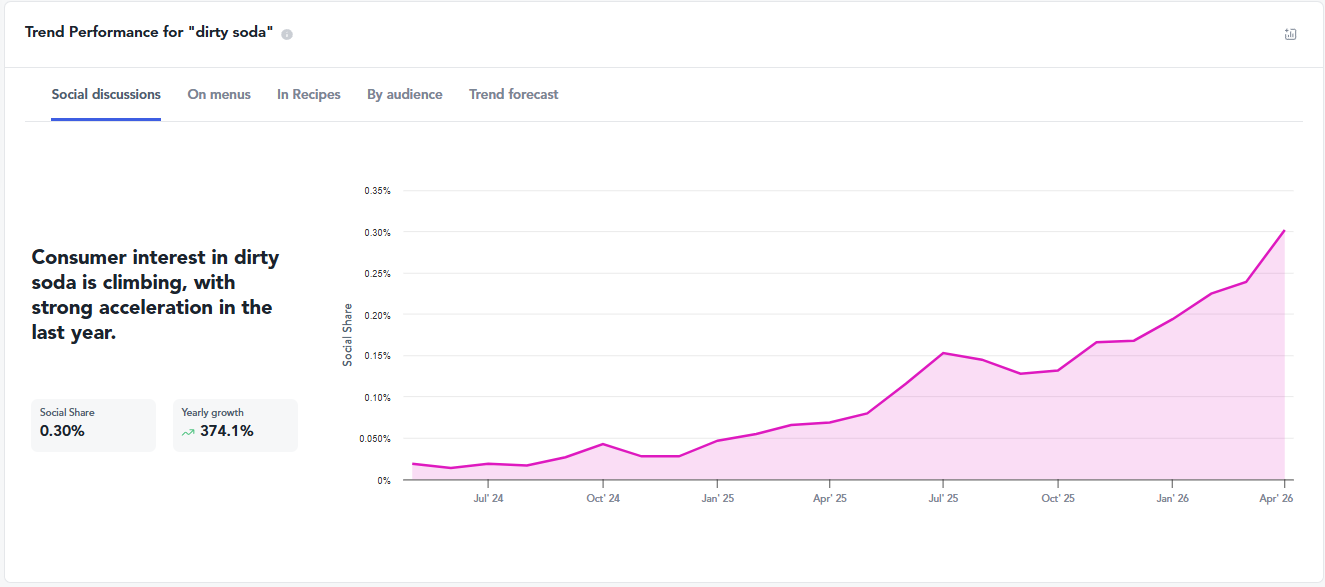
Germany’s summer beverage market is shifting faster than most operators have noticed. Carbonated, customizable drinks are pulling away from standard soft drinks, and dirty soda, the TikTok-born format of creamed-up, flavored soda, is sitting at the edge of a very open market. Consumer engagement with dirty soda in Germany jumped 70.6% in posts in the past year, with almost no brand or operator response yet. If your team is planning a summer LTO for Germany, the dirty soda opportunity is exactly the kind of gap that closes fast once one player moves.
Key takeaways
- Dirty soda consumer engagement in Germany is up 70.6% since last year, yet cream soda, its closest ready-to-drink cousin, sits in an early lifecycle stage with almost no branded presence. Your team can be the first mover in a category that is already building.
- “Summer” is a growing claim in the German flavored soda space, up 14.6% in the past 12 months. Consumers are already framing these drinks as seasonal. That is a brief that writes itself.
- Cola-based dirty soda mixes are surging in Germany: cola ingredients in the dirty soda context are up 44.8%. Citrus zest is up 54.9%. The flavor combinations are already in demand. Operators just need to package them.
- The top consumer motivations in the dirty soda space are sweet, summer, and fun. That is a three-word positioning brief for your LTO pack or menu callout.
What dirty soda actually is and why Germany is ready
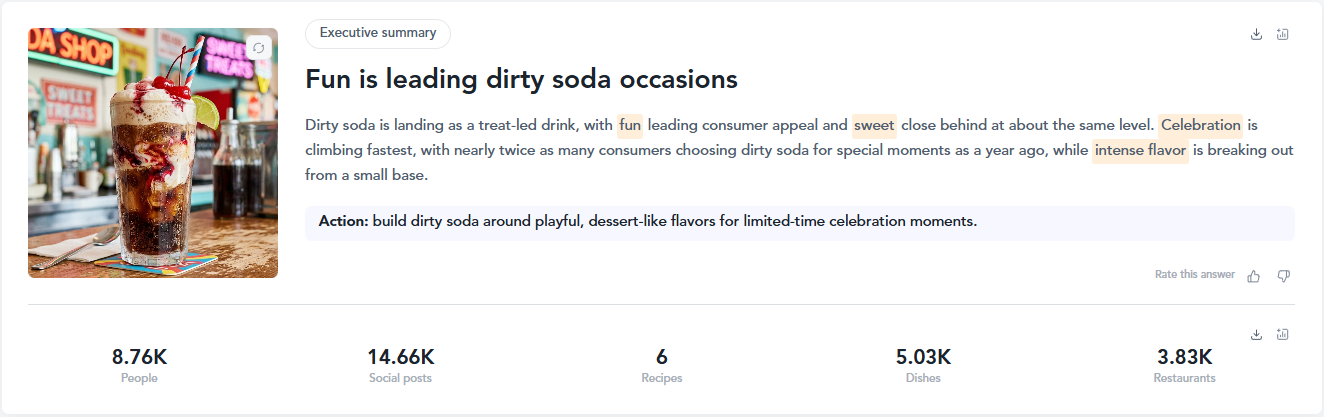
Dirty soda is a customizable carbonated drink built on a base of cola, lemon-lime soda, or cream soda, then layered with flavored syrups, fruit, and a pour of coconut cream or coffee creamer. The format blew up in the US via TikTok and Utah’s independent soda shops, and it is now making its way through European markets. In Germany, the consumer appetite is already showing up in the data. The product shelf and restaurant menus have not caught up.
Tastewise’s food intelligence platform tracks signals across consumer panels, restaurant menus, and recipe data simultaneously. In the German beverage space, dirty soda content volume grew 70.6% in the past year. Cream soda sits at a 41.15% ingredient share within the format but remains in an early lifecycle stage, meaning demand is building and brand supply is thin. Cola variants are up 44.8% and citrus zest flavors are up 54.9% as flavoring signals within the same context.
The opportunity is a summer LTO that gives German consumers a format they have been discovering online and a product they cannot yet find easily on shelves or menus. The gap between consumer curiosity and available product is where your team earns first-mover advantage. The summer food trends 2026 report covers the broader seasonal landscape and where beverages sit within it.
How German consumer behavior is accelerating the dirty soda moment
German consumers are not waiting for brands to invent dirty soda. They are making it at home, sharing it online, and looking for an easier version everywhere they shop or eat out. The consumer motivation data is blunt: sweet (süß) leads at 11.24% share, summer (Sommer) sits at 9.64% and is growing, and fun (Spaß) rounds out the top three. These three signals together tell you this is not a health drink or a premium spirits play. It is a joyful, warm-weather, shareable format.
That combination matters for how you position a retail SKU or a foodservice LTO. The “easy” motivation is also in the data. The German word einfach shows up as a leading claim. Consumers want dirty soda to feel like a spontaneous upgrade to their afternoon, not a complicated ritual. That simplicity is a design brief for format: single-serve RTD, premixed flavors, nothing that requires assembly at the table.
The product innovation solution at Tastewise is built exactly for moments like this one, where the consumer signal is ahead of the product shelf and your team needs to validate a concept quickly before the window moves.
5 dirty soda signals shaping Germany’s summer retail
1. Cream soda as the base
Cream soda holds a 41.15% ingredient share within the dirty soda context in Germany. It is the most-talked-about component by a wide margin. Yet it sits in the early lifecycle stage, which means volume is building without brand saturation. For your R&D team, this is the base to build from. The consumer is already reaching for it
2. Cola variants with serious velocity
Cola ingredients in the German dirty soda mix are up 44.8% in the past 12 months. Dirty soda coke zero and cola-based builds are the most recognizable entry point for a mainstream German consumer, familiar enough to try and customizable enough to feel new. Your retail pitch almost writes itself: start with a flavor consumers already trust, then add the creamer layer that makes it feel special.
3. Citrus-forward flavors doing the heavy lifting
Citrus zest (Zitrusschale) is up 54.9% in the German flavored soda space. Lemon, lime, and orange peel combinations are the natural direction for a summer dirty soda range. They read as fresh and seasonal on pack, and they pair cleanly with both cream soda and cola bases. Melon flavors are growing too, up 30.7%. That is your second SKU if you want a range play.
4. The summer occasion is already claimed
The Sommer (summer) claim in German carbonated beverages is up 14.6% in the past year. Consumers are already linking these drinks to warm-weather occasions: outdoor drinking, afternoon refreshment, friends and weekends. The data for Wochenende (weekend) and Freunde (friends) also shows up consistently across the dirty soda claims. That is an occasion story you can put directly on the label or on the menu board.
5. TikTok momentum is real, if early
Dirty soda has active TikTok signal in Germany. The format is being introduced to German audiences through content rather than retail, which is exactly how it spread in the US. Tastewise flagged dirty sodas as part of the next wave of fermented and flavour-forward beverage innovation back in October 2025. At the time, it was a niche signal sitting alongside botanical sodas and prebiotic mixers. It is no longer niche. That content-first discovery pattern means the brand that arrives first with a credible product meets consumers who are already curious. Gen Z beverage behavior follows this exact path, trend discovery online, then expectation at shelf. The question is how long before competitors notice the same signal.
Where the whitespace is: scoring the sweet spot
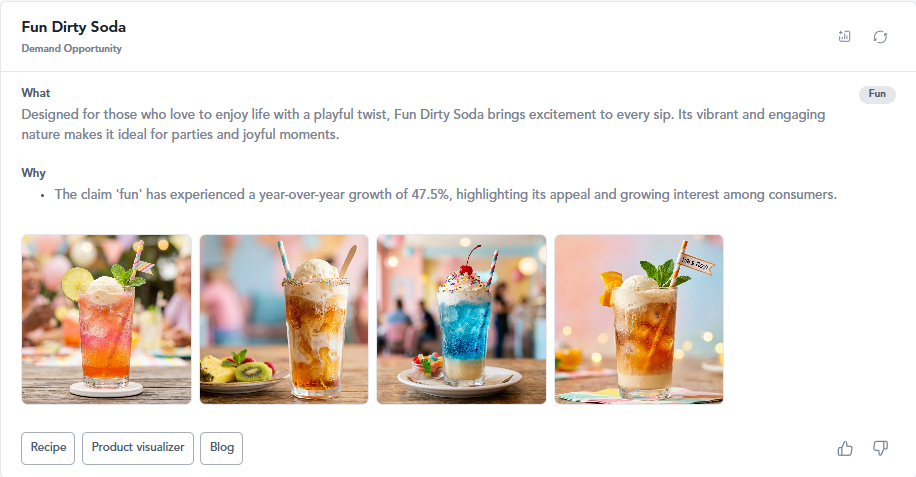
The intersection of cream soda’s early lifecycle stage and cola’s high growth velocity is the product brief. A dirty soda LTO for Germany does not need to reinvent the category. It needs to arrive in a market where demand is ahead of supply. That is the definition of whitespace, and it is exactly what the Tastewise data is showing for Germany right now.
The strongest flavor combination the data supports is a cream-based cola or lemon-lime soda layered with citrus or melon flavoring. Maple syrup (Ahornsirup) is growing 147.7% as a flavoring agent within creamer beverage contexts in Germany, an unexpected but interesting option for a premium dirty soda variant. Pepsi is growing 174.2% in flavored soda contexts, suggesting that non-Coca-Cola cola bases are gaining ground too.
For R&D teams, this means a three-SKU range is defensible: a cola-citrus dirty soda, a cream soda-melon variant, and a premium maple-cream build for a higher price tier. Each has independent demand evidence behind it. Each is different enough from what German shelves currently offer to justify the space. To see how leading food and beverage brands use consumer signals to validate exactly this kind of concept, the product innovation page walks through the process.
Ready to build your summer LTO concept?
What this means for CPG brands and foodservice operators in 2026?
The dirty soda moment in Germany is a channel-specific opportunity depending on where your team plays.
Innovation and R&D teams have a validated flavor brief: cola or cream soda base, citrus or melon flavoring, a creamer layer. The consumer signals for coffee creamer dirty soda and coconut cream dirty soda variants are active in English-language content reaching German audiences. That cross-border signal is a leading indicator for what the domestic market will want in 12 to 18 months.
Category managers can use the dirty soda whitespace to build a category-growth story for buyers. A retailer looking to grow the non-alcoholic beverages section in summer has almost nothing in the dirty soda format to offer right now. Your brand showing up first with the right positioning is a new-distribution story, not a share-of-shelf fight.
Sales teams have a clean narrative: consumers in Germany are already making dirty sodas at home and looking for the format in stores. The engagement data is growing at 70.6% in the past year. The retail shelf has not moved. That gap is the pitch. The retail sales enablement solution at Tastewise is built for exactly this kind of sell-in, turning a consumer signal into a buyer conversation that lands.
The CPG marketing guide covers how to translate signals like this one into a full campaign and channel strategy.
Win the dirty soda shelf in Germany this summer. The consumer signal is already there. The shelf space is still empty.
FAQs about dirty soda trends in Germany
Dirty soda is a customizable drink made by adding flavored syrups, fruit, and a pour of coconut cream or coffee creamer to a carbonated base like cola or cream soda. The format originated in the US and spread through TikTok. In Germany, consumer engagement with dirty soda content grew 70.6% in the past year, driven by sweet, summer, and fun motivations. Retail and foodservice product supply remains thin, creating a clear LTO opportunity.
Cola-based dirty soda variants are up 44.8% in the past 12 months in Germany, citrus zest flavors are up 54.9%, and melon is growing at 30.7%. Maple syrup is an emerging premium flavoring option, up 147.7% in the creamer beverage space. Cream soda is the leading base ingredient by share, sitting in an early lifecycle stage with strong upside.
Start with the consumer signal, not the product concept. Dirty soda engagement in Germany is growing at 70.6% in the past year with almost no branded response from retail or foodservice. That gap is the story. Show the buyer where demand is already heading, then connect your SKU to that movement: a cola-citrus dirty soda, a cream soda-melon variant, or a premium maple-cream build. Each has independent consumer demand evidence behind it, and each fills shelf space that is currently empty.

We’d love to learn your goals and see how Tastewise fits
We’d love to learn your goals and see how Tastewise fits
Get a personalized demo
Good taste. Wise move.
Your demo request is confirmed. We’ll reach out within one business day to schedule your walkthrough.
What happens next

See what’s driving demand, then turn it into a sell-in story for retailers and operators.
- Connect consumer panels, market trackers, and agents into one evidence view
- Get the “why” behind what’s changing, with explainable demand drivers
- Walk away with a buyer-ready narrative and next steps to activate
Trusted by


“Tastewise is my secret tool for knowing what consumers want next and why.“