






What Canada food trends are we seeing in 2026? Consumers are reorganising the way they think about what food and drink is supposed to do for them, and the brands that are already reading those signals have a meaningful head start. Functional claims are growing across nearly every category. Heritage and comfort cues are coming back with real momentum. And convenience formats are being redefined as premium, not as compromise. If your team is still working from last year’s brief, the gap between what Canadian shoppers want and what the market is giving them is widening every quarter. Tastewise tracks those signals in real time across the Canadian consumer panel and operator menus, so your team always has the current read.
Key takeaways
- Functional health claims are accelerating. Energy is up 91% in the past year. Metabolism is up 169%. Blood sugar is up 92%. These are mainstream purchase drivers your sell-in stories need to reflect.
- Comfort as a motivator is up 87% in Canada over the past 12 months, running alongside functional demand, not against it. Canadian consumers want both in the same product, and the brands building that bridge own the whitespace.
- Matcha is the breakout ingredient in Canada, growing 87% in the past year with a 1.3% menu share. The ingredient has consumer pull but is still underdeveloped at retail. That is the format opportunity.
- High protein is up 44% and protein powder up 51% since last year. The growth is not at the gym. Breakfast, snack, and on-the-go formats are where the volume is building.
What is driving food trends in Canada right now
Canadian consumers are redefining what good food is supposed to do. It is not enough for a product to taste great. Shoppers increasingly want food and drink to perform: to support energy, manage blood sugar, improve gut health, reduce inflammation, and still feel like something worth eating. This is not a wellness trend in the traditional sense. It is a deeper shift in how Canadians relate to their food choices, one that is structural and cross-demographic.
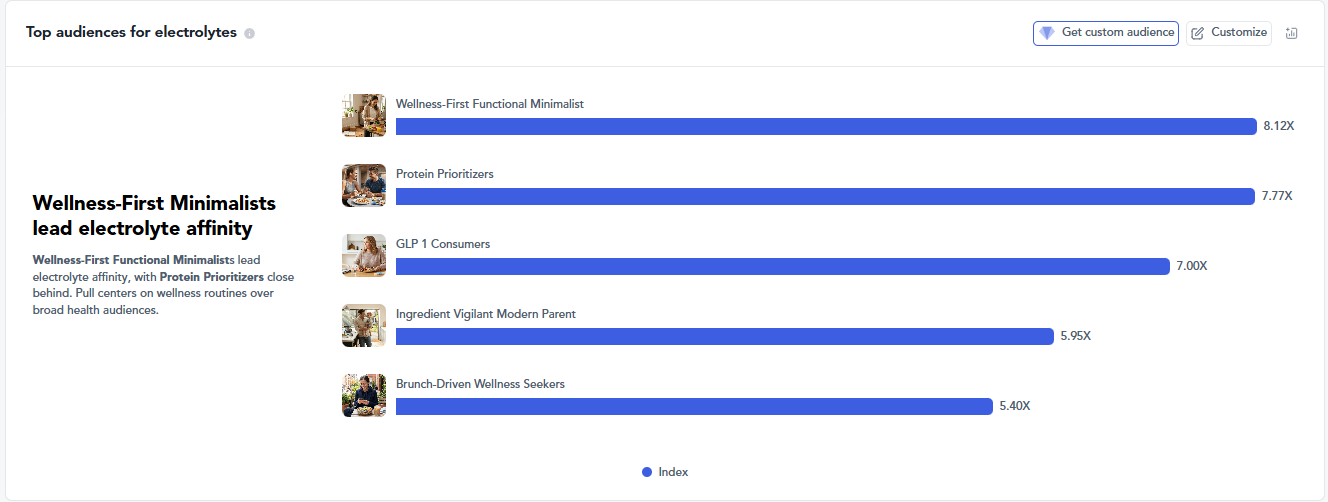
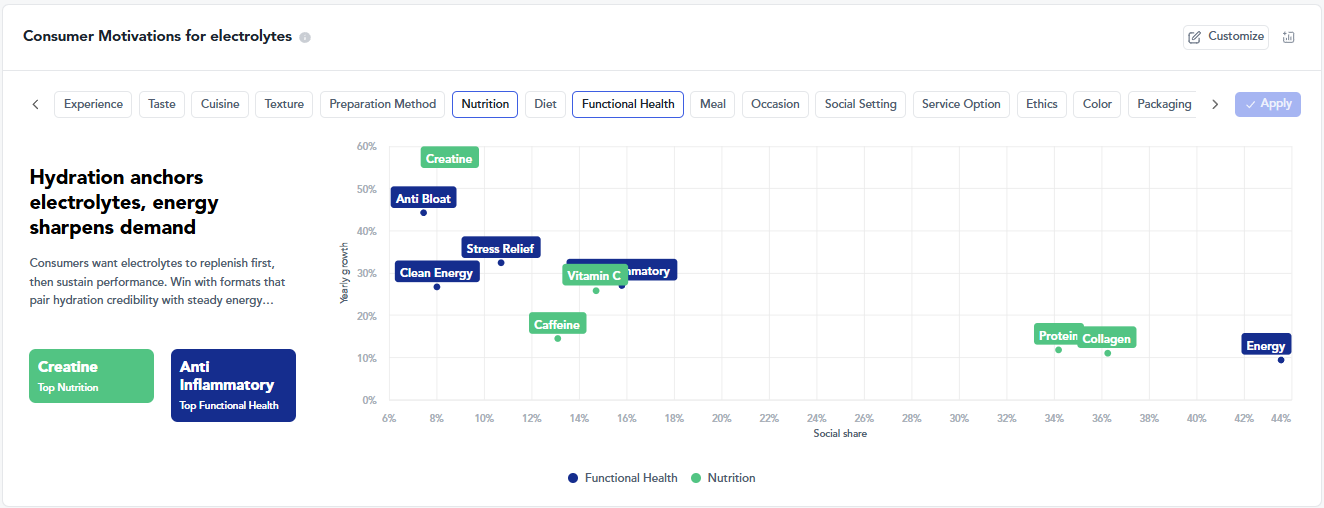
Tastewise data from the Canadian consumer panel shows the highest-growth claims are concentrated in functional health. Anti-inflammatory is up 168% in the past 12 months. Detox is up 203%. Electrolytes are up 207%. Blood sugar management is up 92%. Hormone balance is up 171%. These are reaching mainstream Canadian consumers across every channel and occasion. At the same time, comfort is up 87% and nostalgia is up 56%, confirming that the opportunity is not either/or. The brands that will win in Canada are the ones that deliver functional benefit inside a product that also feels familiar. See how Tastewise maps whitespace in your category
For Innovation Managers, R&D Directors, and Brand Marketers, this points to portfolio whitespace that most teams have not fully mapped. The 2026 food and beverage trend forecast gives a full view of where these signals sit in the category lifecycle and which ones have clear runway left.
The three food trends in Canada shaping 2026 product strategy
1. Functional health is moving from premium to default
The functional health conversation in Canada has reached a tipping point. It is no longer a premium-tier differentiator. It is becoming the baseline expectation across categories. Anti-inflammatory is up 168% since last year. Detox is up 203%. Electrolytes are up 207%. Blood sugar management is up 92%. Hormone balance is up 171%. These reflect a Canadian consumer who is actively managing long-term health through daily food and drink choices. The product opportunity here is not to add a single functional claim to an existing SKU. It is to design products where the functional story is the anchor. Tastewise’s product innovation solution shows which specific claims are gaining traction in your category and which ingredient combinations are already resonating with Canadian buyers.
2. Matcha and emerging botanicals: the ingredient the market is still building
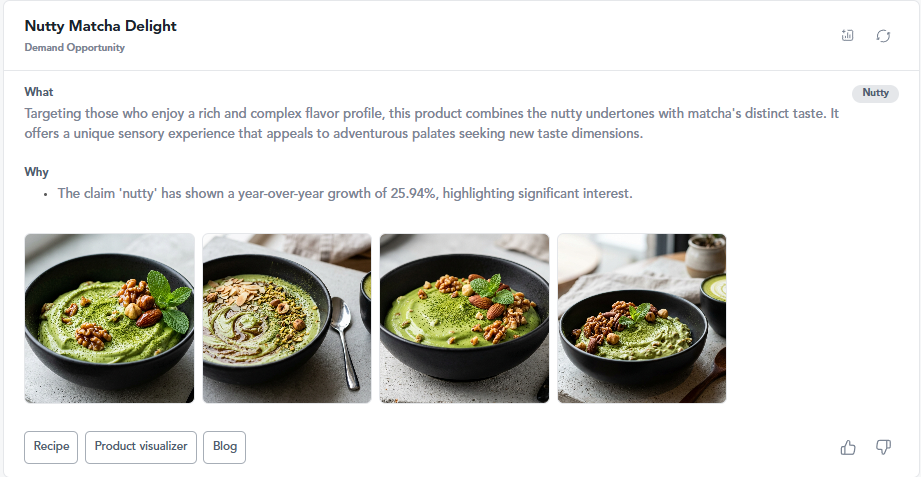
Matcha is the clearest single-ingredient story in Canada right now. It is growing 87% in the past year and has moved from social to operator menu presence, carrying a 1.3% menu share against a 1.79% consumer share. That gap matters. When consumer demand runs ahead of menu availability, it signals a format and positioning opportunity, not saturation. For R&D and marketing teams, this is the window before the market catches up. The secondary emerging ingredients worth watching include yogurt, up 53%, smoothie bowls, up 311%, and Greek yogurt, up 86% since last year. These cluster around a broader shift toward foods that are both probiotic-adjacent and visually driven. The pattern mirrors what Technomic described in its 2026 Canadian foodservice forecast: beverages are moving from a supporting role to a driver of visitation. The same dynamic is playing out with ingredient-led positioning at retail.
3. Comfort and nostalgia as a growth lever, not a defence play
Canada’s comfort signal is not a retreat from innovation. It is a signal about what innovation needs to feel like. Comfort as a consumer motivator is up 87% in the past year. Nostalgia is up 56%. Authentic is up 24%. These signals run in parallel with the functional health momentum, not against it. What they collectively describe is a Canadian consumer who wants food and drink that feels grounded, recognisable, and human. For brand teams, ingredient choices should connect to heritage flavour profiles even when the format or function is new. The Canadian identity claim is also real: the term is up 17% on the panel with a 61% share weighted toward home occasions. That is a buy-local and source-local story your retail sell-in narrative can carry with genuine consumer data behind it.
Your Canadian market brief is a conversation away. See how Tastewise builds Canada-specific consumer briefs in minutes.
How current food trends in Canada are showing up across channels
At-home occasions
Home occasions dominate the Canadian functional health signal. Anti-inflammatory, detox, blood sugar, and metabolism claims are running at 88 to 95% home-weighted on the consumer panel. This tells your team something specific: the Canadian consumer most actively engaging with functional food is shopping at retail, cooking at home, and reading ingredient labels carefully. Clean label is up 132% in Canada since last year. For CPG teams, this is the argument for front-of-pack clarity. The CPG marketing strategies that are winning right now lead with ingredient transparency, not just health claims.
Foodservice and operator occasions
The restaurant channel in Canada is where comfort and global flavour are building fastest. Halal is up 21%. Authentic is up 24%. Canadian is up 17%. These align with what operators are reporting about what is driving visitation. The food industry trends Canada is watching in 2026 consistently point to flavour-led beverages and ingredient-forward formats as the growth drivers in fast casual and QSR. Your foodservice sell-in narratives should anchor on the consumer demand data operators are trying to meet, not just on the operational benefits of your product.
Key ingredients in Canada food trends 2026
The following ingredients combine meaningful reach with above-average velocity in the Canadian consumer panel. Each has a distinct opportunity profile for your R&D team.
- Matcha. Growth: +87% in the past year. Lifecycle: emerging. High consumer pull with below-parity menu presence. Format whitespace at retail.
- Yogurt and Greek yogurt. Growth: +53% and +86% respectively. Lifecycle: emerging. Probiotic-adjacent. Functional and snack formats both have runway.
- Smoothie and smoothie bowl. Growth: +43% and +311%. Lifecycle: emerging. Visual-led and shareable. Under-represented in portable retail formats.
- Functional soda. Growth: +61%. Lifecycle: emerging. Alcohol-free occasion. Hydration and gut health crossover play.
- Collagen. Growth: +86%. Lifecycle: early. Strong home bias at 74%. Supplement-to-food bridge opportunity.
- Oats and overnight oats. Growth: +44% and +119%. Lifecycle: early. Convenient nutrition. Clean-label base for protein and gut health claims.
What your team should do with these food trends Canada signals
For R&D and innovation teams
The clearest whitespace in Canada is the functional-comfort intersection. Products that anchor on a clean, recognisable base ingredient (yogurt, oats, matcha, broth) and layer in a functional claim (gut health, anti-inflammatory, energy) against a familiar flavour cue represent a combination consumer data is pointing to clearly and the market has not yet filled. The food industry trends Canada is producing in 2026 reward teams that can validate concepts fast. Tastewise’s agentic AI runs concept validation against the live Canadian consumer panel in minutes, so your team can build the brief, test the positioning, and walk into a product review with evidence rather than assumption.
For marketing and brand teams
The buy-Canadian signal is real and growing. The claim “Canadian” is up 17% with a strong home-occasion weighting. This is not generic patriotism. It is a consumer need for provenance and sourcing transparency that is directly linked to the clean-label momentum. Your brand campaigns in 2026 should connect the ingredient story to the sourcing story. The food marketing strategies that are building share in Canada lead with those answers, not with claims that require a label read.
For sales and commercial teams
Canadian retail buyers are looking for sell-in narratives that connect consumer demand data directly to product claims. The food trends report 2026 Canada shows that functional health, convenience, and comfort are not competing stories. They are the same story told from three different angles. Your buyer pitch should quantify the demand behind each angle with Canadian-specific numbers, not US market proxies. The best B2B sales enablement tools for CPG in 2026 put that data in the hands of the seller at the moment of the pitch.
For broader market context: Food in Canada’s November 2025 industry panel reported that whey protein products are growing at three times the rate of the overall Canadian market, with brands that explicitly call out protein claims on-pack seeing growth roughly 20 times the overall marketplace rate. That velocity confirms what the Tastewise consumer panel shows: functional protein claims are not peaking in Canada. They are normalising.
The Canadian market brief your team needs is already in the data. Tastewise builds real-time Canada food trend reports using live consumer panel data, operator menus, and agentic AI. Your team can have a full category brief in a single session.
FAQs about Canada food trends
The three strongest signals in the Canadian consumer panel for 2026 are functional health (led by anti-inflammatory, metabolism, energy, and blood sugar claims), comfort and nostalgia (both up significantly in the past year), and protein-forward convenience. Matcha is the standout single ingredient, growing 87% and already crossing into operator menus. The 2026 food and beverage trend forecast covers these signals in full with Canadian-specific data.
Canadian consumer behaviour is directionally similar to the US on functional health but differs meaningfully on the comfort-and-nostalgia signal, the buy-Canadian provenance demand, and the specific ingredient breakouts. Matcha, yogurt, and soda are all growing faster in Canada than in the broader North American dataset. Teams that use US data as a proxy for Canada will misread both the timing and the format opportunity.
The most effective retail sell-in narratives in 2026 connect three things: a specific Canadian consumer demand signal, the gap between what consumers want and what is currently on shelf, and the velocity data that tells the buyer this is a durable trend. Tastewise builds that brief automatically from the live Canadian consumer panel. See the retail sales solution for how your sales team can walk into a buyer meeting with a Canada-specific proof deck.



We’d love to learn your goals and see how Tastewise fits
We’d love to learn your goals and see how Tastewise fits
Get a personalized demo
Good taste. Wise move.
Your demo request is confirmed. We’ll reach out within one business day to schedule your walkthrough.
What happens next

See what’s driving demand, then turn it into a sell-in story for retailers and operators.
- Connect consumer panels, market trackers, and agents into one evidence view
- Get the “why” behind what’s changing, with explainable demand drivers
- Walk away with a buyer-ready narrative and next steps to activate
Trusted by





“Tastewise is my secret tool for knowing what consumers want next and why.“