





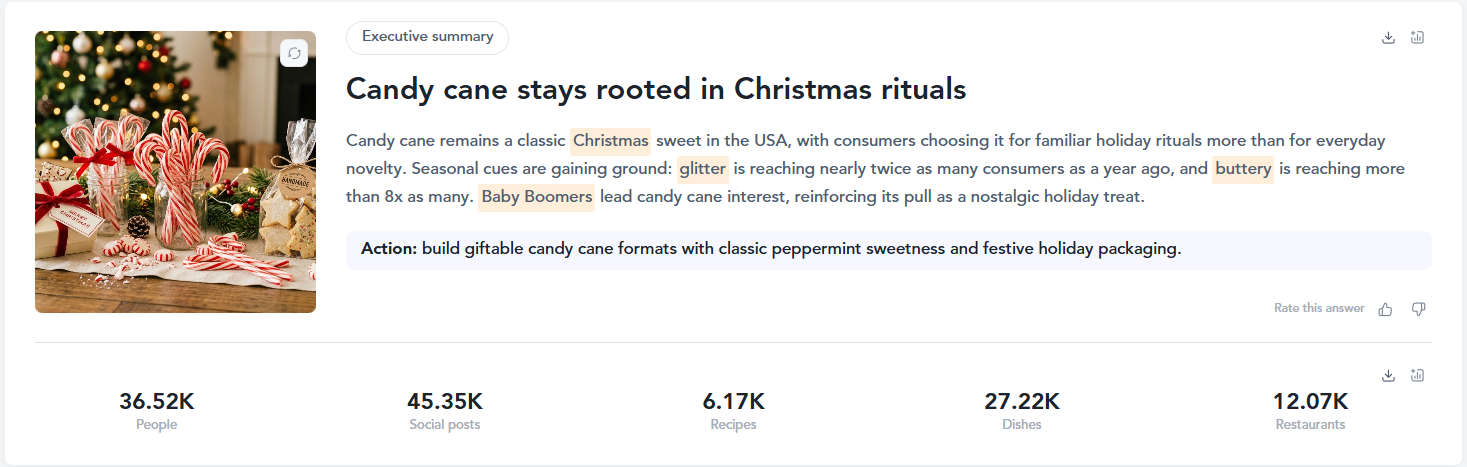
Candy canes have anchored the holiday confectionery shelf for generations, but the candy canes trend in 2026 is showing a more complicated picture than pure nostalgia. Consumer engagement with the format remains strong, with dishes connected to candy cane flavors up 33% more than a year ago across the Tastewise US consumer panel. At the same time, the core ingredient itself is in a mature lifecycle stage, while adjacent flavors like cinnamon (+29% in the past year), caramel (+19%), and latte (+33%) are in an emerging or trending stage within the same confectionery universe. That divergence is the signal your team should not ignore. The window to lead a flavour-forward reformulation is open right now, before competitors read the same data.
Key takeaways
- Candy cane-adjacent dishes grew 33% in the past 12 months. Consumer demand for the mint-and-sweet flavour profile is accelerating even as the core format matures. Your team can capture that demand through seasonal line extensions that lead with emerging pairings rather than traditional peppermint alone.
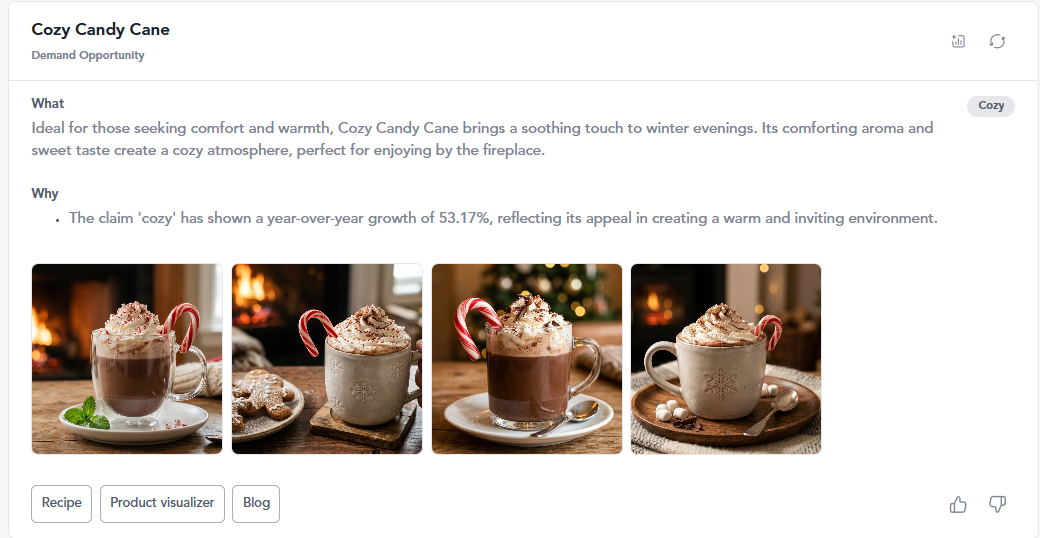
- The festive claim is growing 41% and the cozy claim 53%. Consumers are broadening the emotional territory around candy canes beyond Christmas. Products that own the cozy or family occasion throughout winter, not just December, have a longer commercial runway.
- Cinnamon is up 29% within the candy cane confectionery context and is in a trending lifecycle stage. Brands that combine peppermint with cinnamon in a limited edition or duo-format can meet a clear consumer preference gap before the 2026 holiday season.
- Latte sits in an emerging stage within the candy cane flavour universe, growing 33% in the past year. The coffee-mint combination is already appearing on foodservice menus and has not yet reached retail in meaningful volume. That gap is the retail whitespace your category team should be briefing now.
What is driving the candy canes trend in 2026
Candy canes began as a single-format, single-occasion product. What consumers are doing with them now is different. Across the Tastewise panel, the ingredient set surrounding candy cane consumption has broadened considerably. Chocolate is trending at +21% within the confectionery category. Ice cream is growing at +47%. Latte, cinnamon bun, and waffle are all in an emerging stage and trending upward at 33%, 95%, and 72% respectively. Consumers are not just eating candy canes. They are using the mint-sweet profile as a flavour anchor in layered, multi-ingredient experiences.
The Tastewise US consumer panel shows 34,624 dishes connected to candy cane flavour signals, up 33% since last year. The most material growth is not in the traditional candy format itself but in beverages, baked goods, and dessert applications that borrow the flavour profile. Peppermint mocha holds a 2.1% menu share in foodservice. Candy cane lattes, milkshakes, and crinkle cookies are appearing across quick service and fast casual menus at $5 to $10 price points, with limited seasonal availability driving scarcity-led demand.
For your R&D and marketing teams, the opportunity is in the flavour combinations the market has not yet covered at retail scale. Cinnamon-peppermint, coffee-mint, and chocolate-caramel-mint are all growing in consumer preference data but remain underdeveloped at the shelf. The product innovation case is clear: a brand that moves this planning cycle has a genuine first-mover window in the premium seasonal confectionery segment.
What the candy canes trend data shows about consumer behaviour
The candy canes trend is mature at the core and growing at the edges. That is a specific commercial situation and it calls for a specific response. Tastewise data shows the main candy cane ingredient holding a 93.81 share within the confectionery consumer universe, but its trend in the past year is -6.5%. In plain terms: nearly every consumer in this space already knows the product. The base is saturated. The velocity is negative. That is not a growth story for the core SKU. It is a signal to extend into adjacent territory where the consumer’s appetite is still growing.
The adjacent territory is clearly defined. Chocolate is in a trending lifecycle stage at +21% within confectionery. Caramel is trending at +19%. Cinnamon is trending at +29%. These are not niche signals. They are the fastest-growing flavour companions to peppermint in the same consumer cohort that already buys candy canes. A cinnamon-peppermint bark, a caramel-mint filled confection, or a dark chocolate peppermint thin all sit at the intersection of existing consumer demand and underexplored retail SKUs.
Consumer motivations in this space are shifting too. The festive claim grew 41% in the past 12 months. Cozy grew 53%. The family claim grew 12%. Weekend grew 39%. These signals point to consumers who want mint-sweet flavour experiences across a broader seasonal window, not just on Christmas Eve. Your sell-in narrative to retail buyers should reflect that extended occasion. A SKU positioned as a cozy winter indulgence rather than a Christmas-only item earns more weeks of shelf space, which changes the financial case entirely.
Where the candy canes trend is moving fastest by channel
At-home consumption is where the deepest volume lives. The in-the-kitchen recipes attached to the candy cane flavour universe include everything from peppermint bark to candy cane hot chocolate jars to peppermint Oreo truffles, showing that consumers are actively building around the flavour profile at home. That home-cooking behaviour is a leading indicator for retail demand. When consumers are making something at home in volume, a packaged version of the same experience typically follows 12 to 18 months later.
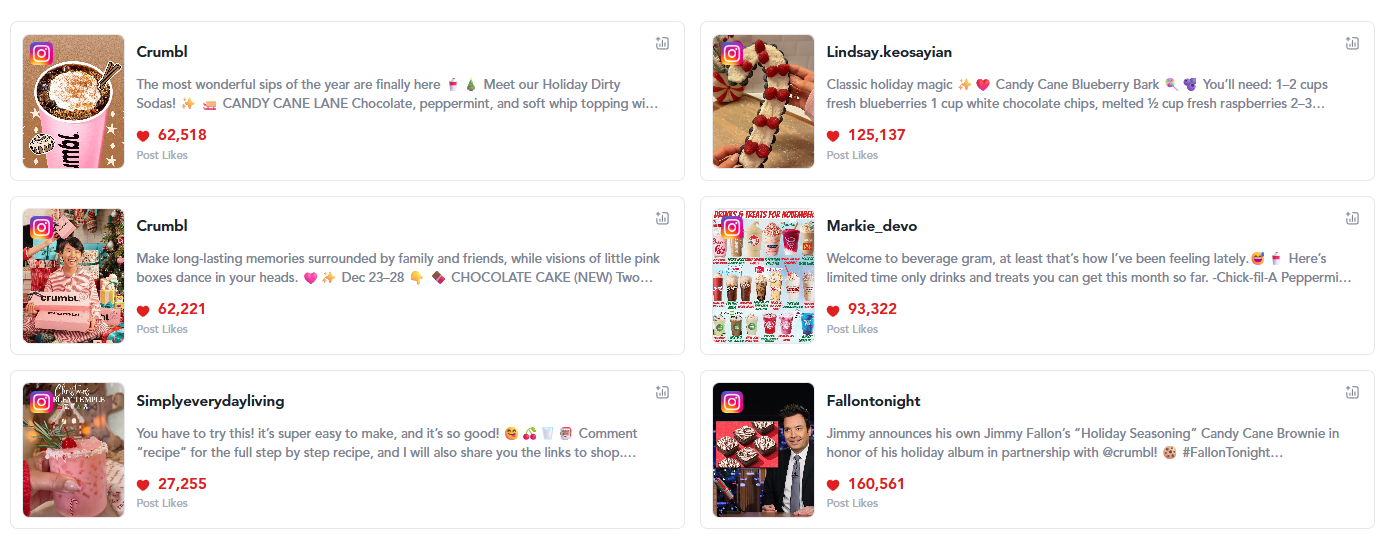
In foodservice, the data shows 246 menu items connected to candy cane flavour signals across 13,964 restaurants. The leading applications are beverages: peppermint mocha, candy cane lattes, chocolate covered candy cane frappes, and iced candy cane drinks. Beverage applications dominate because they translate the flavour profile into a repeatable, high-margin format that chains can run as a limited time offer with minimal sourcing complexity. That is the precise whitespace a retail or CPG brand can fill with a ready-to-drink or powder format that replicates the foodservice experience at home.
The retail shelf data shows a category still anchored to traditional peppermint candy canes from mass-market brands at $1 to $10 price points. The premium and innovation segment, where flavour variety and better-for-you positioning would naturally sit, is underpopulated. The retail sales opportunity for a brand willing to lead on flavour complexity in a premium single-serve or gifting format is real and currently unoccupied.
The flavour combinations driving candy cane innovation
The most valuable insight from the Tastewise consumer panel is not that peppermint is popular. It is that specific pairings are growing at meaningfully different rates inside the same consumer cohort. Cinnamon bun is in an emerging stage at +95% in the past year within the candy cane universe. Waffle is emerging at +72%. Pastry is emerging at +81%. Sugar cookie is emerging at +36%. These are baking-adjacent flavour companions that are reaching consumers at a rate that suggests a clear consumer need for candy cane flavour in non-traditional formats, specifically baked and breakfast-adjacent products.
The chocolate dimension is equally instructive. Chocolate itself is trending at +21%, but double chocolate within the candy cane context is growing at +127% in the past year. Milk chocolate is at +57%. The consumer signal is that richer, more indulgent chocolate pairings with peppermint are the direction of travel. A dark chocolate peppermint confection or a chocolate bark with crushed candy cane and sea salt sits at the exact intersection the data points to.
On the beverage side, latte is in an emerging stage at +33% within the candy cane flavour universe, while cold foam is growing at +138%. These signals together suggest a consumer appetite for peppermint-flavoured premium coffee formats that has not translated into a retail packaged version yet. For a brand operating in food and beverage marketing with access to a coffee or beverage manufacturing partner, this is a genuine first-mover window in a category that foodservice has already validated.
What your team can do with this data now
The candy canes trend in 2026 presents three distinct activation opportunities depending on your team’s planning horizon and channel focus.
For R&D teams: reformulate around flavour companions
The data is specific: cinnamon, caramel, and double chocolate are the fastest-growing flavour companions in the candy cane consumer universe. A reformulation or line extension built around cinnamon-peppermint or caramel-mint flavour profiles enters a space where consumer demand is documented and no mainstream retail brand has established a strong position. The typical validation cycle for this kind of adjacent reformulation is 6 to 9 months, which means starting the brief now puts a product on shelf for the 2026 holiday season.
For marketing teams: extend the occasion beyond December
The cozy claim growing 53% and the family claim growing 12% both signal that consumers are ready for mint-sweet flavour experiences outside the strict Christmas window. A campaign that positions candy cane-flavoured products as a winter treat from November through February, rather than a December-only item, earns more shelf time and more consumer impressions. The food marketing strategies that work in this space lead with occasion broadening, not just seasonal novelty.
For sales teams: build the retail buyer story
The retail buyer case for a premium candy cane innovation is built on three numbers: 33% dish growth in the past year, 41% growth in the festive claim, and 53% growth in the cozy claim. Together they show a consumer base that is growing in its engagement with the flavour profile and broadening the occasions it connects to. A sell-in deck built around those signals, cross-referenced with the foodservice menu data showing what consumers are already buying at $7 to $10 in quick service, makes a compelling case for a premium price point at retail.
FAQs about the candy cane trend
Consumer engagement with candy cane flavour profiles is growing through adjacent applications rather than the traditional format. Dishes connected to candy cane flavour signals grew 33% in the past year on the Tastewise US consumer panel. The growth is concentrated in beverages, baked goods, and multi-ingredient desserts that use peppermint as a flavour anchor rather than as the primary product.
Cinnamon is in a trending lifecycle stage at +29% within the candy cane confectionery universe. Caramel is trending at +19%. Chocolate is trending at +21%. On the emerging side, latte, cinnamon bun, and waffle are all growing at 33%, 95%, and 72% respectively in the past 12 months. These pairings represent the clearest innovation whitespace in the category because they are growing in consumer preference data but remain underdeveloped at the retail shelf.
The core candy cane ingredient is in a mature lifecycle stage with a -6.5% trend in the past year, which indicates market saturation at the format level. The opportunity is not in the traditional format. It is in the flavour universe around it. Dish applications connected to candy cane flavour profiles grew 33% in the same period, showing that consumer appetite for the mint-sweet profile is expanding even as the original format peaks.




We’d love to learn your goals and see how Tastewise fits
We’d love to learn your goals and see how Tastewise fits
Get a personalized demo
Good taste. Wise move.
Your demo request is confirmed. We’ll reach out within one business day to schedule your walkthrough.
What happens next

See what’s driving demand, then turn it into a sell-in story for retailers and operators.
- Connect consumer panels, market trackers, and agents into one evidence view
- Get the “why” behind what’s changing, with explainable demand drivers
- Walk away with a buyer-ready narrative and next steps to activate
Trusted by





“Tastewise is my secret tool for knowing what consumers want next and why.“