





The UK beverage aisle is shifting faster than most category reviews can keep pace with. Brown sugar bubble tea has moved from independent boba shops in East London and Manchester to a credible claim on prime summer shelf space, and consumers are showing up for it on their own terms. Operators across the UK now carry brown sugar bubble tea variants in 380 restaurants, and consumer posts around the format grew 3.1% in the past 12 months even as the broader bubble tea category declined 11.5% in the same period. If your innovation or sales team has this drink in your sightline for 2026, the consumer evidence supports moving before the summer seasonal window closes.
The operator investment signals the same urgency. Gong Cha has committed to opening 225 new UK stores in the coming years, creating nearly 2,000 jobs. That is not a brand hedging on a niche. That is a commercial bet on bubble tea becoming a fixture of the British high street. Retail has a window to lead before the format is fully normalised.
Key takeaways
- Consumer posts for brown sugar bubble tea grew 3.1% in the past 12 months while the broader bubble tea category fell 11.5%. The format is pulling ahead within a contracting category. That divergence is the exact story a retail buyer needs to hear.
- Matcha is up 83.6% in the past year as a companion ingredient in brown sugar bubble tea. No UK retail SKU owns this combination yet. R&D teams that move now get to the buyer meeting first.
- “Refreshing” is up 7.5% and “creamy” is up 5.8% as experience claims in this format. The consumer is making a texture-led decision, not just a flavour one. Format and mouthfeel belong in your brief.
- 477 UK operators carry bubble tea formats, with 380 restaurants stocking brown sugar variants specifically. Foodservice has already normalised this drink. Retail still has room to lead.
Brown sugar bubble tea in 2026: what UK consumers are actually doing
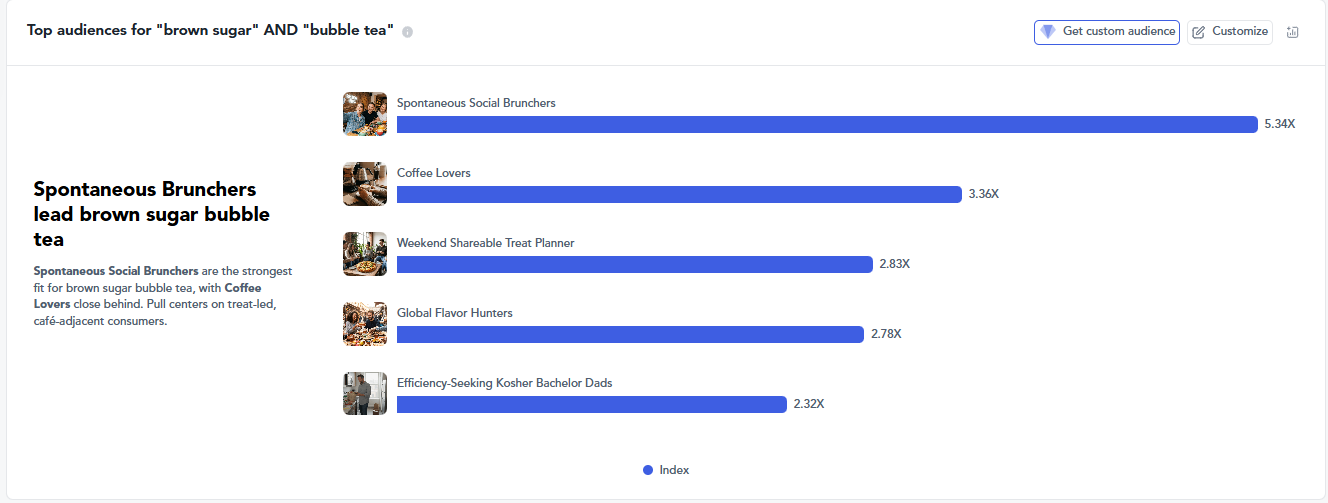
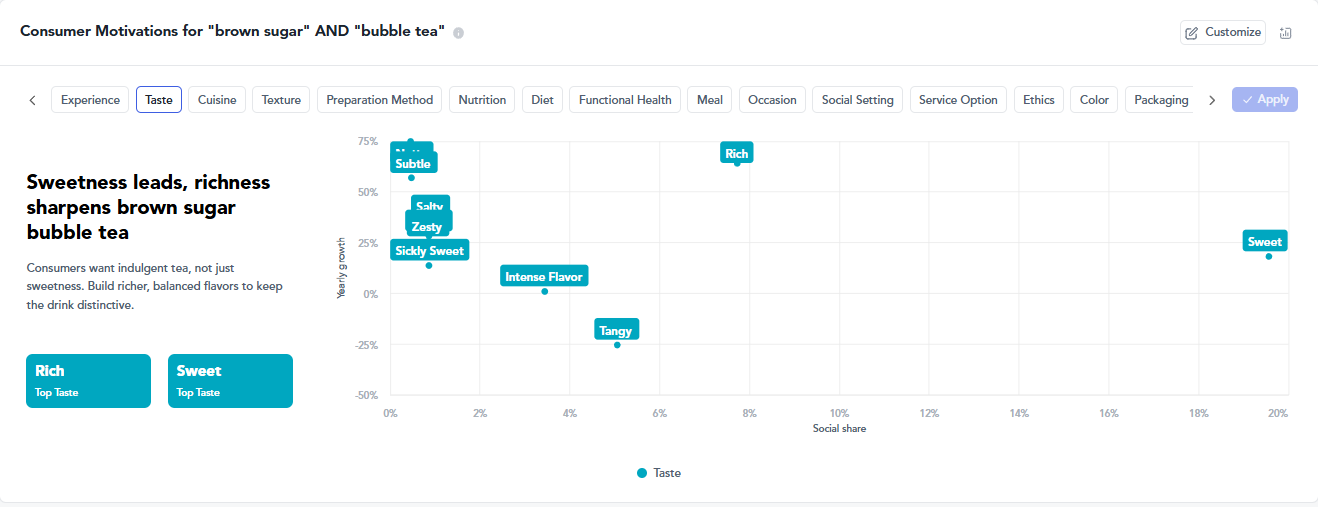
Brown sugar bubble tea sits at an unusual intersection for a drink category: indulgent but not heavy, visually distinctive, and tightly tied to a social occasion context. The experience signals driving it in the UK right now are “sweet” (24.6% share), “refreshing” (up 7.5%), “creamy” (up 5.8%), and “tangy” (up 45.6%). That last signal is the most telling. Tangy growing fastest means the consumer is already comfortable with complexity and contrast in this format. This is not a simple sugar-hit drink. It is a craft beverage experience that people associate with friends, weekends, and the kind of discovery moment that makes them share.
Consumer intelligence from the Tastewise food intelligence platform tracks 380 UK restaurants currently carrying brown sugar bubble tea, with 477 operators across the wider bubble tea category stocking related formats. The fastest-growing companion ingredients are matcha (up 83.6% in the past 12 months), strawberry (up 31.6%), and coffee (up 31.2%). These are not niche additions. They are the building blocks of the next generation of premium bubble tea SKUs at retail. The beverage trends data for 2026 shows this same premium-casual format shift playing out across the wider drinks category.
The opportunity is specific. Most branded retail SKUs in the UK still treat bubble tea as a novelty, positioning it narrowly around its Taiwanese origin and visual theatre. Consumer behaviour has moved past that. The drink is now a texture-led, occasion-flexible, premium-casual format. Brands that treat it that way in their sell-in materials and on-pack language will land better buyer conversations than those still leading with the authenticity narrative alone.
Extracting value from indulgence in the 2026 beverage reset
UK supermarket category managers are under pressure to right-size their soft drinks sections and find genuinely incremental distribution. The question a brown sugar bubble tea SKU has to answer is simple: does it bring a new shopper into the aisle, or does it cannibalise an existing premium RTD? The consumer data gives your team a strong answer, but only if you frame it correctly.
Consumer motivation data shows “south east asian” claims growing at 52% in the past year within the brown sugar bubble tea conversation. That consumer is already buying Asian cuisine products, speciality teas, and premium soft drinks. A well-positioned brown sugar bubble tea SKU does not compete with cola or standard iced tea on that shopper’s basket. It sits in a completely different need state, and that is the incremental argument your category team needs.
Brown sugar bubble tea occupies the premium-casual beverage occasion that UK consumers are defining right now: sociable, textured, visually interesting, and grounded in a credible flavour story. That occasion is not currently owned by any major UK beverage brand. It lives almost entirely in foodservice and independents. Retail has a gap, and the retail sales solution gives your team the market sizing and segment evidence to make that argument in the room.
Uncovering consumer whitespace for brown sugar bubble tea
The formulation brief for this category in the UK is not finished. Consumer signals point to three emerging white spaces that R&D teams can act on before summer seasonal reviews close.
The first is dairy-free bases. The “dairy free” claim is growing at 16.3% in the brown sugar bubble tea consumer conversation, and the broader bubble tea category shows dairy-free up 79.8%. Oat milk and coconut bases appear consistently in the ingredient co-occurrence data. Coconut is up 5.9% in the past 12 months for brown sugar bubble tea specifically. The direction is clear, and no UK retail product has landed here yet.
The second white space is the matcha-brown sugar combination. Matcha is growing at 83.6% in the past year as a companion ingredient. The matcha trends data for 2026 confirms this as one of the strongest crossover signals across tea and beverage formats. In the UK, only a handful of foodservice operators have explicit matcha-brown sugar builds on their menus: Xing Fu Tang in London, Shakeii Shakeii in Wembley, and Truedan in Brunswick Centre are among the few. No mainstream UK retail SKU owns this space. The flavour logic is clear: the bittersweet earthiness of matcha cuts through the caramel-sweet brown sugar syrup in a way that makes the drink feel more premium and less one-note.
The third is texture signalling on pack. “Chewy” sits at a stable share in the consumer conversation, but tapioca pearls appear on 24.9% of brown sugar bubble tea menus and tapioca is the second highest-share ingredient in the format. The chewy pearl experience separates this drink from every other premium RTD in the chilled aisle. Brands that lead with texture on pack, not just flavour, are more likely to convert the shelf-browser who has never tried bubble tea into a trial purchaser.
Using category analytics to prove the brand deserves premium placement
The premium placement conversation with a UK supermarket buyer comes down to one question: does your product bring demonstrably different consumers into the category, or does it just switch shoppers between SKUs? For brown sugar bubble tea, the consumer data gives your team a strong answer.
The “premium” claim is growing at 1.9% in brown sugar bubble tea consumer conversations, and “artisan” is up 34.4%. In a category where most existing consumer language sits around “sweet”, “tasty”, and “refreshing”, the emergence of premium and artisan framing signals a segment of consumers actively seeking to trade up. These are the shoppers supermarket category managers want in their beverage aisle, and they are already coming to bubble tea with that intent.
The “friends” motivation is growing at 15.6% and the “weekend” occasion holds at 4.18% share. Shoppers are not grabbing brown sugar bubble tea as a functional hydration hit. They are choosing it deliberately for a specific social moment. That is the makings of a high-margin, repeat-purchase format in the right retail environment. The consumer marketing solution helps brand teams build these sell-in narratives with the category evidence to back them up.
Micro-market targeting for brown sugar bubble tea across UK regional footprints
UK supermarket buyers manage highly specific store clusters. A drink trend that shows strong velocity in urban London hubs may need a different formulation or positioning in other regional footprints. For brown sugar bubble tea, the operator menu data makes this visible.
The menu evidence shows a heavy concentration of operators in London alongside growing presence in Birmingham, Edinburgh, Manchester, and Coventry. The Edinburgh University locations for Nanyang Restaurant and Maycheelin Bubble Tea signal that this format is already normalised in student-heavy urban markets outside London. The consumer for bubble tea in Edinburgh is likely younger, more price-sensitive, and more familiar with the format than a mainstream supermarket shopper in a suburban Southern England cluster.
This distinction matters for your pitch. A national listing argument built entirely on London-centric consumer signals will not hold up with a buyer managing Northern or Midlands store clusters. The “back to school” occasion signal growing at 25% in brown sugar bubble tea consumer conversations points to a younger demographic driving adoption. In student-dense cities, that signal is stronger and the conversion argument to a buyer is faster. Geo-specific consumer filters on the Tastewise platform let your sales team tailor the story to the exact account and store cluster, protecting them from a generic national pitch that does not survive scrutiny.
What this means for beverage brands in 2026
For Innovation and R&D teams
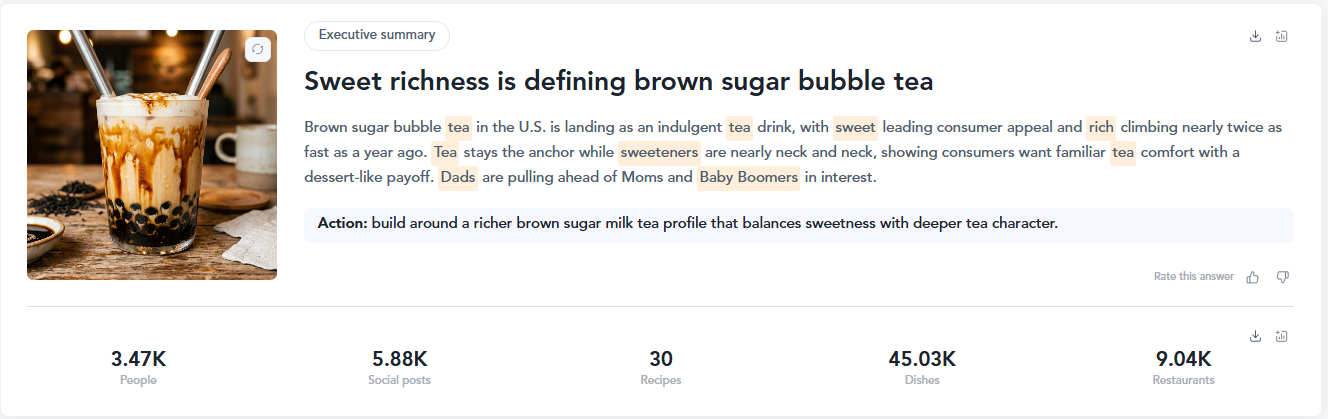
The matcha-brown sugar and oat milk-brown sugar formulation spaces are both growing in UK consumer conversations and still unclaimed in retail. R&D briefs built on actual consumer demand signals produce concepts that survive internal review more easily because the evidence is defensible at every stage. Build the brief from the consumer data, and your innovation pipeline moves faster. The product innovation solution connects these signals directly to your formulation process.
For Category Managers
The “dessert” claim in the broader bubble tea conversation is up 57% in the past year. Shoppers are treating bubble tea as a meal extension or sweet treat occasion, not just a standalone drink. That basket-building insight is the argument you need to defend shelf space: this format increases the total basket, it does not cannibalise existing lines. Bring the occasion data and the basket context to your next range review, and the conversation changes.
For Sales Enablement
Static decks do not win buyer meetings in 2026. UK supermarket buyers expect current demand data, not six-month-old trend reports. Walking into a retailer account review with real-time consumer evidence for brown sugar bubble tea, a clear whitespace argument, and region-specific demand signals is the difference between a listing conversation and a waiting room.
Looking ahead: brown sugar bubble tea and 2027 shelf resets
The brands watching bubble tea data today are not the same ones who will be surprised by a private-label brown sugar boba launch in 2027. Retailers move fast when consumer demand is visible and no branded response has appeared yet.
The “limited edition” claim is growing at 16.3% in the brown sugar bubble tea conversation, and “seasonal” is up 16.3% in the same period. Consumers are comfortable with episodic encounters with this format. A summer limited edition is a lower-risk entry point than a full-year listing, but it builds the consumer evidence base that supports a permanent listing in the next reset. Treat the 2026 summer window as a proving ground, not just a sales opportunity.
Brands that maintain always-on category intelligence will see the next private-label threat coming. Those relying on retrospective reports and annual forecasts will not. The shift from periodic review to continuous intelligence is already happening among the leading UK food and beverage brands.
The consumer demand for brown sugar bubble tea in the UK is real, growing relative to the broader category, and still commercially underdeveloped in retail. Your team has a window.
FAQs about brown sugar bubble tea in the UK
Consumer posts for brown sugar bubble tea grew 3.1% in the past 12 months, while the broader bubble tea category declined 11.5% in the same period. That divergence is the key signal. The format is holding and gaining relative share within a contracting category, which is the behaviour pattern of a trend that has moved past novelty into a more stable consumer habit. The operator footprint of 380 UK restaurants carrying the format supports the same reading.
The three highest-priority formulation directions supported by UK consumer data are: a matcha-brown sugar variant (matcha up 83.6% in the past year as a companion ingredient), a dairy-free or oat milk base (dairy-free claims growing in both the brown sugar and broader bubble tea conversation), and a coffee-brown sugar combination (coffee up 31.2% as a companion ingredient). Each is already appearing in UK foodservice but has no significant retail presence yet.
Start with the consumer demand evidence specific to the retailer’s store cluster and target demographic. Demonstrate that brown sugar bubble tea attracts a different shopper than existing premium RTD SKUs by showing the occasion and motivation data. Back it with the foodservice operator data showing existing normalisation in nearby urban markets. Frame the ask as an incremental distribution opportunity, not a substitution. The Summer 2026 Food Trends report gives your team the wider seasonal category context to anchor that conversation in the right moment.




We’d love to learn your goals and see how Tastewise fits
We’d love to learn your goals and see how Tastewise fits
Get a personalized demo
Good taste. Wise move.
Your demo request is confirmed. We’ll reach out within one business day to schedule your walkthrough.
What happens next

See what’s driving demand, then turn it into a sell-in story for retailers and operators.
- Connect consumer panels, market trackers, and agents into one evidence view
- Get the “why” behind what’s changing, with explainable demand drivers
- Walk away with a buyer-ready narrative and next steps to activate
Trusted by





“Tastewise is my secret tool for knowing what consumers want next and why.“