






Brasil food trends in 2026 are being shaped by a consumer base that is simultaneously more urban, more connected, and more exacting about what ends up on the plate or in the cup. With over 88% of Brazilians living in urban areas, demand for fast, flavourful, and functional food is accelerating across every channel. The country’s foodservice market is projected to grow from USD 18.56 billion in 2026 to USD 26.21 billion by 2031, and delivery platforms now serve 55 million active users weekly. If your team is mapping portfolio priorities or sell-in stories for the Brazilian market, the consumer signals have never been clearer. This is where the growth is, and where the whitespace still exists.
Key takeaways
- Matcha is growing 46.2% in consumer reach in Brazil, with posts and recipe activity accelerating well ahead of menu adoption. This gap between consumer excitement and operator response is the whitespace your team can own first.
- The hamburguer category is up 161.7% in the past 12 months and pizza is up 46.8%, driven by a premiumisation wave. Brazilian consumers are trading up to artisanal, gourmet formats, which means value-add ingredients and unique flavour stories carry more weight in any sell-in pitch than they did 18 months ago.
- Protein and fitness claims are a structural shift, not a trend. Creatine is up 80.6%, hydration claims are up 91.6% in this context, and weight management is up 48.1%. These numbers signal sustained consumer interest in functional nutrition that goes beyond a workout window.
- The “brasileiro” identity claim is up 124.3%. Brazilians are actively seeking heritage formats reimagined for modern taste, which makes locally grounded innovation the strongest foundation for new product concepts entering this market.
Brasil food trends 2026 overview: the forces behind the shift
Brazilian consumers are not passively following global food trends. They are actively translating them. Matcha arrives as a Japanese import and immediately takes on a Brazilian rhythm, appearing in iced lattes, energy drinks, and collagen-enriched powder blends sold through iFood and Uber Eats. Hamburguer evolves from a fast-food staple into a weekend ritual, elevated with wagyu, artisanal buns, and premium sauces. The result is a market where familiarity and novelty coexist, and where the consumer is sophisticated enough to reward both.
Across the Tastewise consumer panel for Brazil, the headline signals point in three directions. First, aspirational formats are outgrowing heritage categories: matcha reaches more than 21,500 consumers and is growing at 46.2% in posts, while biscoito (biscuit) sits at negative 71.8%. Second, functional claims are gaining real weight. The “balanceada” (balanced) claim is up 148.3%, “premium” is up 70.8%, and “saudavel” (healthy) is up 73.7% within the matcha consumer orbit. Third, the delivery economy is rewarding convenience with ritual. Brands that make their product feel like an intentional moment, not just a quick option, are earning disproportionate consumer attention.
For your team, this creates a concrete portfolio opportunity. The intersection of flavour-forward formats, functional ingredients, and delivery-optimised convenience is largely unclaimed. Most operators have moved into matcha and protein territory separately. Very few have built a proposition that joins these drivers into one format. The 2026 food and beverage trend forecast shows this pattern across multiple markets, and Brazil is one of the fastest-moving examples globally.
Download the 2026 food and beverage trend forecast to see the category and channel signals shaping Brasil food trends this year.
Brasil food trends and the matcha moment
Matcha is the single clearest example of how brasil food trends evolve from imported signal to embedded category. The Tastewise consumer panel for Brazil shows matcha has reached more than 21,500 consumers, with posts up 46.2% and recipe activity up 14.8% in dishes. The iced matcha latte holds a 34.7% menu share in the matcha-serving restaurant set, and the matcha latte commands 31.2% menu share. These are not marginal numbers.
What is driving it is not simply a global social wave landing on Brazilian shores. The consumer motivations around matcha in Brazil cluster around “refrescante” (refreshing), up 63.2%, “calma” (calm), up 64.3%, and “ritual,” up 140.8%. Consumers are using matcha to construct a daily pause, a moment of intentionality in a highly fast-paced urban routine. For product innovation teams, this means the format itself carries meaning. A matcha format that is portable, clean-label, and easy to prepare at home or order on delivery addresses all three consumer motivations simultaneously.
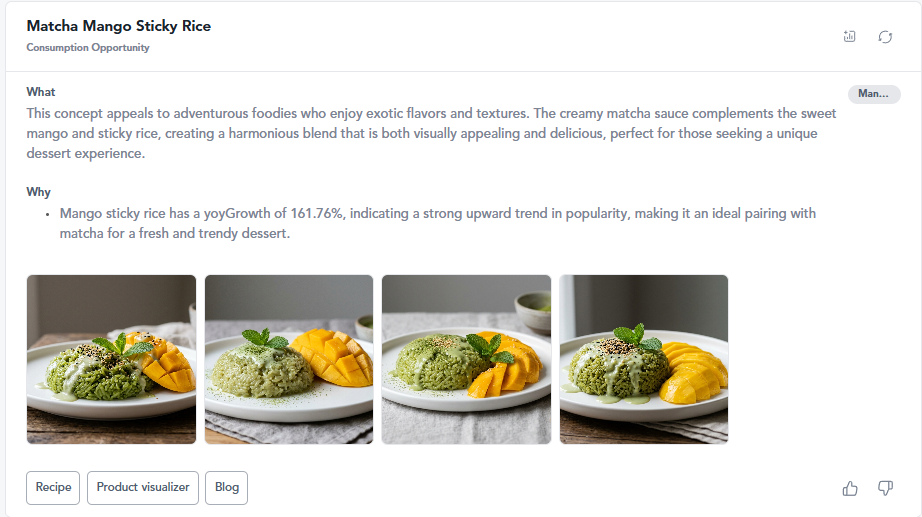
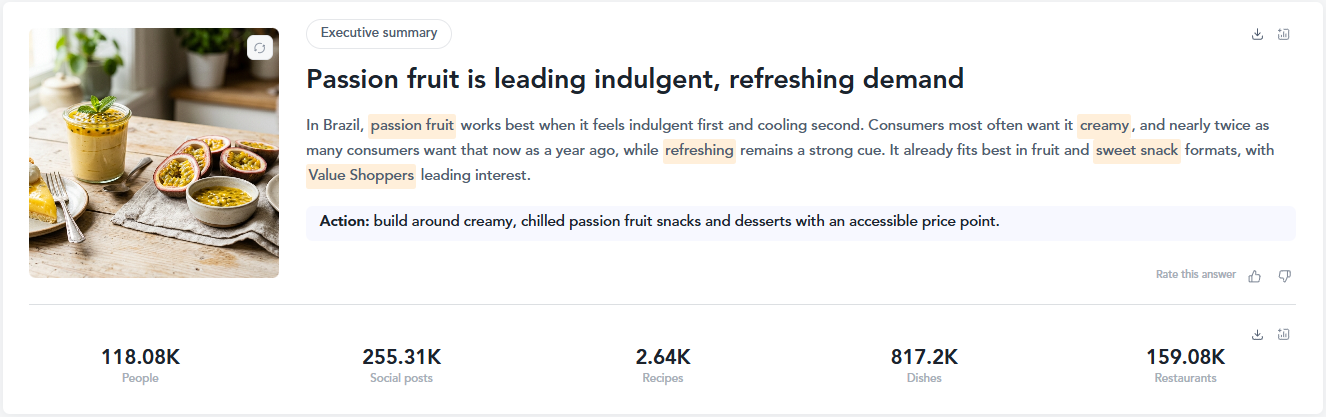
The gap that remains is flavour complexity. Hojicha is growing 18.4%. Yuzu is growing in the matcha orbit. Maracuja (passion fruit) is up 92.8% as a companion ingredient. The consumer is ready for second-generation matcha formats. The question is whether brands will move before the channel consolidates around a generic iced latte default.
Protein and functional signals reshaping brasil food trends
The fitness and functional nutrition signal in Brazil has become structural. Within the protein-fitness-wellness consumer cluster, creatine is up 80.6%, gut health is up 19.1%, hydration is up 91.6%, and weight management is up 48.1%. These are not opportunistic peaks. They reflect a Brazilian consumer who has integrated performance nutrition into daily life rather than keeping it for weekend training sessions.
Whey holds 37.65% social share within the protein consumer set, and frango (chicken) is up 161.2% in this context as consumers increasingly map high-protein formats onto everyday meals rather than just dedicated post-workout windows. The “saudavel” claim is up 31.5% in this cluster and “balanceada” is up 3.9%, indicating that the consumer is not seeking extremes. They want balanced, achievable, daily nutrition.
For consumer marketing teams targeting Brazil, this creates a clear brief. Protein is not a niche claim in this market. It is a mainstream expectation. The whitespace is not in the protein claim itself but in how it is packaged, positioned, and communicated in a culture where food is deeply social. The brands that frame protein around sharing moments and Brazilian daily ritual, rather than gym performance metrics, will own the widest consumer segment.
See how Tastewise consumer intelligence can help your team map the whitespace in Brazil before your competitors do.
The premiumisation wave in brasil food trends
The hamburguer category growing 161.7% and pizza up 46.8% in the past 12 months are not simply volume signals. They are premiumisation signals. Both categories show strong growth alongside “artesanal” (artisanal, up 47.6% in the broader food trends set), “gourmet” (up 34.2%), and “premium” (up 70.8%). Brazilian consumers are trading up inside familiar categories rather than switching to unfamiliar ones.
The churrasco (barbecue) signal is up 258.7% in the delivery context, and espaguete (spaghetti) is up 659.2% in the same operator data. These are comfort formats being elevated. The consumer is ordering the familiar but expecting more from it. Craft sauces, premium proteins, and distinctive flavour stories are what justify the price premium and earn the repeat delivery order.
The “brasileiro” identity claim, up 124.3%, is the strategic frame your team needs to hold here. Premiumisation in Brazil does not mean importing global luxury. It means elevating what is already beloved. Innovation concepts that take a Brazilian staple and add a functional or artisanal layer will outperform concepts that arrive as foreign premium propositions. This is where retail sales strategy rooted in real consumer data earns its value.
How brasil food trends play out across channels
The delivery channel is not a separate reality from in-store or at-home in Brazil. With 55 million active delivery-app users, the behaviour that appears on iFood and Uber Eats quickly shapes what consumers expect to find in retail. Açai, matcha, and artisanal burgers are all categories that were validated in the delivery channel first and then migrated into retail as consumer expectation.
The at-home signal is also growing. The “forno” (oven) claim is up 19.8% in the matcha cluster and sticky rice is up 75.3%. Brazilian home cooks are extending their repertoire, reaching for ingredients and formats they have encountered out of home and trying to recreate them. This creates a direct retail opportunity. Formats that are delivery-first but adaptable to home preparation will travel across the channel split without requiring a separate product architecture.
The on-the-go claim is up 54.3% in the matcha context. Café is up 32.3% in the broader food trends set. These two signals together point to a morning and afternoon ritual economy. Quick-service and café formats that position a functional, flavourful product for the commute window are underserved in Brazil right now. The coffee shop segment is growing, but the matcha-forward, functional café format is nascent.
Key ingredients in brasil food trends for 2026
Matcha
Consumer reach growing 46.2% in posts. High menu adoption in specialty cafes but very low penetration in mainstream QSR. The gap is the opportunity.
Hamburguer (premium beef and chicken burger formats)
Up 161.7% in the past year. Artisanal build expectations are mainstream in São Paulo and Rio. Regional markets are earlier stage.
Café
Up 32.3%, and up 83.1% in the protein-fitness cluster specifically. Functional coffee formats crossing into the wellness consumer set.
Queijo vegano (vegan cheese)
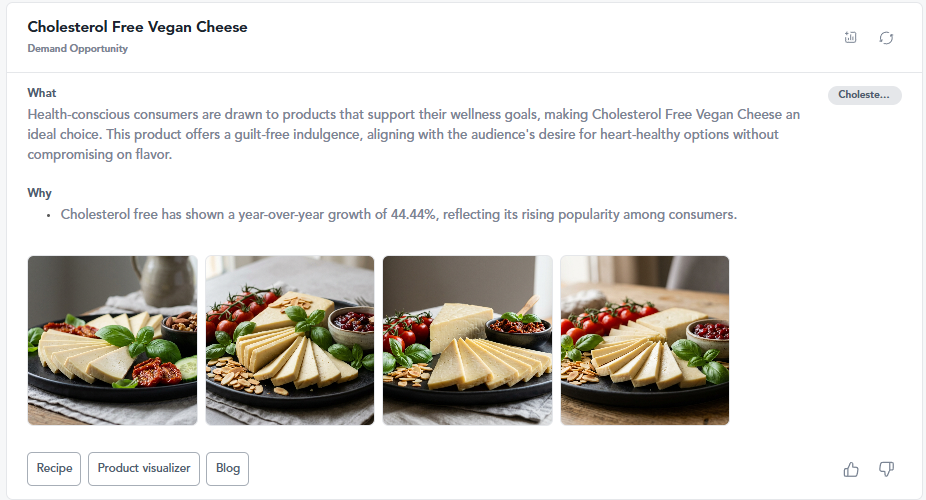
Up 50.5% in the food trends set. Plant-based alternatives declining overall, but specific subcategories like vegan cheese are growing. Consumers are moderating rather than eliminating animal products.
Maracuja (passion fruit) and hojicha
Maracuja up 92.8% in the matcha orbit. Hojicha up 18.4%. Both signal a consumer appetite for complex, layered flavour profiles within the tea and functional beverage category.
Your team can map the whitespace in Brazil today. Request a Tastewise demo to see how the platform surfaces these consumer signals by market, category, and channel.
FAQs about brasil food trends
The strongest signals in 2026 are matcha and functional beverages, premium burger and pizza formats driven by artisanal positioning, and protein-forward everyday nutrition across QSR and delivery channels. The “brasileiro” identity claim is up 124.3%, showing that consumers want these trends grounded in local heritage, not imported wholesale.
The broader plant-based category is declining in Brazil, with the “a base de plantas” claim down 54.6% in the past 12 months. However, specific subcategories like vegan cheese are up 50.5% and the “sem alcool” (non-alcoholic) claim is up 56.2%. Consumers are moderating animal products selectively rather than adopting full plant-based diets, which creates more targeted innovation opportunities than a whole-category plant-based play.
Brazil has 55 million active delivery-app users, and the delivery channel is the primary incubator for new format adoption in urban markets. Categories validated through iFood and Uber Eats, including açai, matcha lattes, and artisanal burgers, subsequently migrate into retail as consumer expectations. Teams tracking Brasil food trends through real-time consumer data can identify which delivery formats are approaching critical mass before they saturate.


We’d love to learn your goals and see how Tastewise fits
We’d love to learn your goals and see how Tastewise fits
Get a personalized demo
Good taste. Wise move.
Your demo request is confirmed. We’ll reach out within one business day to schedule your walkthrough.
What happens next

See what’s driving demand, then turn it into a sell-in story for retailers and operators.
- Connect consumer panels, market trackers, and agents into one evidence view
- Get the “why” behind what’s changing, with explainable demand drivers
- Walk away with a buyer-ready narrative and next steps to activate
Trusted by





“Tastewise is my secret tool for knowing what consumers want next and why.“